
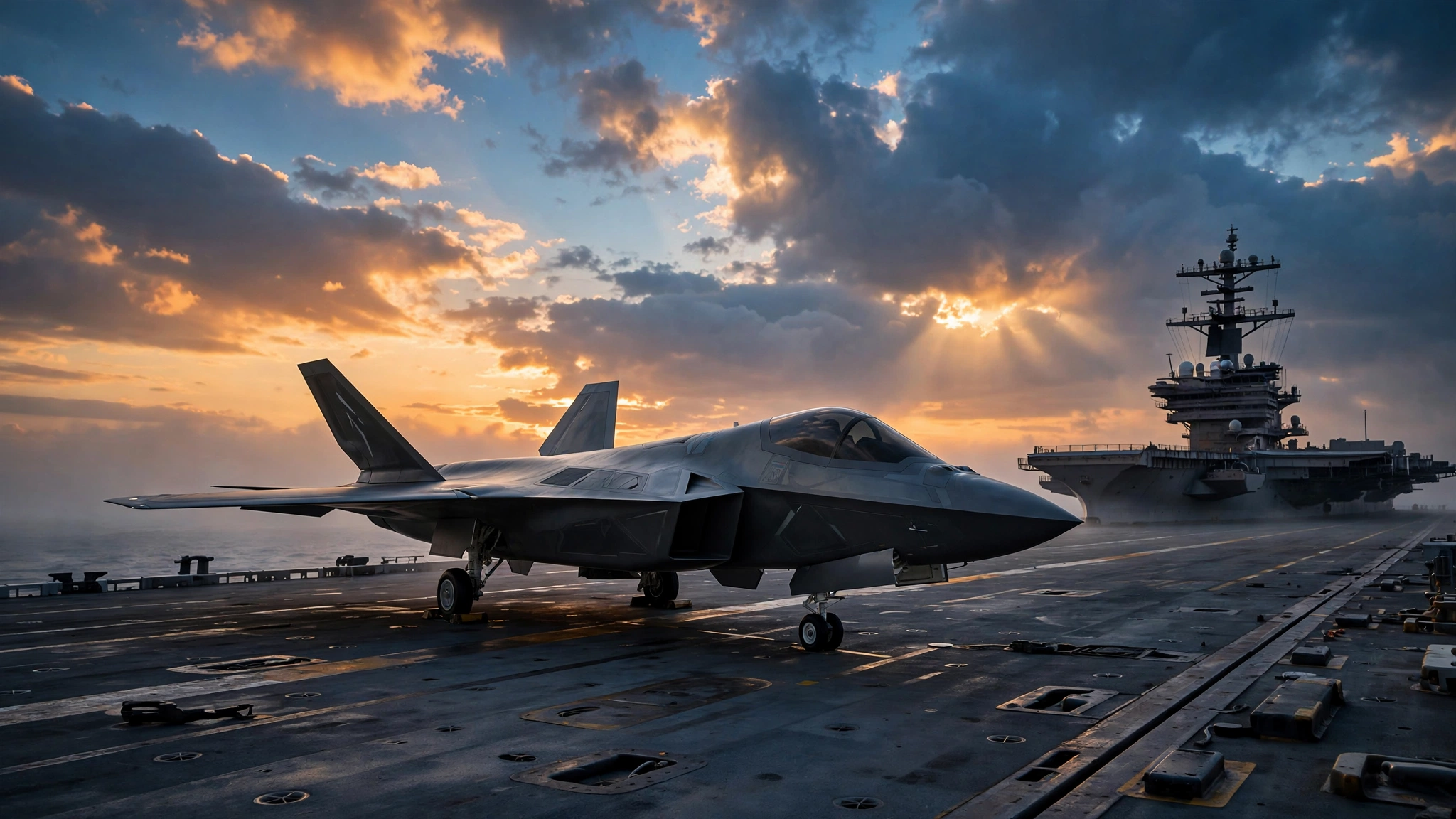
Boeing has won the U.S. Navy’s Boeing F/A-XX contract, a full-scale development award valued at more than $20 billion that makes the aerospace giant the prime contractor for America’s first sixth-generation carrier-based fighter jet. The Navy announced the decision on September 29, 2026, selecting Boeing over rival Northrop Grumman in one of the most consequential Pentagon competitions of the decade.
Investors welcomed the news: according to Investopedia, Boeing shares rose more than 2% in premarket trading on September 30, offering some relief for a stock that entered the day down roughly 14% in 2026. The award, issued by what the Pentagon now calls the Department of War, covers the full-scale development phase of the F/A-XX program and includes multiple test aircraft for ground testing, airworthiness certification, systems integration, and weapons integration work, the Aviationist reported.
What the F/A-XX Contract Covers
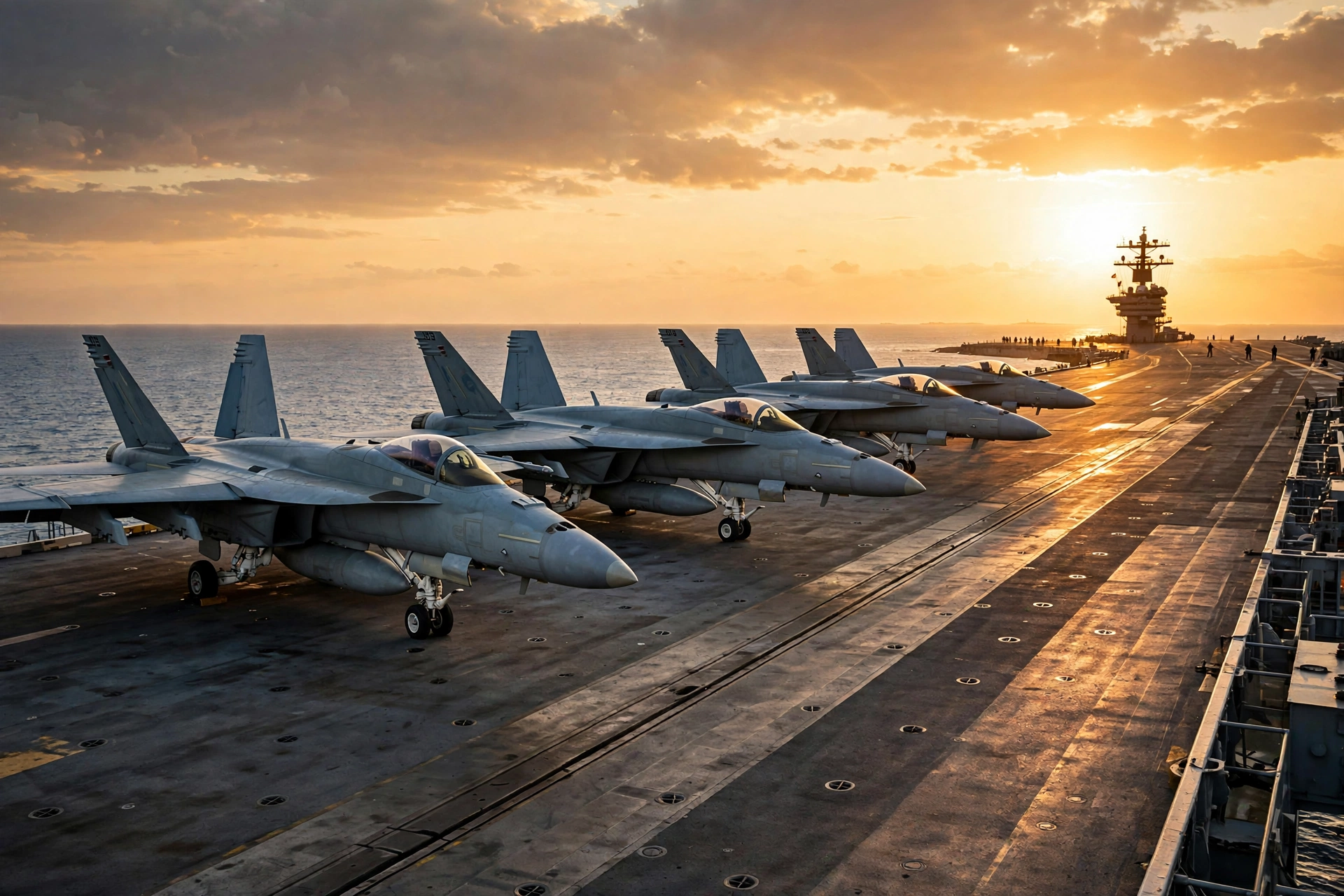
The F/A-XX is the centerpiece of the Navy’s Next Generation Air Dominance family of systems, designed to replace the F/A-18E/F Super Hornet and the EA-18G Growler beginning in the 2030s, according to the program’s documented history. The new jet will fly alongside the carrier-based F-35C and operate with Collaborative Combat Aircraft — the uncrewed “loyal wingman” drones the Navy is developing for its future air wings, Army Recognition reported.
Announcing the award, Michael P. Duffey, Under Secretary of War for Acquisition and Sustainment, called the F/A-XX “a critical pillar in our commitment to maintaining peace through strength,” adding that it “will dominate contested airspace, extend operational reach, and deliver a decisive combat advantage for the warfighter.” Acting Secretary of the Navy Hung Cao described the sixth-generation fighter as “a generational leap in air superiority” that will give “the world’s best aviators” capabilities to “fight, win, and come home safe.”
The Navy intends the F/A-XX to address a central challenge of future carrier operations: projecting strike power in heavily contested airspace, against increasingly long-range surveillance networks, surface-to-air missiles, and anti-ship weapons. Boeing says the aircraft will feature an open mission systems architecture, advanced mission systems, and greater operational reach — though the company notes that technical and programmatic details remain classified under U.S. national security and export laws.
Boeing Becomes Sole Builder of Both U.S. Sixth-Gen Fighters
The F/A-XX win follows Boeing’s March 2025 selection to build the Air Force’s F-47 sixth-generation fighter, SOFX reported. With both awards, Boeing is now the sole U.S. builder of crewed sixth-generation fighters — a remarkable franchise position that locks Northrop Grumman and Lockheed Martin out of the next-generation fighter market for years.
“It’s an honor to be selected to produce the Navy’s first sixth-generation platform,” said Steve Parker, president and chief executive officer of Boeing Defense, Space & Security. “Backed by decades of work, bolstered by game-changing innovations and solidified by the investments we’ve made in new facilities uniquely suited to build multiple products with next generation capabilities, our dedicated and talented team is ready to execute this critical program.”
Parker added that delivering two advanced fighters in parallel “was always our plan, and we invested accordingly.” Construction continues on Boeing’s secure manufacturing facility in St. Louis — described as the largest of its kind in the U.S. — which the company says will be part of the world’s most advanced, all-digital aerospace design and manufacturing system.
A second, smaller award on the same day
On the same day it won the fighter contract, Boeing also received a separate Navy order worth about $16.7 million to plan and prepare for the shutdown of the F/A-18 and EA-18G production lines in St. Louis — the very aircraft the F/A-XX is meant to succeed. The symbolic one-two punch underscores how quickly the Navy intends to pivot from its legacy fleet to the new platform.
What It Means for Investors and the Defense Industry
For Boeing, the F/A-XX award extends a run of defense momentum that has helped offset the commercial aviation side’s struggles. The contract’s development phase alone is worth north of $20 billion, and production orders in the 2030s could ultimately be worth many times that — though no official figures for the total program value have been released, and any such estimates remain speculative.
Analysts will be watching how the win reshapes the competitive landscape. Northrop Grumman, which lost the competition, remains a major defense player with strengths in uncrewed systems and strategic bombers, but its exclusion from both sixth-generation fighter franchises is a significant setback. Lockheed Martin, which builds the F-35, was not a reported finalist for the F/A-XX award.
Caution is warranted on the timeline: the Navy has not announced an official Initial Operational Capability date, so projections placing entry into service in the early-to-mid 2030s remain unconfirmed. What is certain is that the development phase now underway will define naval aviation for the next three decades — and Boeing will build it. Market watchers should note the broader backdrop: the award arrived as U.S. equities navigated a volatile stretch, with Treasury yields recently hitting their highest levels since 2007, as covered in our earlier report on the S&P 500’s slide.

FAQ
How much is the Boeing F/A-XX contract worth?
The full-scale development contract is valued at more than $20 billion, according to the Department of War’s award announcement. It covers development and multiple test aircraft; total program value including future production has not been disclosed.
When will the F/A-XX enter service?
The Navy expects the F/A-XX to begin replacing the F/A-18E/F Super Hornet and EA-18G Growler in the 2030s. No official Initial Operational Capability date has been announced, so specific years remain speculative.
Why did Boeing beat Northrop Grumman?
The Navy has not publicly detailed its selection criteria, and program specifics remain classified. Boeing’s prior selection for the Air Force’s F-47 program and its investments in digital manufacturing facilities in St. Louis were cited by the company as key advantages.
What happens to the Super Hornet production line?
Boeing received a separate $16.7 million Navy order on the same day to plan the shutdown of the F/A-18 and EA-18G production lines in St. Louis, the aircraft the F/A-XX will eventually replace.

Leave a Reply
You must be logged in to post a comment.