
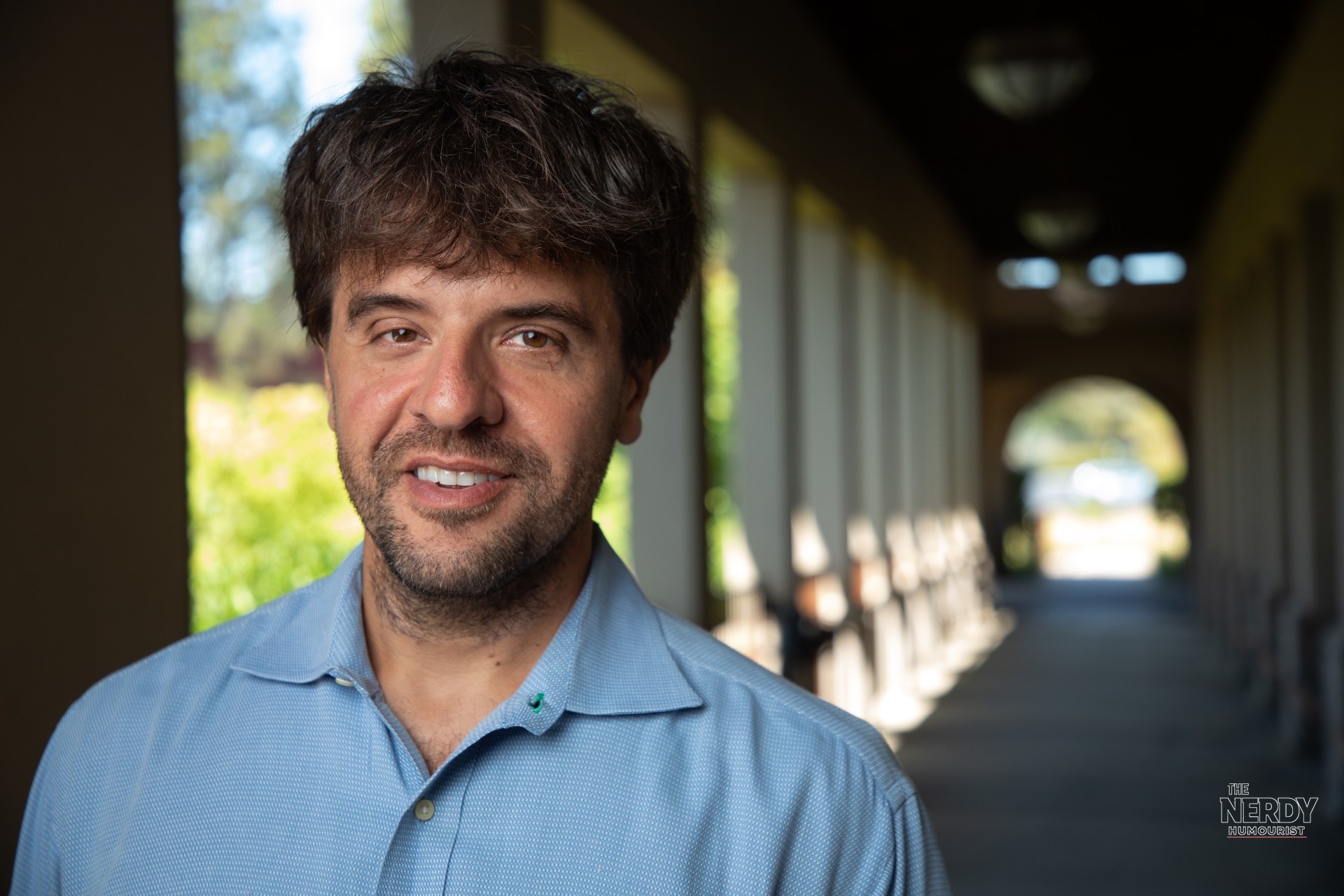
The Nobel Prize Medicine 2026 winners are Karl Deisseroth, Peter Hegemann and Georg Nagel, who were awarded the 2026 Nobel Prize in Physiology or Medicine on Monday for “discoveries concerning light-gated ion channels and optogenetics,” the Nobel Assembly at Sweden’s Karolinska Institutet announced.
The 54-year-old American Deisseroth, 71-year-old German Hegemann and 73-year-old German Nagel will share the prize sum of 12 million Swedish kronor (about $1.2 million) equally, according to Reuters. Their work transformed a light-sensitive protein found in pond algae into a revolutionary research tool that lets scientists switch the activity of individual nerve cells in a living brain on or off using light — a technique known as optogenetics.
“This method is now being used in laboratories around the world to reveal the brain’s mysteries,” the prize-giving body said.
What the Nobel Prize Medicine 2026 Winners Discovered
At its core, optogenetics is exactly what it sounds like: controlling cells with light. Neurons — the brain’s nerve cells — communicate with each other using electrical signals. The three laureates figured out how to make those signals answer to a light switch.
The story starts in the 1990s, when Peter Hegemann, then at the Max Planck Institute for Biochemistry in Germany, became curious about how a single-celled alga called Chlamydomonas manages to swim toward light, New Scientist reported. He discovered the secret was a light-sensitive protein on the alga’s surface.
In the early 2000s, Hegemann teamed up with Georg Nagel, then at the Max Planck Institute for Biophysics in Frankfurt, and together they showed that this protein — which they named channelrhodopsin — acts like a tiny door. When exposed to light, the channel opens, charged ions flow through it, and the cell fires an electrical signal. Crucially, they found that regardless of which cell they put the protein in, that cell became light sensitive.

“They had just discovered the switch neuroscientists had long dreamed of,” Abdel El Manira, a neuroscientist and member of the Nobel Committee, said at the prize announcement, according to New Scientist.
Then came the decisive leap. Karl Deisseroth, a professor of bioengineering and psychiatry at Stanford University, introduced the gene that codes for channelrhodopsin into nerve cells from rats. When he shone blue light on those cells, they fired nerve signals. He published the breakthrough in 2005, and two years later he made the same light-controlled switch work in the brains of living mice, the Nobel committee said.
“It’s a tremendous step forward to be able to link nerve cells and their function to specific behaviours,” said Anna Wedell, a member of the Nobel committee. “It’s a completely new dimension of understanding of the function of the brain,” New Scientist reported.
How the Nobel Prize Medicine 2026 Winners Built a Light Switch for Brain Cells
Before optogenetics, neuroscientists could stimulate brain tissue with electricity, but the method was crude — it hit many cells at once, with no way to target just one type. “It acts as a ‘light-sensitive switch,'” Wedell explained at the announcement, allowing scientists to “map which cells are responsible for which function” in the brain, CNN reported.
The precision comes from genetics. Researchers insert the channelrhodopsin gene into only the neurons they want to study. Shine a laser or LED light on that brain region, and only those cells respond — everything around them stays silent. It is the difference between flipping a single light switch in a house and cutting power to the whole block.
Using optogenetics, scientists have identified neural circuits governing pain, social behaviors, thirst, food consumption, reward and attention, the Nobel committee said. That ability to prove cause and effect — not just observe which brain areas light up, but show what happens when specific cells are silenced or activated — has transformed how researchers study malfunctioning circuits in mental disorders.

From the Lab to the Clinic: What Optogenetics Could Treat
The discovery has opened possible medical applications that were once science fiction. According to the Nobel committee, researchers inserted a channelrhodopsin-like protein into the retina of a blind person, and “the person regained some vision. Using special glasses emitting light, the person was able to discern and grasp objects on a table.” The disease was retinitis pigmentosa, which destroys the eye’s rods and cones.
Another line of research seeks to harness optogenetics to improve cochlear implants for hearing loss, and scientists hope the technique will deepen the understanding of psychiatric and neurological disorders such as depression, anxiety, schizophrenia, Alzheimer’s disease and Parkinson’s disease.
But the field’s most humble moment came from Nagel himself. Learning of the prize on a terrace in Italy, he cautioned that clinical use is still in its infancy. “There’s only, so far, I know of one patient who profited from optogenetics so … I thought it’s still too early to get this prize in medicine,” he said, according to CNN.
“Optogenetics provides opportunities for mapping the brain in a way that we could once only dream of,” said Per Svenningsson, chair of the Nobel Committee for Physiology or Medicine.
How the Laureates Learned They Had Won
Deisseroth, who still works as a psychiatrist alongside his research at Stanford and the Howard Hughes Medical Institute, had been working late on a paper and was starting to drift off when the Nobel committee called. “My phone rang at my bedside. There was about 30 seconds when I had trouble forming words,” he told a news briefing, according to CNN.
Nagel, a professor of molecular plant physiology at the University of Würzburg, was “on the terrace, in the sun” in Italy when the call came. “I didn’t expect this, really!” he said. “I have some friends who always say they are watching what’s happening in October when they are announcing it, and I always told them ‘Keep cool.'”
Hegemann, a Hertie Senior Professor of Neuroscience at Humboldt University of Berlin, did the prize-winning work at the Max Planck Institute for Biochemistry in Martinsried, the Nobel committee said. The three men laid “the foundation for a new era in neuroscience,” in the committee’s words.
The medicine prize traditionally opens Nobel week, with awards in physics, chemistry, literature and peace to follow later this week, and the Nobel Memorial Prize in Economic Science next Monday, Reuters reported. Last year’s medicine prize went to American scientists Mary Brunkow and Fred Ramsdell and Japan’s Shimon Sakaguchi for work on how the immune system spares healthy cells. This year’s laureates will receive their medals in Stockholm on December 10, the anniversary of Alfred Nobel’s death.
FAQ
What is optogenetics?
Optogenetics is a technique that lets researchers control the activity of individual nerve cells in a living brain using light. Scientists insert the gene for a light-sensitive protein called channelrhodopsin into the neurons they want to study; shining blue light on those cells then triggers them to fire electrical signals. It is essentially an on-off light switch for brain cells.
Who won the 2026 Nobel Prize in Medicine?
The 2026 Nobel Prize in Physiology or Medicine was awarded jointly to Karl Deisseroth, 54, an American professor of bioengineering and psychiatry at Stanford University; Peter Hegemann, 71, a German professor of neuroscience at Humboldt University of Berlin; and Georg Nagel, 73, a German professor of molecular plant physiology at the University of Würzburg. They share 12 million Swedish kronor (about $1.2 million) equally.
How does the light-controlled switch actually work?
The key is channelrhodopsin, a protein discovered in the single-celled alga Chlamydomonas by Hegemann and Nagel. When exposed to blue light, the protein opens a channel that lets charged ions flow into the cell, generating an electrical impulse. Deisseroth showed in 2005 that inserting the protein’s gene into rat nerve cells made them respond to light, and by 2007 the technique worked in the brains of living mice.
Can optogenetics treat human diseases today?
Not yet, but research is underway. Scientists have used the technique to partially restore vision in a person blinded by retinitis pigmentosa, and are exploring optogenetic cochlear implants for hearing loss. Even co-laureate Georg Nagel cautioned that only one patient has benefited so far, and he considered the medicine prize “still too early” — a sign of how young the clinical side of the field remains.
Sources: Reuters; CNN; New Scientist; NobelPrize.org press release

Leave a Reply
You must be logged in to post a comment.