

Spanish Prime Minister Pedro Sánchez announced a snap general election for November 29 on Monday, after parliament rejected his government’s emergency housing measures and tens of thousands of protesters took to the streets over the country’s deepening housing crisis, CNN reported.
Sánchez made the announcement in a televised address to the nation from the Palace of Moncloa, his official residence in Madrid, after a weekend of what his office described as a period of reflection. “The time has come for the Spanish people to decide what future you want for yourselves and for your country,” he said, The Times reported.
The election will cut short a legislature that Sánchez, Socialist prime minister since 2018, had intended to run until 2027 — despite his minority government never having been able to approve a budget. If the timetable proceeds as expected, the decree dissolving parliament will be published on Tuesday, triggering the 54-day electoral period required by Spanish law that leads to the November 29 vote, The Times reported.
Spain snap election November 29: why the housing decrees fell
The immediate trigger was the collapse in Congress on Friday of two government decrees responding to Spain’s housing crisis. The measures included strengthened protection against evictions for vulnerable people, restrictions on speculative purchases of homes, and tax incentives to encourage renting, Al Jazeera reported. A second decree sought to make residential leases automatically renewable by tenants, according to the Associated Press.
The decrees were defeated after Junts, a right-wing Catalan separatist party, joined the opposition conservative Popular Party and the populist far-right Vox in voting against them. Sánchez had appealed to lawmakers during a five-hour parliamentary debate to approve the measures, arguing they were needed “to bring greater regulation and fairness to the housing market.”
“What is behind these decrees is the desire to instill order and a sense of humanity in a market that if we do not rein it in will destroy our society,” Sánchez told Congress, the AP reported. He closed his appeal by telling lawmakers: “Do the right thing, or history will judge you, and sooner than you think.”
Mass protests and the Puerta del Sol camp
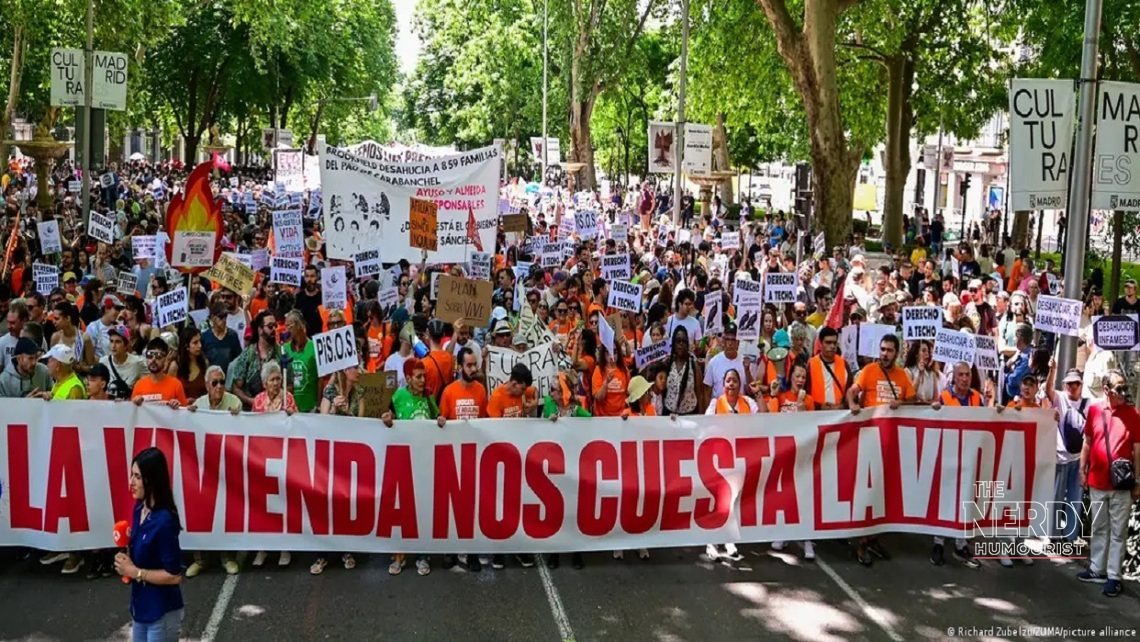
The parliamentary defeat landed in the middle of a wave of public anger over housing costs. Tens of thousands of protesters took to the streets on Saturday — around 70,000 in Madrid alone, according to the Spanish government — with demonstrations in some 50 cities across Spain demanding stronger action on the housing crisis, Al Jazeera reported. For days, hundreds of people have camped out in Madrid’s central Puerta del Sol to protest the housing emergency, and some protesters carried posters calling for a general strike, CNN reported.
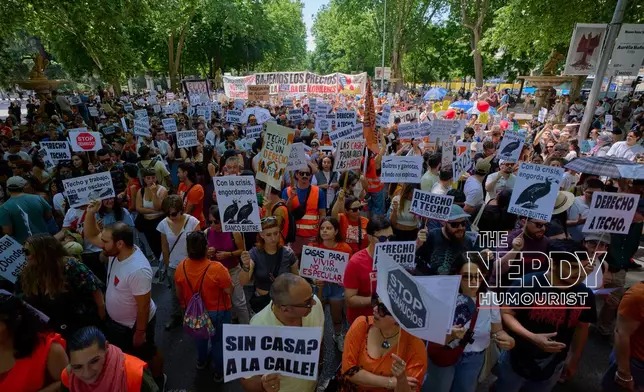
Anger had been building since late September, when an 87-year-old woman, María del Carmen Abascal, was evicted from her Madrid home of 70 years after an international investment fund bought her building and increased the rent, Al Jazeera reported. The case became a symbol of the crisis.
Sánchez’s gamble on the ballot box
Sánchez, 54, is betting that the issue that exposed his government’s weakness in parliament can instead strengthen it at the ballot box. His government has sought to portray the defeat of its housing measures as evidence that the existing parliamentary arithmetic prevents it from tackling voters’ biggest concerns, The Times reported.
“We need to renew people’s support,” Sánchez said in his address, adding that his aim was “to secure a much broader, progressive majority” in parliament — one that could “overcome vested interests, deliver new social advances and continue transforming Spain,” according to Al Jazeera and CNN.
He also struck a self-critical note, admitting his government had “made mistakes and have not managed to do everything we set out to do,” and acknowledging that “part of that social majority is dissatisfied today,” Al Jazeera reported.
The opposition, however, has argued that the vote demonstrates precisely the opposite: that Sánchez no longer has a workable majority and that Spain needs a government capable of governing, The Times reported.
FAQ
When is Spain’s snap election?
Pedro Sánchez announced the vote for November 29. The decree dissolving parliament is expected to be published on Tuesday, starting the 54-day electoral period required by Spanish electoral law, The Times reported.
Why did Sánchez call a snap election?
Congress rejected two emergency housing decrees on Friday after Junts joined the Popular Party and Vox in voting against them. The defeat, combined with mass protests over Spain’s housing crisis, crippled his minority government’s ability to act, prompting Sánchez to seek a renewed mandate.
What was in the defeated housing decrees?
The measures included protections against the eviction of vulnerable people, restrictions on speculative home purchases, tax incentives to encourage renting, and automatic tenant renewal of residential leases, per Al Jazeera and the Associated Press.
How big were the housing protests?
Around 70,000 people joined the Madrid demonstration on Saturday, according to the Spanish government, with protests in some 50 cities. Hundreds of people have been camping in Madrid’s Puerta del Sol for days, and some protesters carried signs calling for a general strike.
Sources: CNN (Oct 5); The Times (Oct 5); Al Jazeera (Oct 5); Associated Press via EuropeSays.

Leave a Reply
You must be logged in to post a comment.