

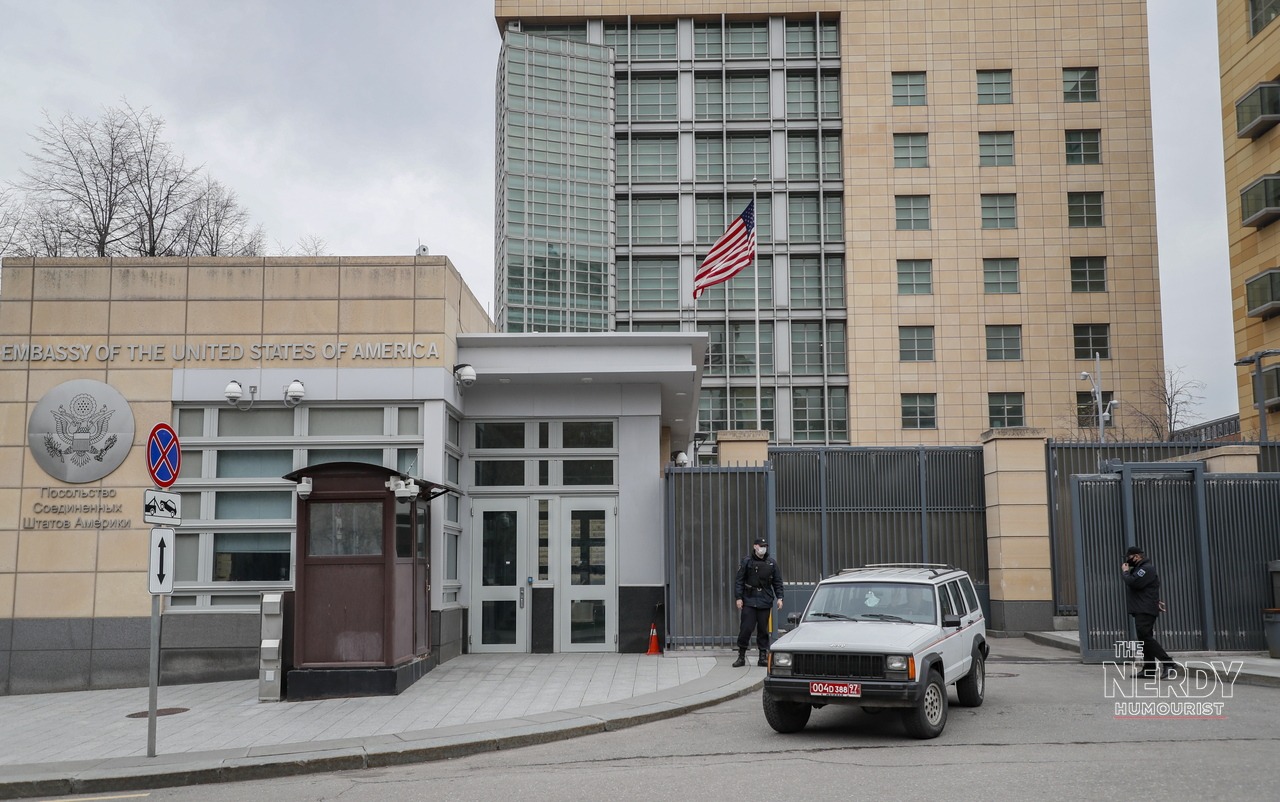
The United States Embassy in Moscow issued a health alert on October 6 urging American citizens in Russia to depart the country immediately amid the Russia suspected plague Irkutsk scare — reports of a suspected case of pneumonic plague in the Irkutsk region of Siberia. The reports follow the death of a 28-year-old laboratory worker at an anti-plague research institute, though no case of plague has been officially confirmed and the World Health Organization has assessed the broader public health risk as low.
The health alert, published by the US Embassy in Moscow on October 6, 2026, said the embassy was aware of press reports from the Irkutsk region “of suspected pneumonic plague resulting in the death of an individual and of associated quarantine measures in, and closures of, hospitals in Irkutsk.”
“We continue to track the situation closely,” the alert said. It warned that the US government has limited ability to assist American citizens in Russia, particularly outside Moscow, and noted that US government personnel may face additional travel restrictions in affected regions due to health and security concerns.
The embassy also reiterated that the State Department’s Level 4 “Do Not Travel” advisory for Russia remains in place, telling US citizens already in Russia that they should depart immediately and strongly advising against travel to the country due to the risk of wrongful detention and security concerns.
Russia Suspected Plague in Irkutsk: What Officials Know About the Death
The worker who died was identified by Russian media as Daria Shipilova, 28, a laboratory assistant at the Irkutsk Anti-Plague Research Institute of Siberia and the Far East. According to regional officials cited by Euronews and other outlets, she was hospitalized with severe pneumonia on September 29 and died between October 1 and October 2. (Her first name is spelled “Darya” in some reports.)
Russia’s public health watchdog, Rospotrebnadzor, has denied reports that she died of plague. The agency said tests of biological material from Shipilova found no microorganisms linked to her professional work, and a special expert commission determined the cause of death was “pneumonia of unknown etiology,” according to Irkutsk Governor Igor Kobzev.
“The situation remains under our control and that of the experts,” Kobzev said.
Despite the denials, quarantine measures have been reported around Irkutsk. Euronews reported that more than 60 institute employees have been isolated inside the facility since October 2, and several hospitals in Irkutsk — including three city clinical hospitals, the Ivano-Matreninsky children’s hospital, and the city maternity hospital — were placed under quarantine. The Central District Hospital in Shelekhov, where Shipilova lived, was also closed, according to media reports.
Rospotrebnadzor said people who had contact with Shipilova were identified and placed under medical observation. Tests found two cases of COVID-19 and two cases of rhinovirus among the contacts, but no other dangerous infectious agents, the agency said. Some reports put the number of contacts under observation at up to 200.
Unconfirmed Reports of a Lab Accident
Some Russian media outlets, including the outlet Lyudi Baikala and the Telegram channel Mash, have reported unconfirmed claims that Shipilova may have contracted pneumonic plague after breaking a test tube containing the plague pathogen in the laboratory and failing to report the incident. These claims have not been independently confirmed.
Rospotrebnadzor rejected that theory on October 4, saying a special commission found no accidents involving work with pathogenic microorganisms at the institute. The US State Department has stressed that many details remain unconfirmed and has called on Moscow to share what it knows.
Trump, Rubio Press Moscow for Answers on Russia Suspected Plague in Irkutsk
President Donald Trump said on October 6 that he plans to speak with Russian President Vladimir Putin about the situation. “I have a call scheduled very soon,” Trump told reporters at the White House on Tuesday evening. “We’ll be able to report about it probably tomorrow.”
A day earlier, Trump said his administration was looking at the situation “very strongly” and offered US help: “We’ll help them, we’ll help them as much as we can.”
Secretary of State Marco Rubio, speaking at a news conference in Reykjavik, Iceland, on October 6, called the death of the lab worker “cause for focus” but not alarm. He said it would be irresponsible to speculate without full information and urged Russia to be transparent.
“I think it’s incumbent upon Russia to obviously share more information with the world,” Rubio said. “The more we can learn about what happened, the better all of us can be in a position of responding.”
A State Department official told Fox News that the US is aware of reports of a death in Irkutsk Oblast and is monitoring the situation closely with the Centers for Disease Control and Prevention and other federal agencies. The official stressed that many details have not been confirmed and said pneumonic plague can be treated with common antibiotics, particularly when treatment begins early.

WHO: No Confirmed Plague Cases; Risk Low
The World Health Organization said it has been in contact with Russian health authorities to verify the event, its circumstances, and the laboratory tests underway.
According to an update received from Russia on October 6, no case of plague has been recorded in Irkutsk, WHO said. Contacts of the deceased worker were identified, tested, and placed under medical observation, and tests found no dangerous infectious disease pathogens among them.
WHO spokesman Christian Lindmeier told a news briefing that the agency assessed the risk as moderate to low for Irkutsk, low for Russia as a whole, and very low for the rest of Europe. WHO Director-General Tedros Adhanom Ghebreyesus said the agency would update its assessment as more information becomes available.
“There is currently no indication that we are dealing with anything similar to the pandemic,” Lindmeier told The Associated Press.
The US Centers for Disease Control and Prevention said it is closely monitoring the reports and working across the US government as more information becomes available, adding there is currently no indication of a broader threat to the United States.
Region Steps Up Precautions
Several countries bordering Russia have responded with heightened health measures. Kazakhstan, Kyrgyzstan, Uzbekistan, and Tajikistan have implemented what their governments described as enhanced health and sanitary controls, including quarantine checks at state border crossings, in response to the reports from Siberia.
The Kremlin has urged reliance on official information. Spokesman Dmitry Peskov told journalists to focus on statements from Rospotrebnadzor rather than “various rumors, various speculations.”
Pneumonic plague is a severe bacterial infection caused by Yersinia pestis that can spread between people through respiratory droplets during close contact and can progress rapidly if untreated. According to the CDC, it can be successfully treated with antibiotics when identified and treated early, and cases of pneumonic plague occur naturally in many parts of the world.
FAQ
Has a case of plague been confirmed in Irkutsk?
No. Russian health authorities have denied that the lab worker died of plague, saying tests found no microorganisms linked to her work. The WHO said Russian authorities reported no confirmed plague cases in Irkutsk, and the official cause of death was given as “pneumonia of unknown etiology.”
Who was the lab worker who died?
Russian media identified her as Daria Shipilova, 28, a laboratory assistant at the Irkutsk Anti-Plague Research Institute of Siberia and the Far East. She was hospitalized with severe pneumonia on September 29 and died between October 1 and October 2, according to regional officials.
What has the US said about the suspected plague reports?
The US Embassy in Moscow issued a health alert on October 6 noting reports of suspected pneumonic plague and quarantines in Irkutsk, reiterating the Level 4 Do Not Travel advisory and urging Americans in Russia to depart immediately. President Trump said he has a call scheduled with Vladimir Putin “very soon,” and Secretary of State Marco Rubio urged Russia to share more information.
Is there a risk to the general public?
The WHO assessed the risk as moderate to low for Irkutsk, low for Russia as a whole, and very low for the rest of Europe, based on the information available. The CDC said there is currently no indication of a broader threat to the United States. The agency continues to monitor the situation and seek verification of the reported event and lab results.
Sources: NY Post, CNN, Fox News, U.S. Embassy Moscow, The Straits Times

Leave a Reply
You must be logged in to post a comment.