
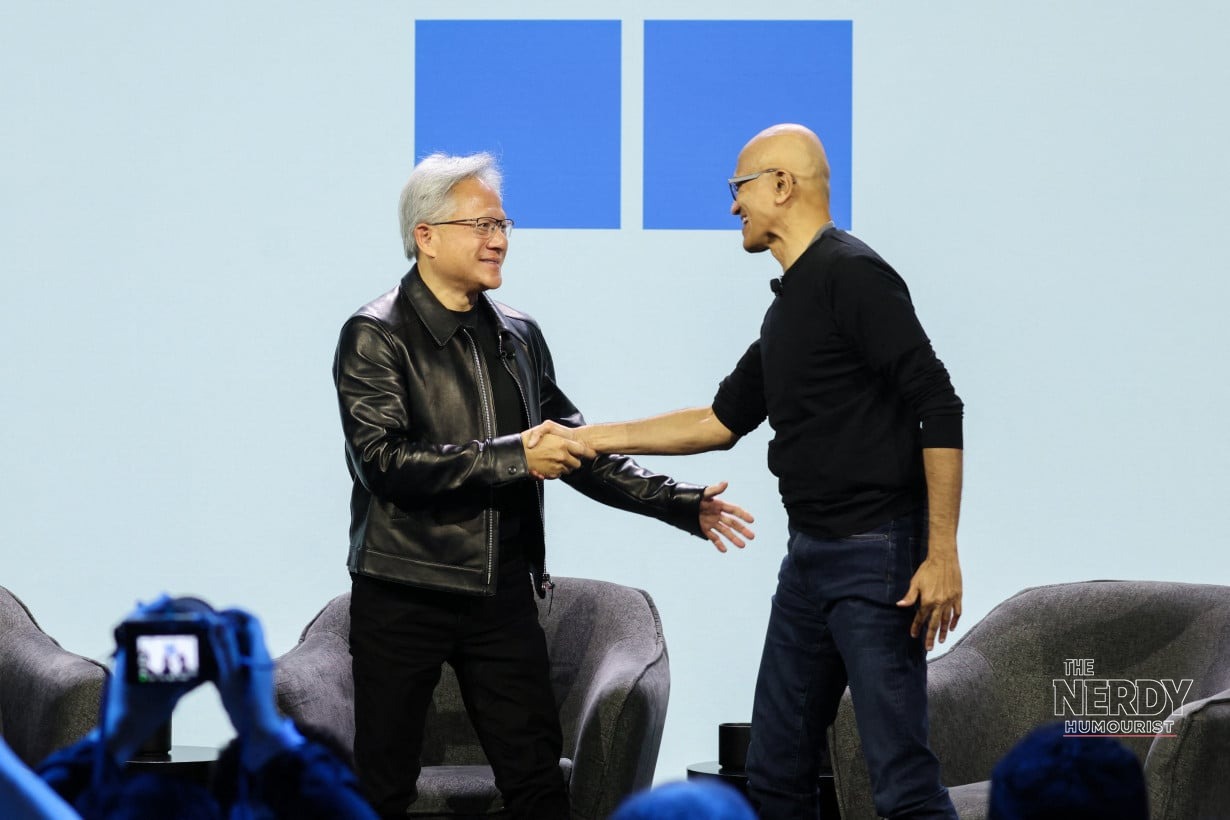
Microsoft finally put a price tag on its most powerful Surface ever. On Wednesday, October 7, Microsoft CEO Satya Nadella and Nvidia CEO Jensen Huang took the stage together in San Francisco to open preorders for the Surface Laptop Ultra — the first laptop built around Nvidia’s RTX Spark superchip — starting at a Surface Laptop Ultra price of $2,599, with shipping beginning October 16. The results landed exactly one day after yesterday’s event preview set expectations, and the hardware story was only half of it: Microsoft used the same stage to reframe Windows itself as the platform for running AI agents locally, according to TechRepublic.
The event was Microsoft’s first major Windows-focused gathering in more than two years, and Nvidia’s presence told the story. The two companies pitched the Surface Laptop Ultra and the wider RTX Spark ecosystem as the answer to a simple question: what if the AI models that currently live in expensive cloud data centers could run on the laptop in front of you instead?
Surface Laptop Ultra Price and Configurations
The headline Surface Laptop Ultra price is $2,599 for the entry model, with availability beginning October 16. That starting price buys a machine running the Nvidia RTX Spark N1X platform — a Grace CPU paired with a Blackwell RTX GPU — and Microsoft says the line tops out at $5,899 for a model with a 20-core processor, 128 gigabytes of unified memory and one terabyte of storage, according to Reuters.
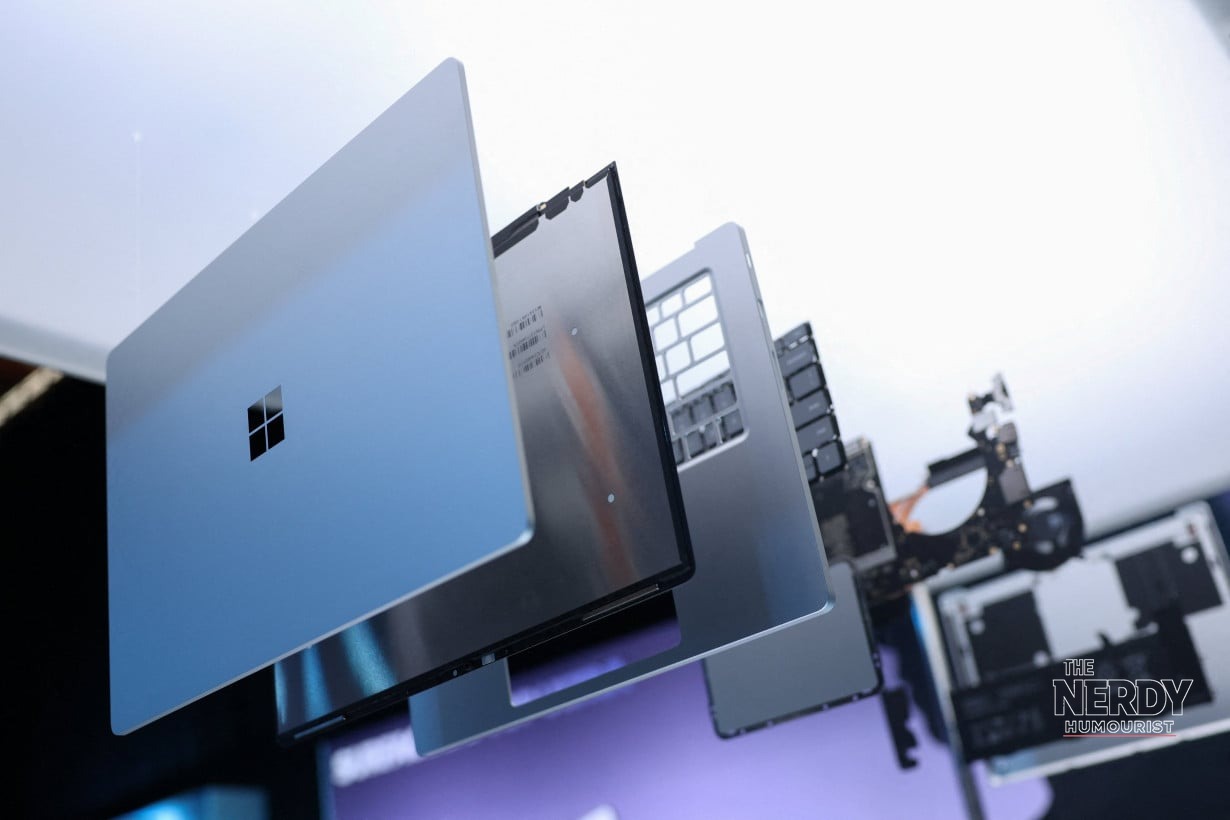
Microsoft’s own product materials describe the flagship configuration as the first Surface Laptop to pair a Blackwell RTX GPU (up to 6,144 GPU cores) with up to 128GB of unified memory and full CUDA support. The platform is rated at up to one petaflop of FP4 AI compute and is designed to run models exceeding 120 billion parameters locally. One caveat worth noting: the one-petaflop figure refers to theoretical FP4 performance with sparsity, so it should not be read as a measure of performance across all workloads.
The entry $2,599 configuration is a step down from those headline numbers. Reporting citing Microsoft’s product page notes the base model uses a reduced RTX Spark part with an 18-core CPU, a 5,120-core Blackwell GPU and 24GB of unified memory. If local AI model training or large-context inference is your plan, the 64GB and 128GB tiers are the ones that matter.
Hardware: Display, Ports, and Battery
Beyond the silicon, Microsoft talked up a 15-inch mini-LED PixelSense Ultra touchscreen rated at up to 2,000 nits of peak HDR brightness — the brightest panel it has shipped on a Surface Laptop — plus the most ports of any Surface Laptop, a new magnetic USB-C charging connector, a haptic trackpad, user-replaceable storage and Windows Hello face sign-in. The aluminum body comes in Platinum and Nightfall, and Microsoft claims up to 15 hours of battery life in typical use.
Gaming got an unexpected moment in the spotlight. Microsoft said the new Gears of War: E-Day can run at 60fps on the Surface Laptop Ultra, and that Call of Duty is coming to RTX Spark in 2027, MobileSyrup reports. Given the Arm-based RTX Spark chip, native gaming support is exactly the kind of detail that could make or break the machine for buyers who want one device to do everything.
The RTX Spark Ecosystem: Dell, HP, Lenovo, MSI, Asus
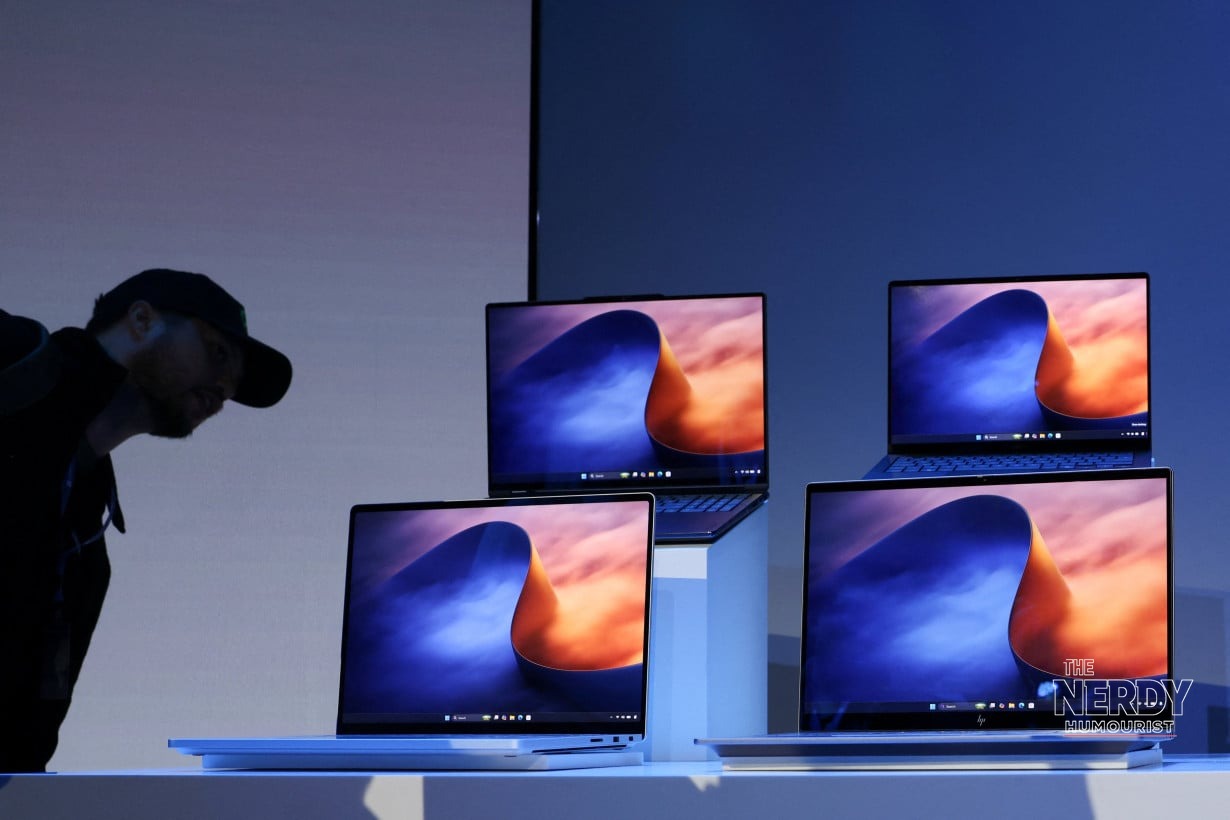
Microsoft did not keep RTX Spark to itself. Partner laptops from Dell, HP, MSI, Asus and Lenovo were shown on stage, and preorders for those partner machines opened alongside the Surface. Microsoft also announced a Surface RTX Spark Dev Box priced at $5,999 — a desktop aimed at developers — and a DGX Station for Windows preview built around Nvidia’s GB300 superchip.
The price pressure is real across the board. Reuters noted that Nvidia increased the price of its DGX Spark AI desktop by about 75% since launch to $6,950 amid rising memory costs. “Two years ago, the software wasn’t ready, but the hardware was. Now the software is ready and the hardware is too expensive to actually run it locally,” said Anshel Sag, an analyst at Moor Insights & Strategy. It is becoming, he added, something only people with the budget can really afford.
Windows AI Agent Features: Execution Containers Take Center Stage
The second act of the event was software. Microsoft unveiled Microsoft Execution Containers — technology it calls MXC for short — designed to prevent AI agents from accessing data and performing unauthorized tasks when running on a laptop or desktop. IT departments can set rules for agents, and Windows enforces those rules on each employee’s machine. Anthropic, OpenAI and Nvidia will all use the tools, said Pavan Davuluri, Microsoft’s executive vice president for Windows and devices.
“We needed to make the desktop the most secure place for agents to execute,” Nadella said, according to Reuters. Huang called the technology “going to revolutionize how agents are built and deployed,” adding: “Without it, (agents are) a complete nonstarter.”
Microsoft also showed AI models that previously required cloud access now running locally on high-powered Windows PCs, including Nvidia’s open-source Nemotron model. Davuluri said a version of DeepSeek’s V4 model can run on machines with at least 60GB of memory and outperform OpenAI’s GPT-5 on some coding and reasoning tasks. The company is splitting Copilot between the cloud and the device: “Copilot will still use the cloud for the hardest tasks, but for times when cost or privacy matter more, it can delegate down to local models that run directly on your computer,” said Copilot chief Jacob Andreou.
Surface Laptop Ultra vs MacBook Pro: Microsoft’s Claims
Microsoft did not shy away from naming the rival. Against a 16-inch MacBook Pro with an M5 Pro chip, the company claimed its RTX Spark PCs are 2.1 times faster to first token, 4.3 times faster at AI image generation and 6.2 times faster at AI video generation. Treat those as vendor measurements, not independent benchmarks — Apple sells a 40-core-graphics MacBook Pro with 128GB of memory and 2TB of storage for $6,700, which is not directly comparable to the $5,899 top Surface, and Microsoft’s entry Ultra costs more than Apple’s $1,999 base MacBook Pro while shipping with 24GB of memory against Apple’s 16GB.
The bigger bet is structural. Microsoft and Nvidia want Windows — not the cloud — to be where AI agents do their work, and the Surface Laptop Ultra is the proof of concept. Whether developers and enterprises buy into the local-AI story at these prices will determine if the Ultra is the start of a new category or a halo product for the faithful. That question is already echoing across the chip industry, where Nvidia’s record capital moves show how seriously the AI buildout is being taken.
FAQ
What is the Surface Laptop Ultra price?
The Surface Laptop Ultra starts at $2,599 for the entry configuration, rising to $5,899 for the top model with a 20-core processor, 128GB of unified memory and 1TB of storage. Preorders opened October 7, 2026, and shipping begins October 16.
What is the Nvidia RTX Spark chip inside the Surface Laptop Ultra?
RTX Spark is an Arm-based superchip combining an Nvidia Grace CPU (up to 20 cores) with a Blackwell RTX GPU (up to 6,144 cores), sharing up to 128GB of unified memory. It delivers up to 1 petaflop of theoretical FP4 AI compute, enough to run 120B+-parameter models locally.
When does the Surface Laptop Ultra ship?
Microsoft says the Surface Laptop Ultra begins shipping on October 16, 2026. Partner RTX Spark laptops from Dell, HP, Lenovo, MSI and Asus also opened preorders, and the Surface RTX Spark Dev Box ($5,999) is available for preorder as well.
What are Microsoft Execution Containers?
Microsoft Execution Containers (MXC) are a new Windows technology that confines AI agents running on PCs, preventing them from accessing data or performing tasks without permission. IT departments can set agent rules that Windows enforces per machine; Anthropic, OpenAI and Nvidia will use the tools.
Sources: Reuters (via LA Post), TechRepublic, MobileSyrup, Gadget Pilipinas, Windows Report

Leave a Reply
You must be logged in to post a comment.