
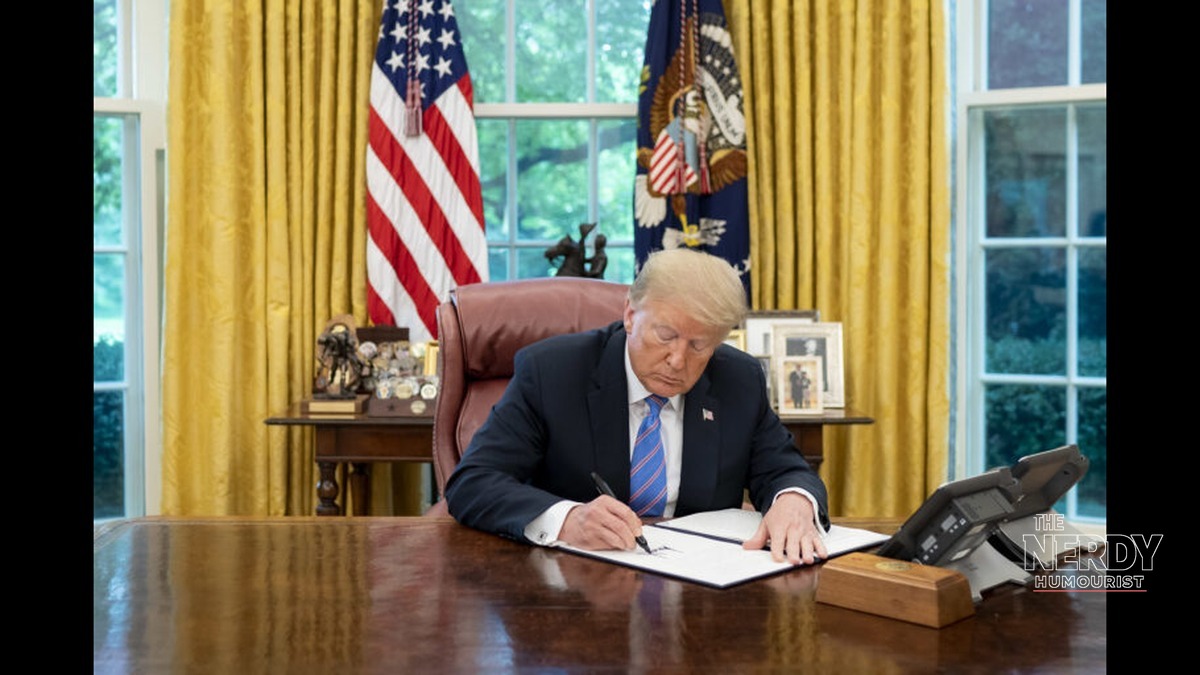
President Donald Trump on Thursday signed an executive order directing the Attorney General to fast-track the federal reclassification of marijuana — a move that could ease long-standing restrictions on medical cannabis research but stops short of legalizing the drug. The trump marijuana rescheduling executive order, signed in the Oval Office, instructs federal officials to complete the rulemaking process that would move marijuana from Schedule I to Schedule III of the Controlled Substances Act, according to a Reuters report.
The order represents the most significant federal drug-policy shift of Trump’s second term. Trump said the action was aimed at patients suffering from chronic pain and serious illnesses, while stressing that the order does not amount to legalization.
“It doesn’t legalize marijuana in any way, shape or form … and in no way sanctions its use as a recreational drug,” Trump said during the signing, according to reports of the event. “We have people begging for me to do this. People that are in great pain.”
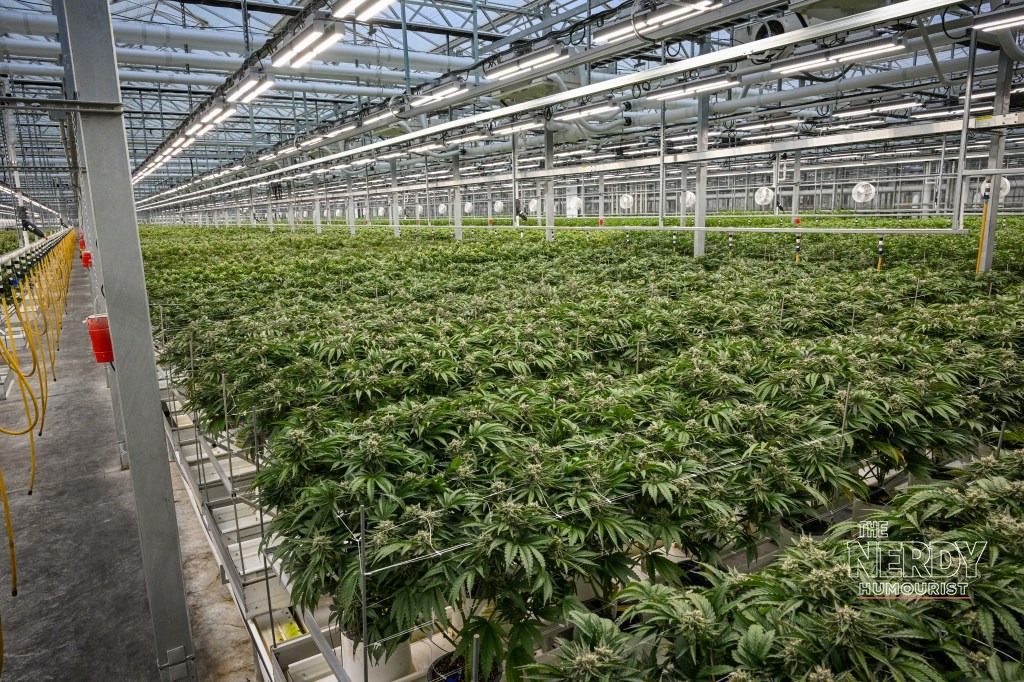
What the Trump Marijuana Rescheduling Executive Order Actually Says
The order’s central command is procedural: it directs the Attorney General to “take all necessary steps to complete the rulemaking process related to rescheduling marijuana to Schedule III of the CSA in the most expeditious manner in accordance with Federal law, including 21 U.S.C. 811,” according to analysis of the order’s text.
Legal experts note an important nuance: the order does not itself reschedule marijuana. Any change must still pass through the administrative process under the Controlled Substances Act, including final action by the DEA and publication of a final rule. The order also sets no explicit timeline, though analysts suggest the final rule could be published within months if the administration pursues the most direct path.
The order lays out its rationale in direct terms: “It is the policy of my Administration to increase medical marijuana and CBD research to better inform patients and doctors. It is critical to close the gap between current medical marijuana and CBD use and medical knowledge of risks and benefits.”
The directive also addresses hemp-derived products. It calls on the White House to work with Congress to “update the statutory definition of final hemp-derived cannabinoid products,” after recent federal funding legislation restricted products with higher levels of THC, according to CNN’s reporting.
Schedule I vs. Schedule III: What Would Change
Under the Controlled Substances Act of 1970, marijuana is currently classified in Schedule I — the most restrictive category, alongside heroin, LSD, and ecstasy. Schedule I substances are legally defined as having no currently accepted medical use and a high potential for abuse.
Moving marijuana to Schedule III would place it alongside drugs the DEA defines as having “a moderate to low potential for physical and psychological dependence” and accepted medical uses — a tier that includes Tylenol with codeine, ketamine, and testosterone. Such a change would not make marijuana legal for recreational use nationwide; it would remain illegal under federal law.
What would change most immediately is research. Schedule I drugs are subject to some of the strictest approval processes in federal law, which researchers say has severely limited clinical trials. Schedule III status would require far fewer approvals, opening the door to large-scale federally funded studies of cannabis-based treatments for chronic pain, seizure disorders, chemotherapy-induced nausea, post-traumatic stress disorder, and other conditions.
The Road Here: A Biden-Era Proposal Revived
The rescheduling process predates Trump’s order. The Justice Department under President Joe Biden previously proposed moving marijuana to Schedule III, but the proceeding stalled in an administrative hearing and appeals, drawing tens of thousands of public comments without reaching a final rule.
Trump’s order directs the Justice Department to push that stalled proceeding to completion as quickly as legally possible. The decision followed an intensive lobbying campaign from the cannabis industry; Trump consulted with Health and Human Services Secretary Robert F. Kennedy Jr. and spoke with industry leaders, including Trulieve Cannabis CEO Kim Rivers, before signing, according to Bloomberg.
“I’ve never been inundated by so many people as I have about this particular reclassification,” Trump said, according to CNN. He also pointed to polling, saying more than eight in 10 U.S. voters support reclassifying marijuana to allow federal funding for research into how it might help patients with chronic and terminal illnesses.
The Drug Enforcement Administration remains at the center of the process — the agency that will ultimately publish any final rule. The DEA also continues to enforce federal drug laws nationwide, as seen in operations like Operation Free Skid Row, the recent FBI-DEA raids in Los Angeles — a reminder that rescheduling changes how cannabis is regulated, not whether federal drug enforcement continues.
What the Trump Marijuana Rescheduling Executive Order Means for Medical Research
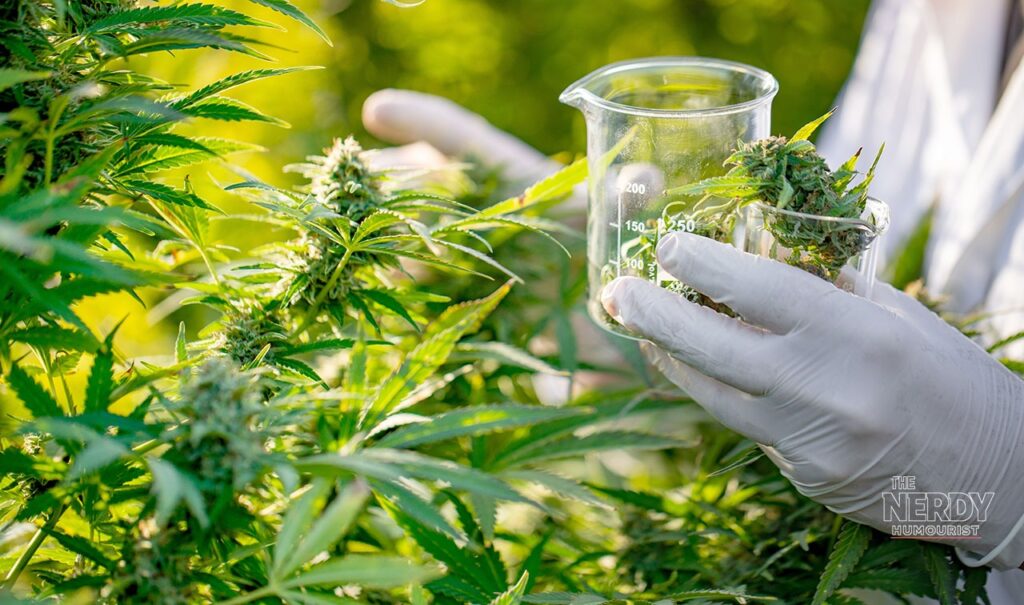
For academic researchers, the order could mark a turning point. The Chronicle of Higher Education reported that moving cannabis out of Schedule I would make it easier for universities, hospitals, and pharmaceutical companies to conduct clinical studies involving FDA-approved marijuana products or state-licensed medical marijuana — work that previously required navigating the DEA’s onerous Schedule I registration process and relying on a limited supply of federally supplied research-grade cannabis.
“This move will open a door that has been closed for far too long by making it possible to pave a clear, science-driven regulatory pathway,” Sasha Kalcheff-Korn, executive director of the cannabis research and advocacy group Realm of Caring, told Cannabis Science and Technology.
Researchers still face hurdles: DEA registration and FDA-regulated clinical trial requirements would remain in place, and the gap between federal prohibition and the 40 states plus Washington, D.C., that allow medical marijuana continues to complicate large-scale studies.
Industry Reaction: “A Long-Overdue Correction”
The cannabis industry, which conducted a years-long campaign for clearer federal rules, largely welcomed the order. “President Trump’s move of marijuana to Schedule III is more than a regulatory tweak — it’s a long-overdue correction that finally treats cannabis as medicine,” said Howard Kessler, founder of The Commonwealth Project.
Clark Hill attorney Craig Small described the order as moving the “football closer to the end zone,” predicting significant benefits for legal operators. Among the most closely watched implications is tax relief: businesses trafficking in Schedule I or II substances are barred by Section 280E of the tax code from deducting ordinary business expenses, pushing some cannabis companies’ effective tax rates above 70 percent, according to cannabis-law analysts. Rescheduling could end that burden and ease banking access for state-legal operators.
Not everyone is on board. Some Republicans have opposed any loosening of federal cannabis standards and urged Trump to maintain current classifications. And analysts quoted by the Independent Institute cautioned that the order’s single operative command — to complete the rulemaking — carries no guaranteed outcome and no deadline, noting that past rescheduling petitions have been denied.
What the Order Does Not Do
Trump was explicit about the order’s limits. It does not legalize marijuana for recreational use, it does not affect adult-use markets, and it includes no criminal justice changes. The president said he remains opposed to recreational legalization: “It’s never safe to use powerful controlled substances in a recreational manner,” he said.
It also does not change marijuana’s status overnight. Until the DEA publishes a final rule — with its typical 30- to 60-day effective period — marijuana remains a Schedule I substance under federal law.
Frequently Asked Questions
Q: Does the executive order legalize marijuana federally?
A: No. The order directs the Attorney General to complete the rulemaking process for rescheduling marijuana to Schedule III, but marijuana remains federally illegal. Trump said explicitly that the order does not legalize marijuana “in any way, shape or form” and does not sanction recreational use.
Q: When will marijuana actually be moved to Schedule III?
A: That is unconfirmed. The order sets no timeline and does not itself change marijuana’s scheduling. Legal analysts say a final DEA rule could follow within months if the administration uses the fastest available legal path, but the administrative hearing and rulemaking steps could also take longer.
Q: What does Schedule III status change for cannabis businesses?
A: If finalized, the biggest immediate effect would be tax relief — Schedule III businesses can deduct ordinary expenses that Section 280E denies to Schedule I and II operators. Banks would also gain a clearer compliance path to serve state-legal companies. It would not resolve federal-state conflicts.
Q: Why did Trump sign the order?
A: Trump framed it as a medical-research and patient-access measure, citing chronic pain, seizure disorders, neurological conditions, and aggressive cancers. He said he had been inundated with requests from patients and cited polls showing broad public support — while drawing a firm line against recreational legalization.
For now, the order sets a direction rather than delivering a finished result: a faster track toward Schedule III, expanded research into marijuana and CBD, and a new congressional push on hemp-derived products — all while marijuana’s federal legal status stays exactly where it was.
Related coverage: full report on the executive order signing.

Leave a Reply
You must be logged in to post a comment.