
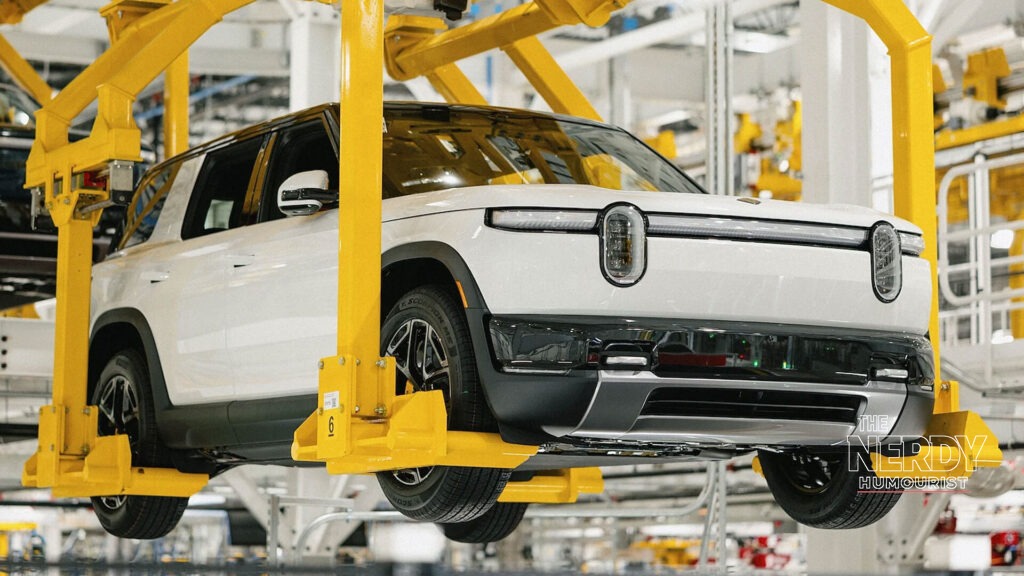
Rivian has secured another $1 billion from its German partner. On October 7, 2026, the electric-vehicle maker announced that its joint venture with Volkswagen Group had fully funded a committed $1 billion, 10-year term loan facility, according to a securities filing reported by Dow Jones Newswires via Morningstar. The Rivian Volkswagen loan deepens the financial ties between the two companies as Rivian ramps up production of its smaller R2 SUV.
The funding arrives at a pivotal moment for the startup. Rivian recently reported third-quarter deliveries of 19,248 vehicles, beating analyst estimates, and has reaffirmed its 2026 delivery guidance — but it continues to burn cash as it scales up R2 manufacturing. The new loan buys the company breathing room without putting new secured debt directly on the parent company’s balance sheet.
How the Rivian Volkswagen loan is structured
The financing is built as a two-step arrangement, as described in filings summarized by Dealroom. First, the Rivian-Volkswagen joint venture borrowed $1 billion from Volkswagen Specter LLC, a Volkswagen financing vehicle, at a fixed 5.93% interest rate under what the parties call Loan A. The joint venture then lent the same sum to a Rivian subsidiary, Rivian JV SPC, LLC, at a fixed 6.03% rate under Loan B. That subsidiary passed the proceeds up to Rivian itself.
The key terms: the facility runs for 10 years and matures on October 7, 2036. Principal repayment does not begin until the third year, with $100 million due annually starting in October 2028, and interest paid semiannually. Loan B can be prepaid without penalty, which triggers an equivalent prepayment of Loan A.
Crucially for Rivian’s balance sheet, the loan is non-recourse to Rivian at the parent-company level — meaning lenders cannot go after the parent company’s assets if the loan defaults — and carries no guarantee from Rivian itself. It is secured by the subsidiary’s 50% equity stake in the joint venture, according to Morningstar.
What the money is for
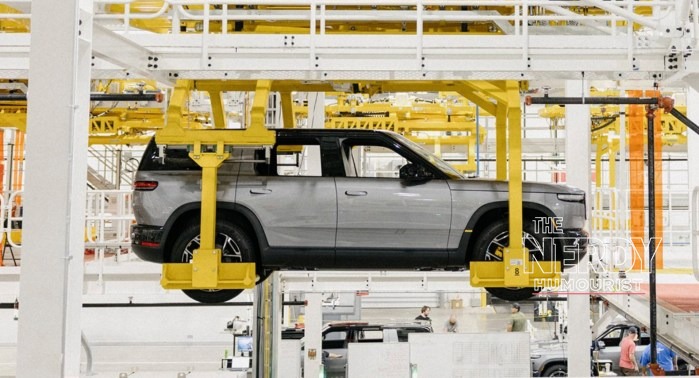
Rivian says it will use the funds for general corporate purposes, according to the SEC filing — a broad designation that covers working capital, manufacturing operations, and the ongoing R2 ramp. The timing is deliberate: the company began reaching customers with the R2, its smaller and more affordable model, this year, and the R2 is the vehicle Rivian is counting on to scale its business beyond early adopters.
The R2’s early days have not been entirely smooth. In September, Rivian launched its largest-ever safety recall, covering 98,828 EVs — including 2,481 R2 crossovers — over a software notification that could block the rearview camera image, as we covered in our Rivian recall report. The company said more than 95% of affected vehicles had already received the fix via an over-the-air update.
Analysts see the loan as helpful but not transformative. With Rivian still burning significant cash quarter after quarter, the $1 billion extends the company’s funding runway while the R2 proves itself in the market — but the debt must eventually be serviced, with repayments starting just as R2 production is expected to scale.
The Rivian Volkswagen loan in the context of the joint venture
The loan is the latest chapter in a partnership that began on June 25, 2024, when the two companies announced plans for a joint venture focused on next-generation vehicle software and electrical architecture. Volkswagen initially committed to invest $5 billion in Rivian, with the capital released as the companies hit milestones; the total commitment has since grown to $5.8 billion, and Volkswagen is now Rivian’s largest shareholder, according to TechCrunch. With this tranche, Volkswagen has put roughly $5.3 billion of that commitment to work, with the remainder expected as equity by January 2028, according to Zacks.
The venture develops the zonal computer architecture — consolidating dozens of electronic control units into a handful of powerful central computers — that will underpin future vehicles from both companies. Volkswagen is betting on Rivian’s software expertise to fix its own well-documented software struggles, and the technology is set to appear in vehicles across the Volkswagen Group. That includes the next-generation Volkswagen ID. Buzz, which will ride on Volkswagen’s Scalable Systems Platform using electronics developed through the Rivian joint venture.
The joint venture’s engineering work continues to advance alongside the financing. Earlier this year, the venture completed a winter testing program for its zonal architecture — a milestone that unlocked a further $1 billion of Volkswagen’s planned investment in Rivian, according to industry coverage.
Frequently asked questions
When did Rivian receive the $1 billion Volkswagen loan?
Rivian announced on October 7, 2026, that the $1 billion committed term loan facility from Volkswagen Group had been funded in full, according to a securities filing. The 10-year facility matures on October 7, 2036.
What are the terms of the Rivian Volkswagen loan?
The facility carries fixed interest rates of 5.93% for the joint venture’s loan and 6.03% for the loan to the Rivian subsidiary. Principal repayment starts in the third year at $100 million annually, with interest paid semiannually. The loan is non-recourse to Rivian’s parent company and is secured by the subsidiary’s 50% stake in the joint venture.
Is the $1 billion a grant or a loan?
It is a loan, not a grant. Rivian will repay the principal plus interest over 10 years. Unlike Volkswagen’s equity investments in Rivian, this tranche is debt — though its non-recourse structure keeps it off the parent company’s secured-debt books.
What is the Volkswagen-Rivian joint venture?
A partnership announced in June 2024 and valued at up to $5.8 billion, focused on developing next-generation vehicle electrical architecture and software for both companies. Volkswagen is Rivian’s largest shareholder, and the venture’s technology will underpin future vehicles across Volkswagen Group brands as well as Rivian’s own models.


Leave a Reply
You must be logged in to post a comment.