
Meta has released Meta Muse Spark Open, an open-weight version of its Muse Spark artificial intelligence model built for coding and agentic AI work, as the company pushes to reclaim ground in a category where Chinese developers have recently dominated. The release, announced Thursday, October 15, 2026, makes the trained parameters of Meta’s most capable open model freely downloadable so developers can adapt and customize them, according to Reuters.
Meta describes Muse Spark Open as its most powerful open-weight model to date, and positions it as a direct answer to leading Chinese open models from Alibaba, Moonshot AI and Z.ai. In an unusual twist, the model is optimized to run locally on Apple’s hardware — specifically pairs of Mac Studio computers powered by Apple’s M5 Ultra chips — signaling a rare collaboration between two of Silicon Valley’s biggest rivals.

Muse Spark Open: key specifications
The model is large by any measure. Meta said Muse Spark Open has 816 billion total parameters, with 42 billion active at a time through a mixture-of-experts design that routes each input to only the most relevant parts of the network. It supports a context window of up to 1 million tokens, putting it in the same class as the largest commercial systems, according to Reuters.
The model is natively multimodal, meaning it can work across text, images and other inputs rather than handling them through bolted-on modules. In a company blog post cited by AFP, Meta said Muse Spark Open was “built for coding and agentic work,” adding that it “excels at long-horizon tasks, complex software engineering, and multi-step reasoning.” The company said “strong safeguards” have been integrated into the new model, though it did not publish details of those protections.
On benchmarks, Meta’s self-reported results target the engineering workloads developers care about. BusinessToday reported that the model scored 76.4 on Terminal-bench 2.1, a software-engineering benchmark, and performed competitively on evaluations such as SciCode and AA-Omniscience. As with all company-reported benchmark claims, independent testing will be needed before the community can judge where it truly stands.
What open-weight means — and why it matters
Unlike closed models such as Anthropic’s Claude or OpenAI’s ChatGPT, where the trained model stays under the creator’s control, open weights are free to download, Reuters reported. Reuters noted that this gives businesses a potentially lower-cost alternative to closed systems and greater control over their own data.
The tradeoff is infrastructure. While open weights are free to download, running a model of this size locally requires serious hardware and technical expertise, Reuters reported. TechRepublic estimated that a compatible Mac configuration for Muse Spark Open — roughly 1TB of unified memory — could cost more than $40,000, making true local deployment a prospect mainly for well-funded teams rather than hobbyists. The model is also available through some API providers, which lowers the bar for developers who want to experiment without buying hardware.
Meta chief executive Mark Zuckerberg has argued that advanced AI should not be concentrated among a small number of companies, Reuters reported — a position that helps explain why Meta keeps publishing open models even as its strategy tilts toward competing with the big closed labs.
The Apple partnership: an AI supercomputer on a desk
The most surprising part of the launch is the hardware story. Meta said Muse Spark Open is “optimized” to run on Apple’s M5 Ultra chips and leverages Apple’s latest MLX framework, which is designed for Apple silicon’s unified memory architecture. Users can run the model across two Mac Studio computers to create what Meta described as a “supercomputer” on their own desktop.
Zuckerberg wrote on X that the model “runs great on new Mac Studios thanks to work” with Apple and its new chief executive, John Ternus. Ternus responded that it was “amazing to run a model of Muse Spark Open’s calibre and scale this efficiently, right from your desk,” adding that “Mac Studio keeps pushing the boundaries of on-device AI,” according to AFP.
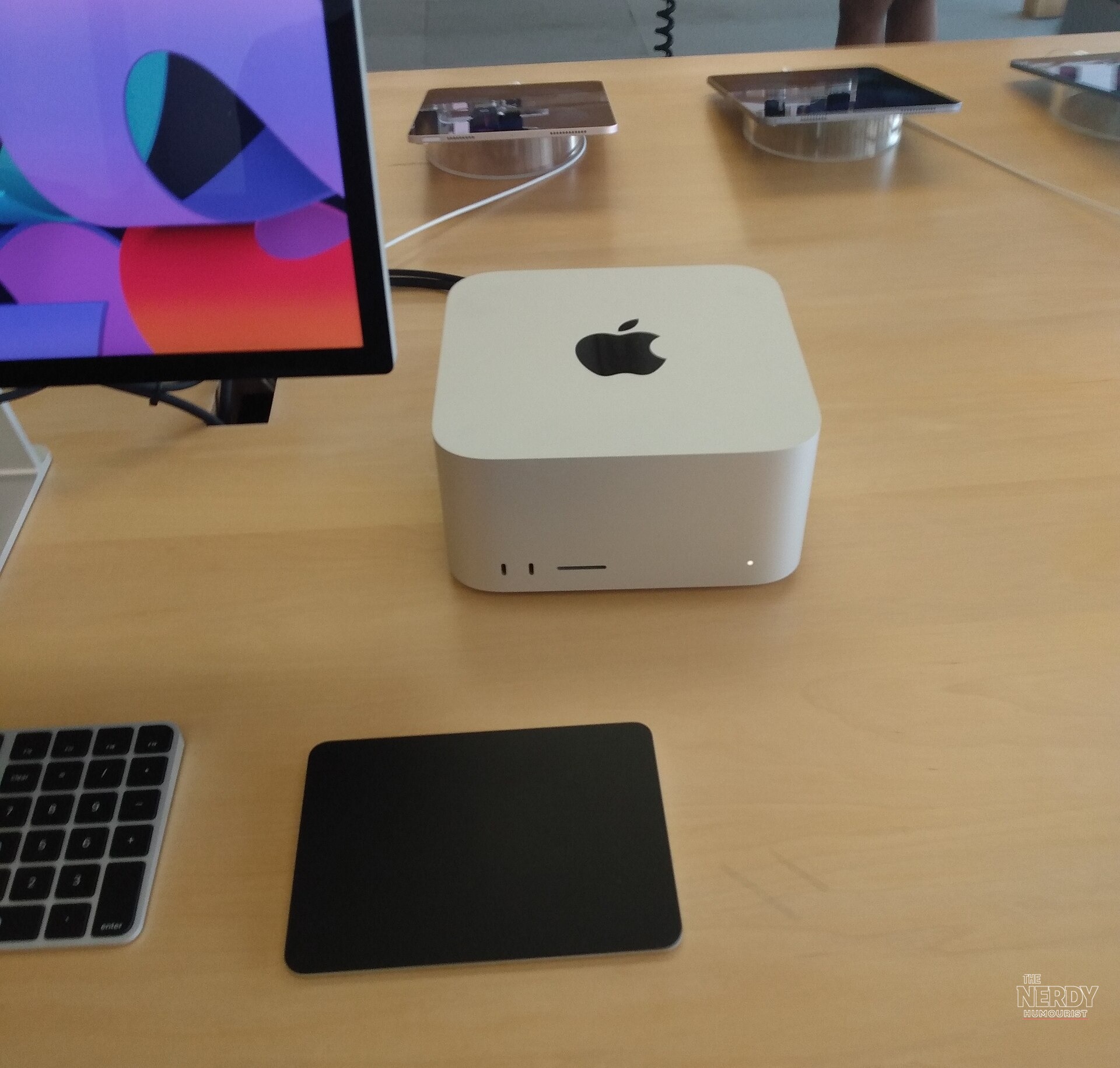
The partnership is notable because Apple and Meta have been rivals on multiple fronts, from privacy standards to mixed-reality headsets. Joint optimization of a frontier-scale model for Apple silicon suggests both companies see high-value desktop AI as a growth market worth cooperating on.
How Muse Spark Open compares to Chinese rivals
Meta framed the launch squarely as a competitive play. Alexandr Wang, Meta’s chief of AI, wrote on X that Muse Spark Open “is the most capable US open-weight model to date.” AFP reported that Chinese developers have become the dominant players in the open-weight market over the past couple of years, with Alibaba’s Qwen, Moonshot AI’s Kimi K3 and Z.ai’s GLM models considered the global frontrunners — but Meta claims its new model now competes at a similar level, and in some cases outperforms them.
The open-model race has real strategic stakes. Open weights let enterprises, researchers and governments build on top of a frontier model without depending on a single vendor — and the country whose models become the default substrate gains influence over the global AI ecosystem. That is part of why a US tech giant publishing its most capable open model is being watched closely in Washington as well as Silicon Valley.
Meta’s two-track AI strategy takes shape
Muse Spark Open arrives just days after Meta unveiled two closed “frontier” models, Wonder and Wonder Full, on October 12, which the company said rival the most advanced versions of ChatGPT and Claude. The one-two punch clarifies Meta’s current strategy: compete with OpenAI and Anthropic at the closed-model frontier while simultaneously fighting the open-weight battle against Chinese labs.
That dual approach marks a shift. Meta’s AI efforts were initially focused on open models, but Zuckerberg has more recently pushed the company to challenge OpenAI and Anthropic head-on. Meta launched the Spark model line in April 2026, a departure from its earlier open-source Llama models, which had lagged the industry. In August, the company released Muse Glimmer, a smaller open-weight model, before stepping up to the full-scale Spark Open release this week.
The broader context is a frantic few weeks in AI: Google opened Gemini 4 Argon to paying customers earlier this month (see our coverage of the Google Gemini 4 Argon launch), and the looming Anthropic IPO — reportedly targeting a valuation above $2 trillion — has put the economics of frontier AI labs under a microscope. Meta’s answer is to cover both ends of the market at once.
Frequently asked questions
What is Meta Muse Spark Open?
Muse Spark Open is an open-weight version of Meta’s Muse Spark AI model, released October 15, 2026, for coding and agentic AI tasks. Developers can download its trained parameters and customize them, according to Reuters.
How big is the Muse Spark Open model?
Meta said the model has 816 billion total parameters — 42 billion active at a time — with a 1-million-token context window, and it is natively multimodal, Reuters reported.
What hardware do you need to run Muse Spark Open?
Meta said the model can run locally across two Apple Mac Studio computers with M5 Ultra chips, effectively a desktop “supercomputer.” TechRepublic estimated a compatible setup could cost more than $40,000; it is also available through some API providers.
How does Muse Spark Open compare to Chinese AI models?
Meta claims it rivals, and in some cases outperforms, leading Chinese open-weight models including Alibaba’s Qwen, Moonshot AI’s Kimi K3 and Z.ai’s GLM — a claim that has yet to be independently verified.


Leave a Reply
You must be logged in to post a comment.