
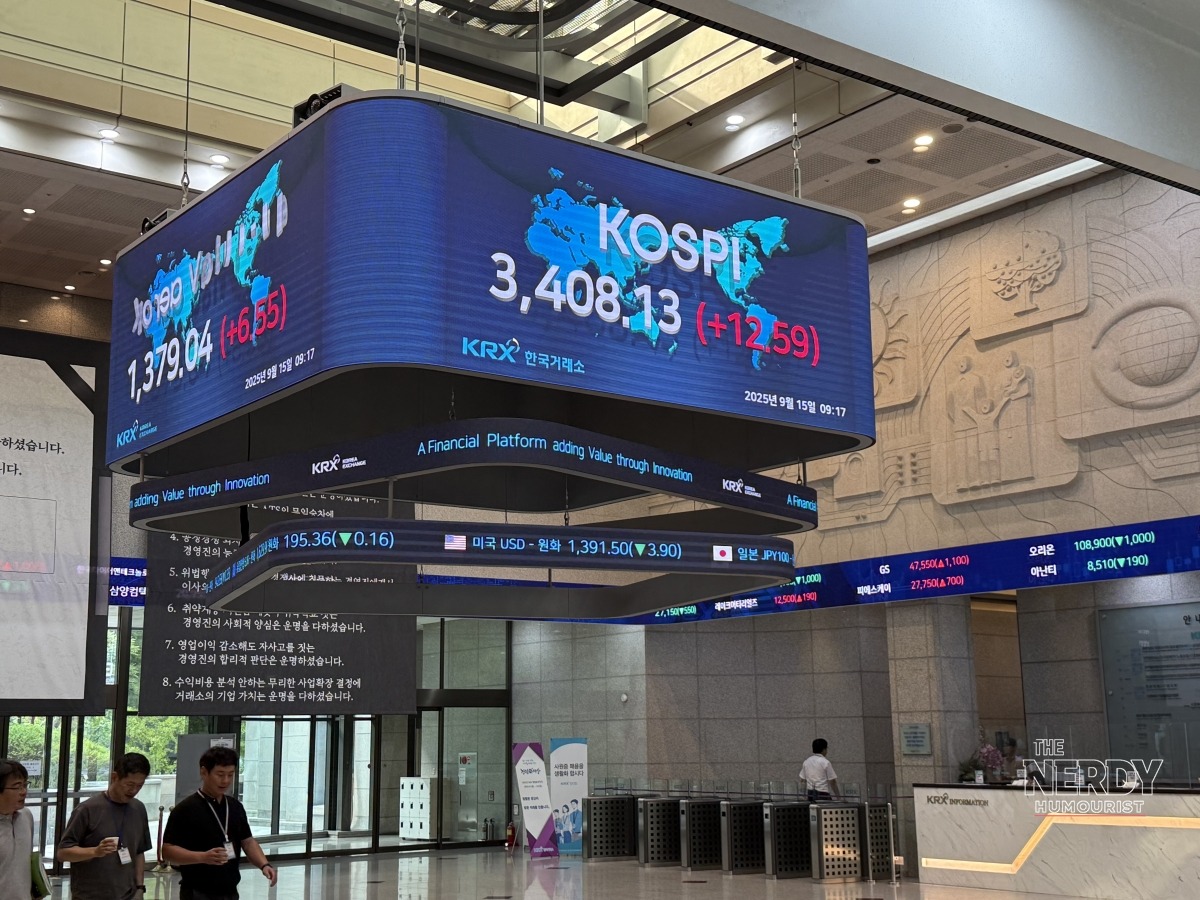
The AI-driven selloff that hammered U.S. tech stocks on Friday jumped the Pacific on Monday, dragging Asian markets sharply lower at the open. South Korea’s KOSPI index fell 3.17% at the open, while Japan’s Nikkei 225 dropped 0.77% — extending the selling pressure on semiconductor and technology shares that began on Wall Street, according to early market coverage from Yonhap News Agency, TradingKey, and BigGo Finance.
The declines continued a brutal sequence for global equities: the Philadelphia Semiconductor Index had just logged its eighth straight decline — its longest losing streak since the 2008 global financial crisis, according to ChosunBiz — as credit concerns around AI data center financing rattled investors.
Seoul: KOSPI opens 3.17% lower, then trims losses
Seoul shares opened sharply lower Monday in the wake of the technology-centered selloff on Wall Street, Yonhap News Agency reported. After opening 3.17% lower at 5,488.41, the benchmark KOSPI briefly broke below the 5,500 level before narrowing its losses, trading down about 1.16% to 1.69% in early morning dealing, according to Yonhap and NoCutNews.
Tech stocks led the decline. Market bellwether Samsung Electronics gave up around 1% and its chipmaking rival SK hynix declined close to 3%, Yonhap reported; in pre-market trading the two had been down more than 3% and 4%, respectively. Top carmaker Hyundai Motor backtracked 1.12% and shipbuilder HD Hyundai Heavy Industries shed 3.7%. Among the gainers, national flag carrier Korean Air rose 1.14% and steelmaker POSCO Holdings climbed 0.51%, Yonhap reported.
The selloff came just one session after the KOSPI had risen 2.05% on Friday, snapping a seven-session losing streak during which it had fallen 6.3%, Yonhap noted.
Retail investors were net sellers of around 380 billion won in early trading, while foreign investors bought a net 160 billion won and institutions bought about 200 billion won, NoCutNews reported. Dip-buying by overseas and local funds helped steady the index after the steep opening drop, ChosunBiz reported.
Tokyo: Nikkei falls as SoftBank and Kioxia slide
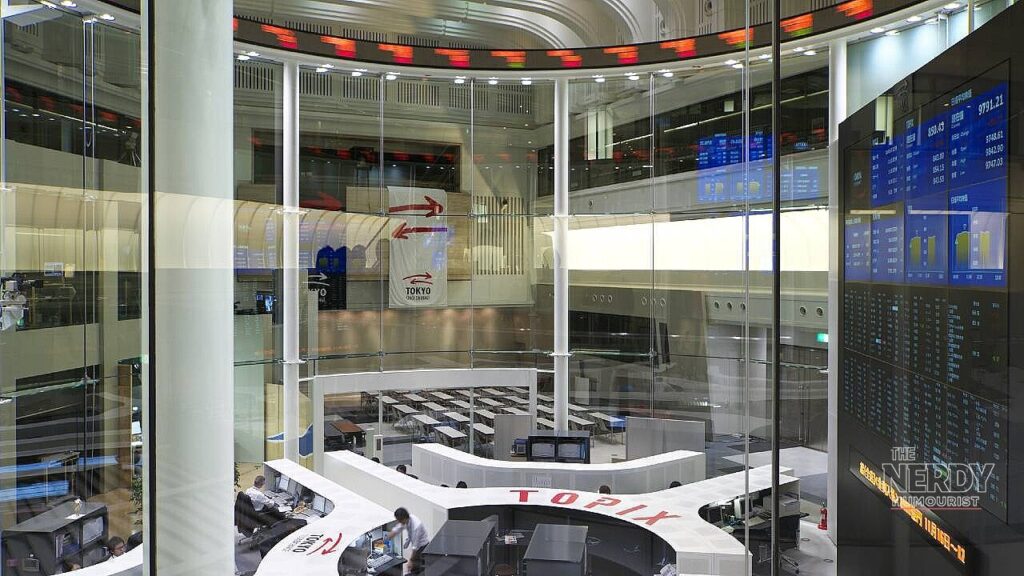
In Japan, the Nikkei 225 opened 0.77% lower at 64,819.56 points and subsequently fell as much as 1.73% to 64,194.90 points, according to TradingKey. SoftBank Group declined 4.43% to 4,725 yen, and chipmaker Kioxia fell 2.58% to 13,030 yen.
The selling was driven by the same forces that toppled Wall Street: U.S. stocks had fallen Friday — the Nasdaq composite plunged 2.15% — largely on heightened concerns over the credit risk of AI data center firm CoreWeave, which fell 11.91% in a single day. Micron, Broadcom, SK hynix’s American depositary receipts, and AMD also slumped sharply on Friday, ChosunBiz reported.
China’s AI supply chain tells a different story
While markets tumbled, China’s A-share artificial intelligence supply chain companies delivered a counter-narrative: a dense cluster of positive third-quarter earnings previews, according to BigGo Finance.
ChangXin Memory Technologies (CXMT) expects a profit of 131 billion to 132.5 billion yuan — approximately $19.6 billion to $19.8 billion — for the first three quarters, swinging to a profit, BigGo Finance reported. Storage, copper-clad laminate, and optical communications companies including Demingli, Shengyi Technology, and Hengtong Optic-Electric all forecast substantial profit increases. CXMT’s chairman also proposed a share buyback of 1 billion to 2 billion yuan, according to BigGo Finance.
Meanwhile, China’s State Council Executive Meeting emphasized deepening and expanding the “AI+” initiative, while the Ministry of Commerce and Ministry of Science and Technology proposed adding 23 AI technologies to the export restriction catalogue for public comment, BigGo Finance reported.
The contrast is striking: while global investors dumped AI-exposed chip stocks on valuation and financing fears, China’s AI supply chain firms reported earnings momentum — a divergence worth watching as the week unfolds.
What analysts are watching
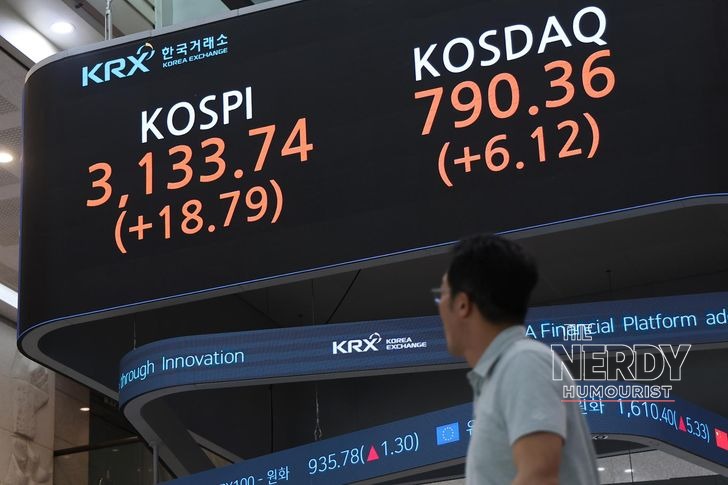
Analysts attribute the correction not to listed companies’ earnings but to funding for the AI investment cycle and a re-rating of valuations, ChosunBiz reported, citing Shin Hyun-yong of Yuanta Securities Korea.
Investors remain cautious ahead of a heavy week: earnings reports from Tesla and Meta are due, as is the November 3 U.S. midterm election backdrop, amid continued uncertainty over the interest rate outlook, analysts told Yonhap. The Korean won traded at 1,334.15 won against the U.S. dollar in early trading.
FAQ
How much did the KOSPI fall on Monday?
The KOSPI opened 3.17% lower at 5,488.41 on Monday, October 19, briefly breaking below 5,500, before trimming losses to around 1.2% in early trading, according to Yonhap and NoCutNews.
Why are Asian markets falling?
The selloff spread from Wall Street’s Friday tech rout — the Nasdaq fell 2.15% — driven by concerns over AI data center financing (centered on CoreWeave’s credit stress), an eight-session losing streak for the Philadelphia Semiconductor Index, and Fed rate-hike fears. Chip stocks SK Hynix, Samsung Electronics, SoftBank, and Kioxia led the Asian declines.
What’s happening with China’s AI stocks?
In contrast to the selloff, China A-share AI supply chain companies posted strong Q3 earnings previews: CXMT swung to a profit of up to 132.5 billion yuan, and firms including Demingli, Shengyi Technology, and Hengtong Optic-Electric forecast big profit increases, according to BigGo Finance.
What could turn the tide?
Big Tech earnings this week — Tesla and Meta report — could reset sentiment around AI valuations, along with the Fed’s October 27–28 rate decision. Dip-buying by foreign and institutional investors already helped steady the KOSPI after its steep open.
Market data cited reflects figures reported for the October 19 Asian session and is not financial advice. Related reading: September CPI and the Fed rate outlook and Fed Chair Warsh’s Bangkok remarks on rate-hike odds. Sources: Yonhap News Agency, TradingKey, BigGo Finance, NoCutNews, ChosunBiz, PANews.


Leave a Reply
You must be logged in to post a comment.