

Honeywell raised its full-year 2026 outlook on Thursday after a third quarter in which adjusted earnings jumped 34% year over year and margins expanded sharply, even as revenue came in a touch below Wall Street’s forecast. The Honeywell Q3 2026 earnings report is the industrial giant’s first quarter as a standalone company, and chief executive Vimal Kapur used it to argue that the post-spin cost structure is working.
Honeywell reported adjusted earnings per share of $2.27 for the quarter, beating the consensus estimate of $2.17 by $0.10, according to FiscalAI data cited by MarketBeat. Revenue was $4.99 billion, just short of the $5.01 billion analysts expected, but up 1.3% from a year earlier. Organic sales grew 7%.
The Numbers That Moved the Guidance
The headline beat was less important than the margin story. Segment margins expanded 370 basis points to 21.3%, and management raised guidance across nearly every metric:
- Sales: now $20.0 billion to $20.1 billion, up from $19.8 billion to $20.0 billion
- Organic sales growth: now 4% to 5%, up from 3% to 4%
- Segment margin: now approximately 20.5%, at the top end of the previous 20.1% to 20.5% range, an expansion of about 290 basis points
- Adjusted EPS: now $8.40 to $8.45, up from $8.05 to $8.35 — a $0.23 increase at the midpoint, representing 30% to 31% growth for the year
- Free cash flow: now approximately $2.1 billion, up from approximately $2.0 billion
For the fourth quarter, Honeywell expects organic sales growth of 5% to 6%, segment margin of approximately 22%, and adjusted EPS of $2.42 to $2.47.
Broad-Based Growth Across All Three Segments

Management described third-quarter performance as broad-based, with growth across all three of the company’s segments. Building Automation grew 8% organically for its eighth consecutive quarter of growth, while Process Automation and Technology (PA&T) also grew 8%.
PA&T is where Honeywell sees a multiyear inflection. The segment carries a backlog of nearly $19 billion, up more than 10% year over year, with strong demand across liquefied natural gas (LNG), refining, petrochemicals and low-carbon energy. Data-centre orders rose more than 100% year over year, as Honeywell sells building automation, process controls, sensing and liquid-cooling products into the AI infrastructure buildout.
Third-quarter free cash flow was approximately $690 million at 95% conversion, and management expects conversion above 100% in the fourth quarter. Gross debt is targeted below $13 billion by year-end, bringing gross leverage below three times earnings — a key milestone in the company’s deleveraging plan.
A Standalone Company, for Real This Time
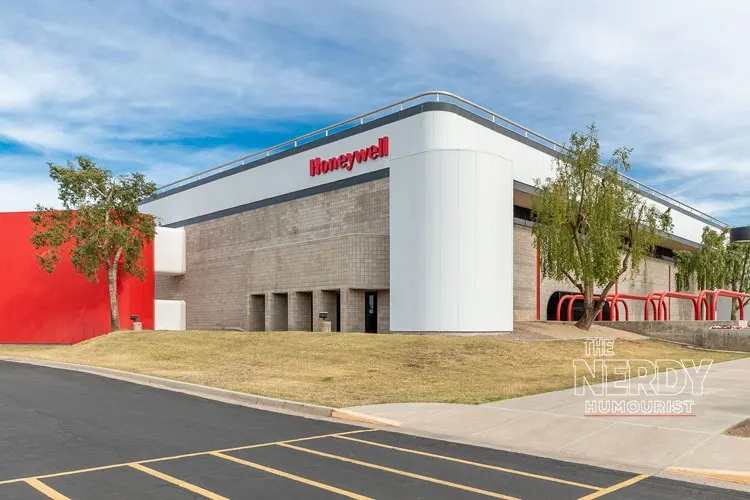
Kapur characterised the quarter as Honeywell’s first as a standalone company, following the separation of its aerospace business. Management linked the results to growth in targeted verticals and continued fixed-cost reductions, which underpinned the decision to raise the outlook.
Debt reduction remains the near-term priority, Kapur said on the earnings call, while disciplined acquisition opportunities could be considered from 2027 onward. He added that Honeywell’s long-term 2029 earnings target of $12 or more per share remains based entirely on organic performance — a pointed message to investors who have questioned whether the industrial conglomerate model can still compound.
The company also expects 2027 organic growth to be at or above its long-term growth algorithm, supported by backlog, short-cycle demand and continued product introductions.
Why Investors Cheered Despite the Revenue Miss
Honeywell’s results were broadly well received, according to market watchers, with the adjusted EPS beat and raised guidance outweighing the slight top-line miss. Investors focused on the 34% jump in adjusted EPS, the margin expansion and improving cash conversion as signals that the post-spin cost structure is working.
The reaction stands in contrast to much of this earnings season, where big technology companies have been punished for heavy AI spending. Honeywell, by contrast, is selling picks and shovels into the AI buildout — cooling, controls and automation for data centres — without the capital-expenditure burden that has weighed on the hyperscalers. Meta, for example, reported negative free cash flow in its latest quarter on $34.91 billion of capital expenditure, a dynamic covered in our earlier report on Meta’s Q3 earnings.
What to Watch Next
Several factors will determine whether Honeywell can sustain the momentum. First, whether data-centre demand keeps growing at triple-digit rates. Second, margin trends in PA&T, where project mix and acquisition dilution have pressured profitability. Third, progress on deleveraging and eliminating stranded costs left over from the separation.
Management also warned that inflation is expected to remain elevated at least into the first half of 2027, making pricing and productivity actions critical to protecting margins. And while the raised guidance assumes continued organic momentum, the company noted that its guidance for segment margin and adjusted EPS uses non-GAAP measures that exclude items it says cannot be reliably predicted.
Frequently Asked Questions
Did Honeywell beat Q3 2026 earnings estimates?
Yes. Honeywell reported adjusted EPS of $2.27, beating the $2.17 consensus estimate by $0.10. Revenue of $4.99 billion was slightly below the $5.01 billion estimate but up 1.3% year over year.
What is Honeywell’s new full-year 2026 guidance?
Sales of $20.0 billion to $20.1 billion, organic growth of 4% to 5%, segment margin of approximately 20.5%, adjusted EPS of $8.40 to $8.45, and free cash flow of approximately $2.1 billion — all raised from prior guidance.
Why did Honeywell raise its outlook?
Management cited broad-based organic growth of 7%, margin expansion of 370 basis points, a nearly $19 billion backlog in Process Automation and Technology, and data-centre orders up more than 100%.
What is Honeywell’s debt plan?
The company targets gross debt below $13 billion by year-end, bringing gross leverage below 3.0 times, with debt reduction the near-term priority before considering acquisitions from 2027.
Sources: Honeywell Technologies Q3 2026 results via Business Wire; MarketBeat earnings coverage (FiscalAI consensus data); Securities.io and Zolmax earnings-call coverage. See also our report on Lockheed Martin’s Q3 earnings and guidance for another industrial earnings story this season. Outbound: Business Wire: Honeywell Technologies reports third quarter results, raises full-year 2026 outlook and MarketBeat: Honeywell issues earnings results.


Leave a Reply
You must be logged in to post a comment.