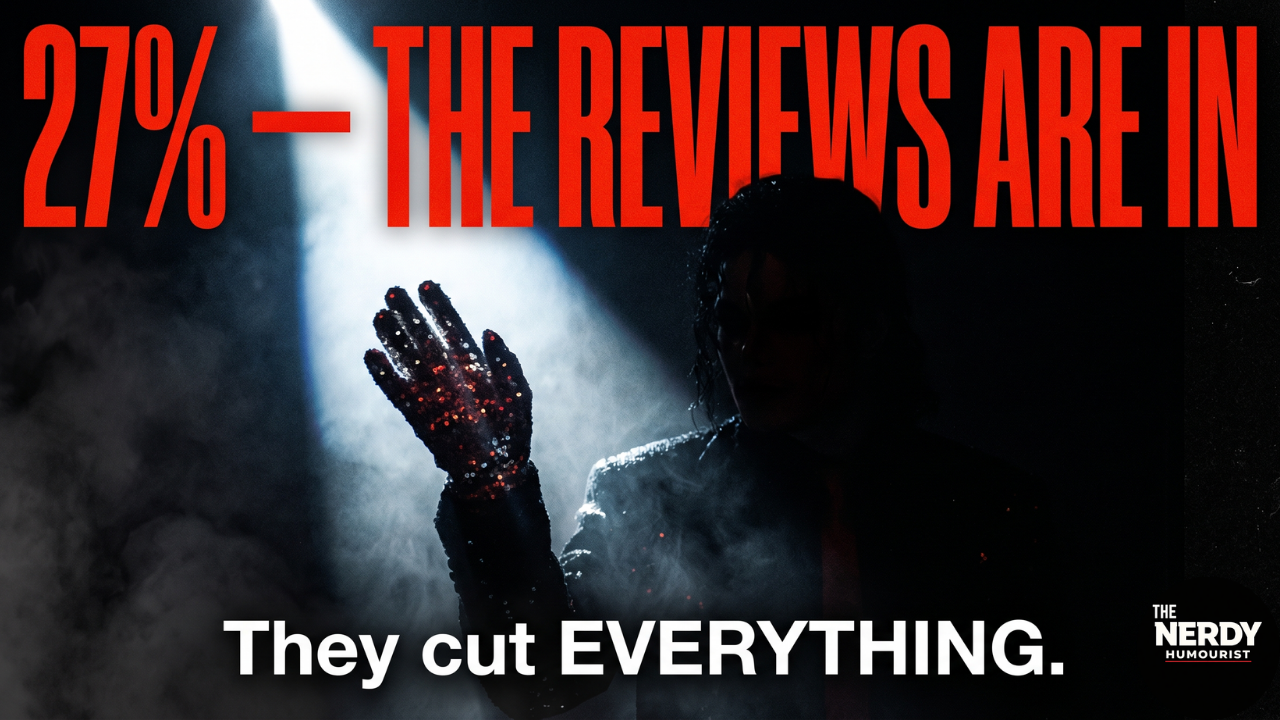
Hollywood gave the King of Pop a $150 million tribute. Critics gave it back 27 cents on the dollar. The Michael Jackson biopic, simply titled Michael, opened in theaters on April 24th, 2026 — and while fans are flooding multiplexes, the critical response has been one of the harshest receptions for a major studio release in recent memory. The debate it’s sparked, though, goes far beyond star ratings.
The Movie
Directed by Antoine Fuqua and written by John Logan, Michael covers the Jackson 5 era through to the singer’s iconic early solo career. Jaafar Jackson — Michael’s actual nephew — leads the film, supported by Nia Long, Miles Teller, and Oscar-winner Colman Domingo. The music is vintage MJ, and by most accounts, Jaafar’s physical performance is genuinely impressive. Deadline
The Problem
The film was reshot to exclude scenes that would have addressed the 1993 sexual abuse allegations against Jackson. Those reshoots cost $15 million. The director has expressed skepticism over the allegations themselves. Janet Jackson does not appear in the film. And Paris Jackson — Michael’s own daughter — has publicly criticized the project. The Washington PostBuzzFeed
What Critics Are Saying
The responses have been withering. Empire called it a “deeply generic music biopic,” The Guardian described a film “rammed with every music-movie cliche,” and The Independent went further, labeling it “a ghoulish, soulless cash grab.” The throughline of nearly every negative review is the same: a film about one of the most complex figures in entertainment history that refuses to acknowledge his complexity. Deadline
The Fan Divide
Audiences are a different story. Early fan screenings produced genuine enthusiasm. The music hits the way it always has. And a built-in global fan base isn’t asking the same questions critics are. The result is a film that may be both a critical embarrassment and a commercial success — a strange kind of Hollywood split screen.
Conclusion
Michael the film is, in many ways, a reflection of Michael the man — carefully controlled, dazzlingly surface-level, and haunted by what it refuses to show you. Whether you see that as reverence or revisionism depends entirely on who you are as a viewer. One thing is not in dispute: the conversation is far from over.