
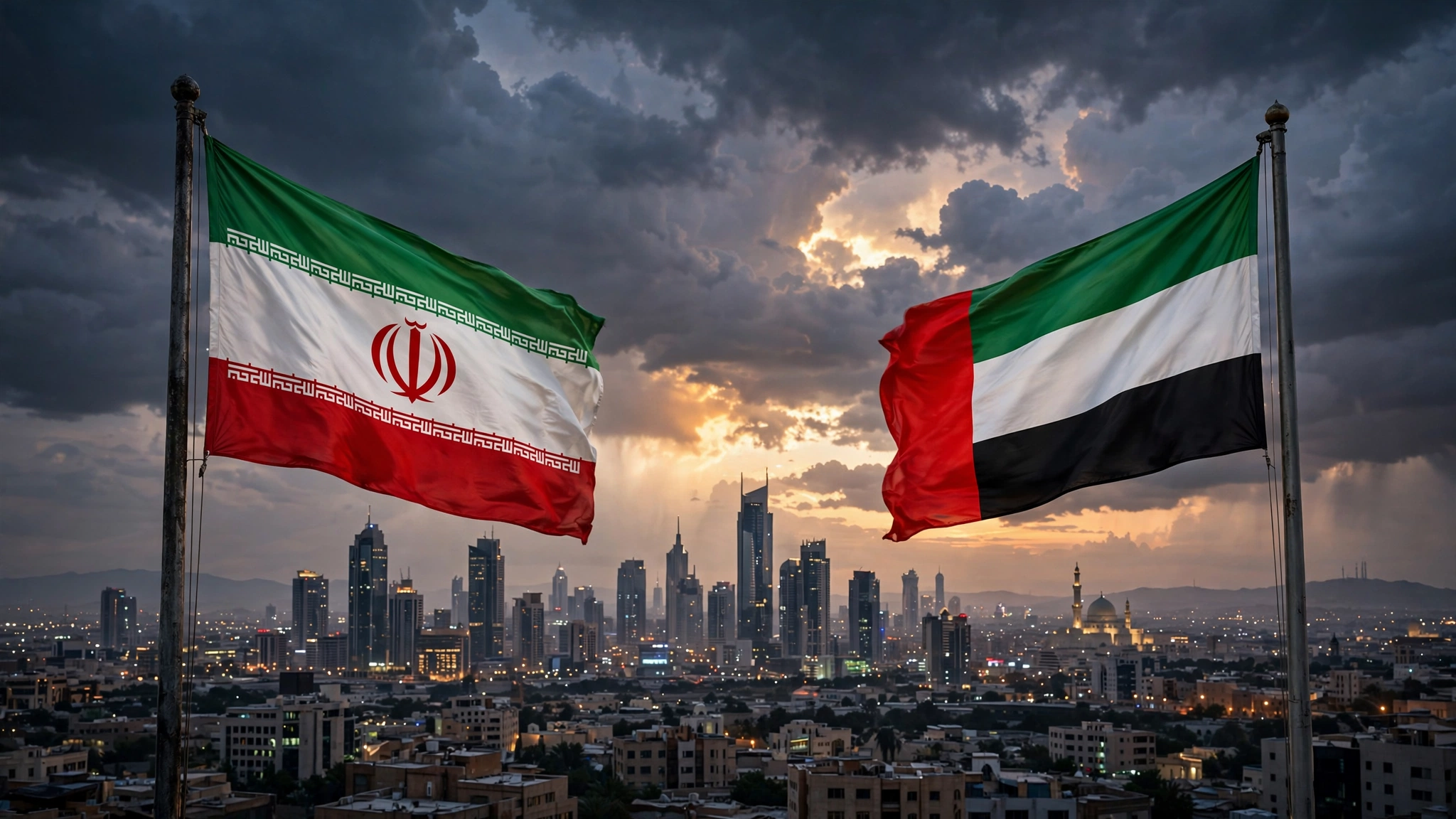
Iran has warned the United Arab Emirates of “highly dangerous consequences” after Israeli Prime Minister Benjamin Netanyahu’s secret visit to Abu Dhabi, sharply condemning the Israeli leader’s meeting with UAE President Sheikh Mohamed bin Zayed Al Nahyan. The warning, issued by Iran’s Foreign Ministry on Tuesday, marks a new escalation in Tehran’s confrontation with Israel and the United States across the Gulf.
Netanyahu made an unannounced one-day trip to Abu Dhabi on Sunday, September 27, to meet Sheikh Mohamed bin Zayed, known as MBZ. Both Israel and the UAE subsequently confirmed the meeting had taken place, with the Emirati state news agency WAM reporting that the two leaders discussed bilateral relations and ways to strengthen them, according to Arab Times.
Iran’s Foreign Ministry strongly condemned the visit and urged countries across the region to remain vigilant over the security risks posed by Israel, calling on regional governments not to allow their territory to be used for actions that could destabilize neighboring countries.
Iran Warns UAE: “Highly Dangerous Consequences”
“The Ministry of Foreign Affairs of the Islamic Republic of Iran strongly condemns the visit of Benjamin Netanyahu, the child-killing and war-mongering Prime Minister of the Zionist regime, to the United Arab Emirates and warns of the highly dangerous consequences of the presence of the occupying regime in the region,” the ministry said in a statement carried by Iranian state media, as reported by the Times of Israel.
The statement continued: “The presence of a criminal whose hands are stained with the blood of hundreds of thousands of innocent people and who is under prosecution by international courts is extremely dangerous and alarming.”
“Regional security is a collective and indivisible matter,” the Iranian Foreign Ministry added, calling on regional governments to “refrain from providing the grounds for the destructive presence of the Zionist regime” and not allow their territories to become a platform for actions against other countries.
A separate warning came from Mohsen Rezaei, secretary of Iran’s Supreme National Security Council, who said in a social media post that hosting Netanyahu would bring no “favorable consequences” and told Emirati officials to “learn from the last war, stop igniting wars,” according to NewsCord.

What Netanyahu and MBZ Discussed
The Israeli Prime Minister’s Office said the visit “focused solely on strengthening relations between the two countries and addressing regional challenges,” rejecting as “fake news” an Associated Press report suggesting otherwise, according to NewsCord.
However, Iranian and Israeli media reports suggest Iran was high on the agenda. Iran International reported that Netanyahu’s talks with Mohammed bin Zayed included the “Iran topic,” and one report — denied by both Saudi Arabia and Jordan — claimed Netanyahu held expanded meetings with senior officials from several Middle Eastern nations, including Saudi Arabia and Jordan, to discuss regional cooperation against Iran.
A senior Saudi official dismissed the reports of any Saudi meeting with Netanyahu, and Jordan also denied them, underscoring how sensitive any public association with Israel remains for Arab governments as the Iran-Israel confrontation intensifies.
Abraham Accords Under Strain
Relations between the UAE and Israel normalized under the U.S.-brokered Abraham Accords in 2020. Since then, the two countries have expanded military and intelligence cooperation, particularly after Iran launched retaliatory strikes against Israel and U.S. military bases and other targets in the Gulf region, as noted by Awani International.
But Tehran has repeatedly accused Gulf countries of facilitating Israeli and American operations against it. In May, Iranian Foreign Minister Abbas Araghchi accused the UAE of being an “active partner” in U.S.-Israeli military action against Iran, an allegation Abu Dhabi rejected, according to Matzav.
The UAE has also denied Western media reports highlighting any firm posture toward Iran or participation in U.S.-Israeli strikes against the Islamic Republic, attempting to balance its Israeli normalization with its need to avoid open conflict with Tehran.
Timing: Regional Tensions at a Boil
Iran’s warning comes as the region sits on a knife’s edge. Brent crude has traded above $100 per barrel as U.S.-Iran negotiations remain unresolved, and earlier this week Israel killed a senior Hamas commander in a Gaza airstrike — an escalation we covered in our report on the Gaza strike.
Netanyahu had warned ahead of the elections that Israel’s enemies could attempt attacks, and that Israel’s “long arm” would reach them anywhere. On September 30, a violent cockpit incident aboard FlyDubai flight FZ1073 — a Dubai-to-Tel Aviv jet that plunged 17,000 feet before making an emergency landing in Saudi Arabia — touched every fault line in the region at once, involving an Emirati airline, Israeli passengers, and a Saudi landing site.
The warning also lands less than a month before Israel’s pivotal election, with Netanyahu’s government under pressure over reports that Arab officials warned him of threats from Gaza before the October 2023 attacks, according to the Foundation for Defense of Democracies.

What Happens Next
Iran has a history of turning such warnings into action. The question now is whether Tehran responds with military moves, proxy escalation, or purely diplomatic pressure. The UAE, for its part, appears determined to maintain both tracks: continued engagement with Israel under the Abraham Accords while denying any role in military action against Iran.
The Biden-to-Trump-era question for Washington is whether U.S. diplomatic cover can keep the Gulf’s fragile balancing act intact. With U.S. forces having just completed their withdrawal from Iraq and negotiations with Iran unresolved, any Iranian retaliation against Gulf states hosting Israeli leaders would arrive at a moment of maximum regional vulnerability.
As Iran’s Foreign Ministry put it, regional security is “collective and indivisible” — and right now, the region looks more divided than it has in years.
FAQ
Why did Iran warn the UAE over Netanyahu’s visit?
Iran’s Foreign Ministry condemned Israeli Prime Minister Benjamin Netanyahu’s September 27 visit to Abu Dhabi, warning of “highly dangerous consequences” from what it called Israel’s destabilizing presence in the Gulf. Tehran accused Israel of repeated threats and military aggression against Iran and urged regional governments not to let their territory be used against other countries.
What did Netanyahu discuss with MBZ?
The Israeli Prime Minister’s Office said the visit focused on strengthening bilateral relations and addressing regional challenges. WAM reported the two leaders discussed ways to expand ties. Iranian and Israeli media reports suggest the “Iran topic” was also on the agenda, though reports of meetings with Saudi and Jordanian officials were denied by all sides.
When did the UAE and Israel normalize relations?
The UAE and Israel established diplomatic relations under the U.S.-brokered Abraham Accords in 2020. The two countries have since expanded economic, military, and intelligence cooperation, a trajectory Iran has repeatedly condemned.
Has Iran threatened the UAE before?
Yes. In May, Iranian Foreign Minister Abbas Araghchi accused the UAE of being an “active partner” in U.S.-Israeli military action against Iran, an allegation Abu Dhabi rejected. Iran has repeatedly warned Gulf states against facilitating Israeli or American operations against it.
Sources: Times of Israel, Hindustan Times, Arab Times, FDD Overnight Brief.

Leave a Reply
You must be logged in to post a comment.