
NASA has a new X-plane, and nobody outside the agency has seen the real thing yet. The NASA X-70 Fractal was unveiled on Wednesday, November 4, at the UP.Summit at Kennedy Space Center in Florida, where NASA Administrator Jared Isaacman introduced it as a crewed, high-performance testbed for flight controls and maneuvering tricks no piloted aircraft has pulled off before. Here’s the odd part: the only picture NASA put out is labeled “generated content.” It’s an AI-made concept image, not a photograph. So the program is real, the numbers are real, but the public hasn’t laid eyes on the actual airplane.
That’s a strange way to meet a new aircraft. It also fits the moment. NASA announced the mission concept first and will show the hardware later — a reversal of how these reveals usually go.
What the NASA X-70 Fractal is built to do
Strip away the mystery and the X-70 is a flying laboratory. Its defining feature is a rapidly reconfigurable flight-control system. Engineers can change how the aircraft responds to the pilot’s inputs between experiments, which lets one airframe test a whole series of control ideas instead of needing a new plane for each one.
“The X-70 Fractal gives NASA a crewed, high-performance platform to test advanced flight-control, maneuverability, and other cutting-edge technologies in real flight,” Isaacman said at the unveiling, according to NASA’s announcement.
The modular design works the same way. NASA says the aircraft can carry up to 2,000 pounds of experimental payloads, mounted internally and externally, and swap them out fast. One week it might fly a new sensor package. The next, a different control system entirely. Isaacman made the point himself: the modular setup lets research teams move quickly between experiments instead of spending months rebuilding the plane.
NASA hasn’t said which technologies will fly first. That’s still open. The agency has not yet identified the specific systems that will be tested on the aircraft’s first missions, so any list you see floating around online is guesswork, not a NASA plan.
The numbers NASA did share
NASA gave out a short spec sheet, and it’s worth reading closely, because it’s all the hard detail anyone has.
Takeoff weight is 10,000 pounds. Cruise speed is Mach 0.75 — roughly 570 miles per hour, or about three-quarters the speed of sound. The ceiling is 45,000 feet, higher than most airliners fly. Range is more than 1,500 nautical miles, about 1,726 statute miles, on an operational mission.
Those numbers tell you what the X-70 isn’t. It isn’t a speed demon. Mach 0.75 is ordinary airline pace. It isn’t a high-altitude spy plane either. What it is, on paper, is a sturdy, mid-size jet with room to spare — built to carry experiments, not to set records. The interesting part lives in the flight controls, not the speedometer.
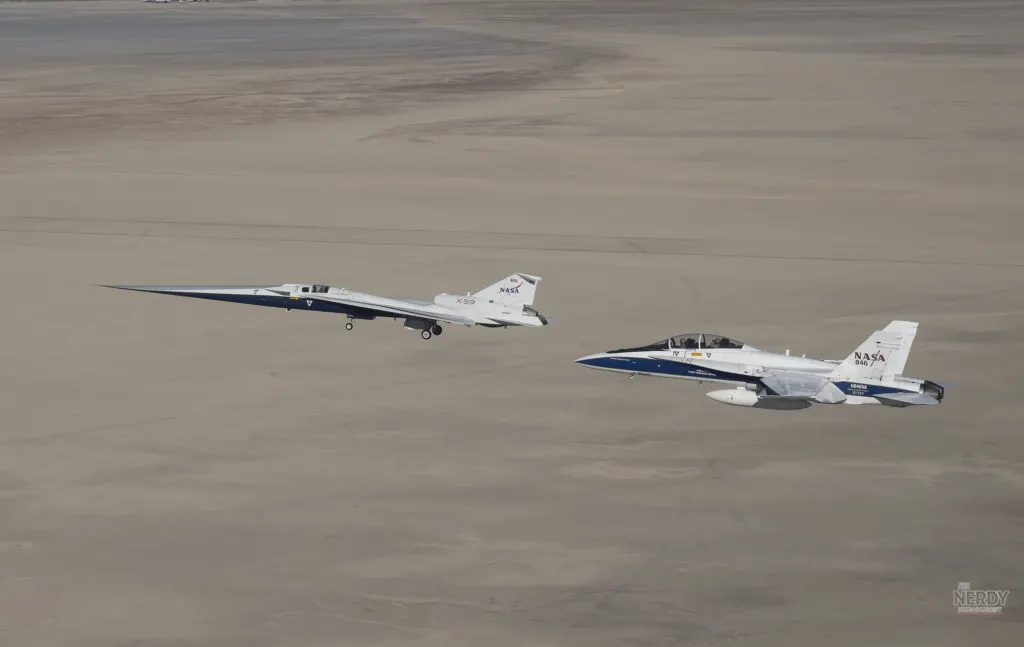
For context, NASA’s other current X-plane just flew. The X-59, the agency’s quiet supersonic research aircraft, made its first flight on October 21, 2026, with an F-15 and an F-18 flying chase. The X-70 is a different animal: subsonic, crewed, and aimed at maneuverability rather than quieting sonic booms.
What NASA isn’t saying yet
The gaps in the announcement are almost as telling as the details.
NASA has not disclosed who is building the X-70. No manufacturer was named, and no contract details were given. The development cost is also undisclosed, as is any detailed flight-test schedule beyond the headline promise: first flight under NASA’s banner within two years.
“We expect her first flight under the NASA banner within the next two years, and X-70 is just one part of this new beginning for aeronautics,” Isaacman said.
That “just one part” line matters. Isaacman, who has made reviving NASA’s X-plane program a top priority since taking over the agency, promised more is coming. “I promise you, there will be more,” he told the UP.Summit audience, according to Aviation Week. The trade publication also reported that another X-plane announcement was expected at the same summit. NASA teased the X-70 itself a week before the reveal, so the agency clearly likes building suspense around this program.
Then there’s the image problem. NASA released a single picture of the X-70: a dark, fighter-jet-like aircraft half-hidden in clouds. TWZ, which covered the announcement, noted the image was described as “generated content.” In plain English, it’s AI art. No real photo of the aircraft exists in public yet, and NASA hasn’t said when one will appear. That leaves a hole in the story no amount of spec-sheet reading can fill. What does the Fractal actually look like? For now, nobody outside NASA knows.

Why the NASA X-70 Fractal matters
The X-plane lineage is the stuff of aviation legend. The Bell X-1 broke the sound barrier in 1947 with Chuck Yeager at the controls. The rocket-powered X-15 touched the edge of space in the 1960s. Dozens of X-planes followed, each one built to answer a single hard question about flight.
NASA’s program had gone quiet in recent years, though. The X-59, which flew for the first time in October, was the first new crewed X-plane in a long while. The X-70 doubles down on the comeback. It’s a signal that Isaacman’s NASA wants to get back to the business of bending metal and flying strange ideas instead of only simulating them.
There’s a practical angle too. Flight-control research done on a crewed testbed feeds straight into the aircraft the rest of us will fly in. The control systems, the handling qualities, the maneuvering limits — all of it eventually shows up in commercial and military designs. A reconfigurable testbed speeds that pipeline up, because researchers can try an idea in real flight within weeks instead of waiting years for a dedicated aircraft.
It also fits a pattern at NASA right now. The agency has been moving fast on aeronautics after years when spaceflight grabbed most of the attention. The X-70 announcement came the same week NASA was dealing with a very different kind of flight problem — the fiery reentry of the Swift telescope, which we covered in our NASA Swift telescope report. One program ends in flames, another takes off. That’s the churn of a working space agency.
What’s next for the X-70
The clock is now running. NASA says the X-70 will fly under its banner within two years, which puts the first flight somewhere before late 2028. No exact date has been announced, and no test schedule has been published.
Watch for three things. First, the manufacturer — somebody built this airplane, and that name will come out eventually. Second, a real photograph, which will tell aviation watchers more than any spec sheet can. Third, the other X-plane Isaacman promised. If the X-70 is just one part of a new beginning, the next reveal won’t be far behind.
Until then, the Fractal stays half in shadow — a real program with real numbers, announced with a picture that isn’t real at all. For a story about the future of flight, that’s a fitting start. And if you’re wondering how fast the tech world moves these days, our report on Apple Intelligence coming to China landed the same week. November 2026 is not a slow news month.
FAQ
What is the NASA X-70 Fractal? It’s a new crewed experimental aircraft NASA unveiled on November 4, 2026. It’s built to test advanced flight-control systems and new maneuvering ideas in real flight, with a modular design that lets researchers swap payloads and control setups quickly.
When will the X-70 fly? NASA expects its first flight under the agency’s banner within two years of the announcement, so before late 2028. No exact date has been given yet.
How fast and how high can the X-70 fly? NASA says it will cruise at Mach 0.75, about 570 mph, reach altitudes up to 45,000 feet, and fly more than 1,500 nautical miles. It weighs 10,000 pounds at takeoff and can carry up to 2,000 pounds of experimental payloads.
Is there a real photo of the X-70? No. The only image NASA released is an AI-generated concept picture, labeled “generated content.” No real photograph of the aircraft has been made public, and NASA hasn’t said when one will be.
Who is building the X-70, and what does it cost? NASA hasn’t said. The manufacturer, the development cost and the detailed flight-test schedule are all still undisclosed.