The Cybertruck is on its way out. Tesla Cybertruck production ending is now official, more or less: CEO Elon Musk announced on X on Friday, November 6, that Tesla will wind down production of the electric pickup at Gigafactory Texas around the middle of next year, to make room for increased production of the Cybercab, the company’s driverless robotaxi. Three years after deliveries began, the most talked-about truck in America is being pushed aside for a car with no steering wheel.
“Tesla will be winding down production of the Cybertruck at Gigafactory Texas around the middle of next year to make room for increased Cybercab production,” Musk wrote.
One sentence. That was the whole announcement. No press release, no earnings-call slide, no follow-up from Tesla’s communications team. Just a Friday post on X, and the auto world spent the weekend picking it apart.
What Musk actually said — and what he didn’t
Read the sentence again, slowly, because the wording leaves a lot open.
Musk said “winding down,” not “ending.” That suggests a taper, not a single day when the line stops. He said “around the middle of next year,” which is a window, not a date. And he said the wind-down applies to Gigafactory Texas, the truck’s only production site. He did not say whether Cybertruck production stops entirely or moves to another plant. He didn’t say anything about outstanding orders, or about parts and service for the trucks already on the road. Tesla hasn’t responded to requests for comment on any of that.
So here’s where things stand: the Cybertruck’s days at its Austin factory are numbered, with the end landing somewhere around mid-2027. Everything past that is unconfirmed.
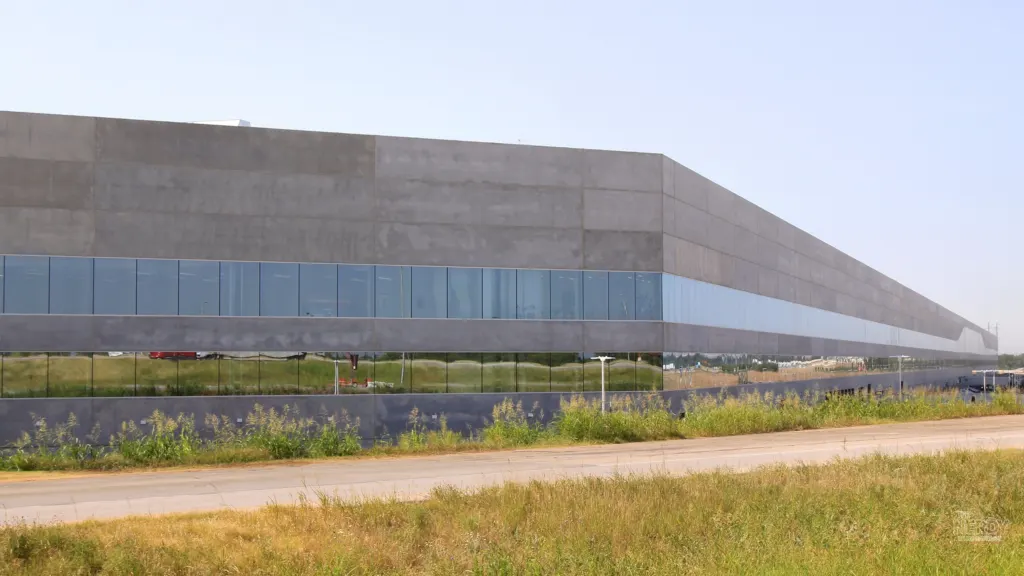
The one thing Musk was clear about is the reason. The factory floor is needed for the Cybercab. Gigafactory Texas has more than 10 million square feet of floor space, and the Cybertruck line has been running at a fraction of its installed capacity. Electrek estimates Tesla is moving around 30,000 Cybertrucks a year on a line built for 250,000. That empty space is the whole story. Tesla would rather fill it with robotaxis.
Cybertruck lead engineer Wes Morrill chimed in online after Musk’s post, saying the truck “lives on through Cybercab.” It’s a graceful line. It also reads like a goodbye.

The sales slide behind the Tesla Cybertruck production ending
Musk’s post didn’t mention sales. It didn’t have to. The numbers have been brutal for a while.
Cybertruck sales in the US are down 28% so far in 2026, according to data from Cox Automotive. Tesla has sold fewer than 73,000 Cybertrucks since deliveries began in late 2023, according to Motor Intelligence. Put that next to Ford, which sold roughly the same number of F-Series trucks in October alone, and the scale of the miss comes into focus. New Atlas reported just 1,914 Cybertrucks registered in the US in October.
The truck also never lived up to its own hype. Musk once projected 250,000 Cybertrucks a year. The launch price landed well above the $39,900 he promised back in 2019. And the truck has been hit with at least six recalls for quality and safety issues, according to s2n.news — a steady drip of bad headlines for a vehicle that was supposed to be indestructible.
This wasn’t a sudden collapse. Musk hinted at the direction back in January, telling investors on Tesla’s earnings call that the Cybertruck might be heading for an autonomous, commercial future. “We will transition the Cybertruck line to just a fully autonomous vehicle,” he said then, according to USA Today. Friday’s post is that idea, made real. The Drive covered the same announcement under a headline calling it the Cybertruck’s death so the Cybercab can live.
For the wider picture on how the whole US market is doing right now, see our report on October 2026 US auto sales — the slowest pace since January.
What replaces it: the Cybercab
The Cybercab is the bet Musk is making instead. Tesla unveiled the two-seat robotaxi in October 2024: a gold, wedge-shaped pod with no steering wheel, no pedals and no mirrors. Tesla started building it in April 2026, according to Yanko Design. Documents Tesla filed with the US Environmental Protection Agency in May show it will be all-wheel drive with 219 horsepower.
Here’s the catch. The Cybercab has sold nothing yet. It has no announced production target and no federal approval for autonomous operation. It’s already facing two reviews from the National Highway Traffic Safety Administration. Musk is trading a truck that sells poorly for a robotaxi that hasn’t proven it can sell at all — or drive itself at scale without a human backup.
That trade makes sense only if you believe Musk’s bigger claim: that the future of Tesla is robots, not cars. The Cybercab is the centerpiece of that claim. Tesla is also expanding its Robotaxi service, and the Cybercab is meant to be the purpose-built vehicle for it — cheaper to build than a retrofitted Model Y, designed purely to carry passengers and nothing else.
Whether the bet pays off is an open question. What isn’t open is the factory math. Tesla needs the floor space, and the Cybertruck wasn’t using it.
Tesla Cybertruck production ending: what Tesla looks like after the truck
Once the Cybertruck line winds down, Tesla’s lineup gets very thin. The company would be left with just the Model 3 and Model Y as cars a human actually drives. The Roadster, which Tesla unveiled again last month with cold-gas thrusters and deposits of $50,000 for the Performance version and $250,000 for the Thrust version, is slated for production in 2028 — and Tesla’s own reservation agreement says it can’t guarantee when, or if, the car will be delivered.
That’s a strange lineup for a company that was, until recently, the world’s most valuable automaker. Two sedans, a robotaxi that isn’t selling yet, and a supercar with a maybe-delivery date. The Cybertruck was supposed to be the third leg of the stool. Instead it lasted three model years and under 73,000 sales.
The timing also lines up with a rough year for electric cars in America. US EV sales hit 725,888 in the first nine months of 2026, down 30% year over year. The $7,500 federal EV tax credit was eliminated, pulling the rug out from under buyers. Every EV maker is feeling it — GM just recalled more than 67,000 Cadillac and Chevy EVs over brake software, as we covered in our GM recall report. But Tesla’s Cybertruck problem is specific: a polarizing truck, priced above its promise, selling a fraction of its target, on a line built for ten times the volume.
The end of an era, or just a factory shuffle?
Maybe the Cybertruck isn’t dead. Maybe production moves somewhere else, or the truck comes back as a fully autonomous commercial vehicle, the way Musk hinted in January. Tesla hasn’t said, and nobody outside the company knows.
What we do know is this: the stainless-steel wedge that dominated auto headlines for five years is being wound down at the only factory that builds it, to make room for a robotaxi with no steering wheel. The Cybertruck arrived as the future of the pickup. It leaves as a lesson in what happens when the future doesn’t sell.
FAQ
When will Tesla stop building the Cybertruck? Musk says production at Gigafactory Texas will wind down around the middle of 2027. There’s no firm end date, and he hasn’t said whether production stops entirely or moves to another plant.
Why is Tesla Cybertruck production ending? Sales fell 28% in the US so far in 2026, according to Cox Automotive, and total sales are under 73,000 since late 2023. Tesla needs the factory floor for the Cybercab, its driverless robotaxi.
What is the Cybercab? It’s Tesla’s purpose-built robotaxi: a two-seat, gold-colored car with no steering wheel, pedals or mirrors. It was unveiled in October 2024 and Tesla started building it in April 2026. It hasn’t entered mass production yet and has no federal autonomous-vehicle approval.
What cars will Tesla still sell after the Cybertruck? Just the Model 3 and Model Y as human-driven cars. The Roadster is slated for production in 2028, though Tesla says it can’t guarantee when, or if, it will be delivered.