
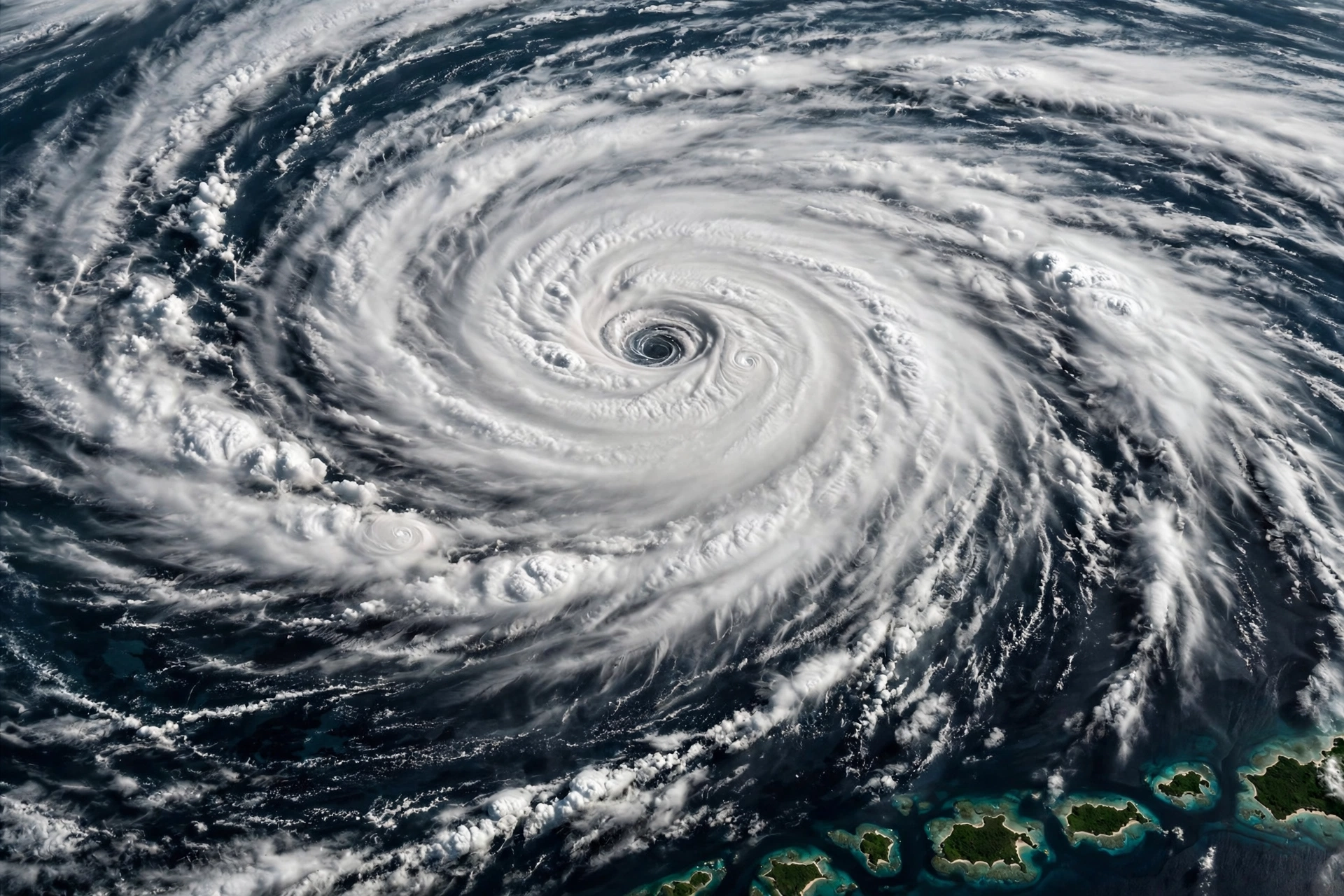
The Hurricane Nolo Hawaii forecast has turned urgent: the Category 2 storm is churning slowly south of the Big Island, threatening powerful winds and dangerous flash flooding across the islands through Sunday. Forecasters warn that even though Nolo’s center is expected to stay offshore, tropical storm conditions are already underway across the islands — with the potential for catastrophic flooding, damaging winds and extreme surf through Sunday, USA Today reported on September 26.
At 8 a.m. Hawaii time (2 p.m. ET) on Saturday, Nolo was centered about 145 miles south of the southern tip of the Big Island, with maximum sustained winds of 110 mph, according to the National Hurricane Center. Hurricane-force winds extended outward up to 45 miles from the center, and tropical storm-force winds reached as far as 140 miles. A separate AFP report put winds at 105 mph (165 kph), with the storm slowly strengthening as it moves through the weekend.
“Don’t venture out if you don’t have to into the dangerous flooding environment, but also high winds. We can have trees and power lines down,” Michael Brennan, director of the National Hurricane Center, said Friday.
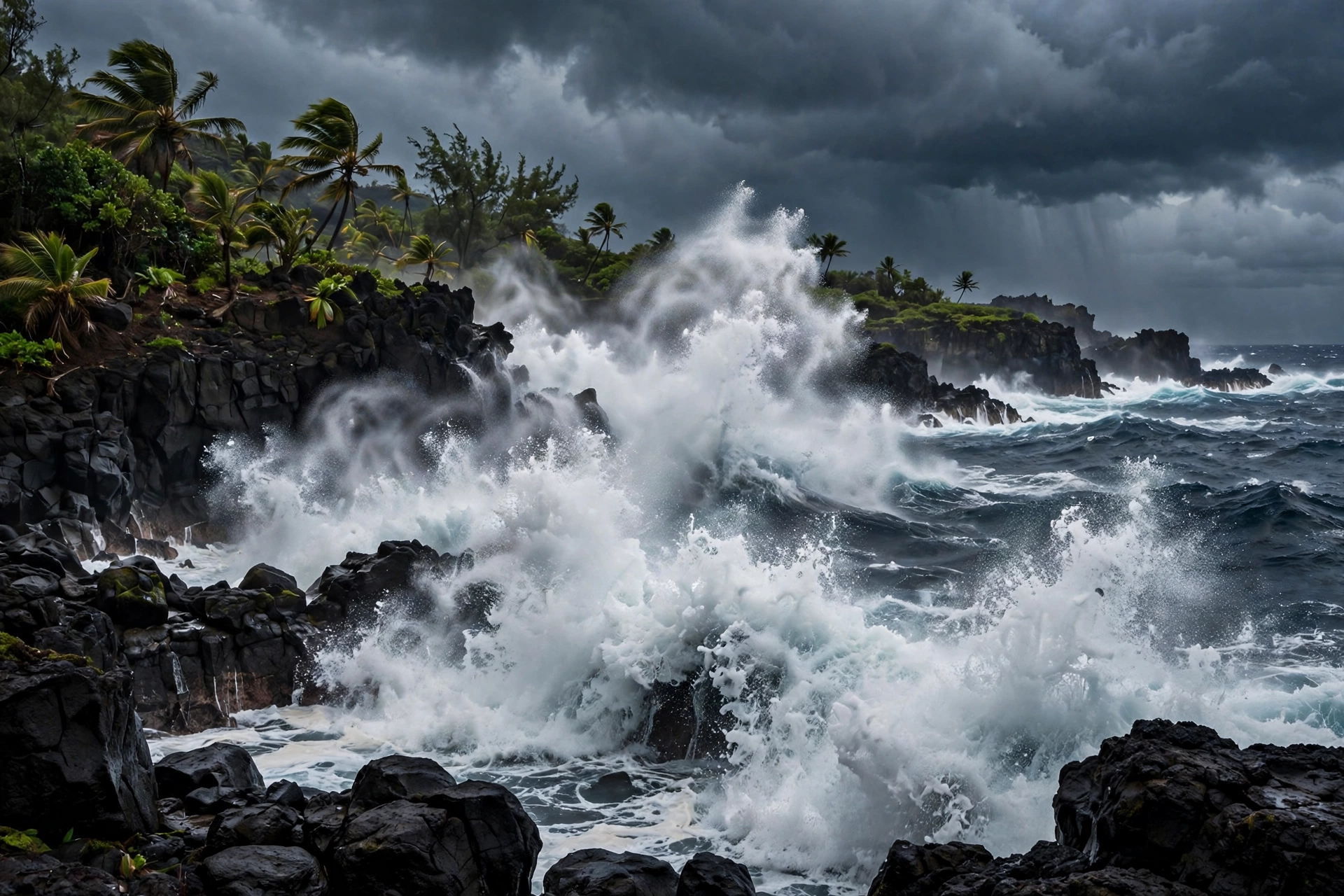
Where Hurricane Nolo Is Now and Where It’s Headed
Hurricane Nolo has been described by forecasters as “meandering” — nearly stationary early Saturday south of the Big Island. Later in the day and on September 27, the storm is expected to advance westward, pick up speed, and eventually turn north. It is forecast to continue strengthening, possibly reaching major hurricane status as it passes the islands.
“On the forecast track, the center of Nolo will remain well south and southwest of the main Hawaiian Islands,” the hurricane center said. “Regardless of the exact track of Nolo, strong and gusty winds are possible for all of the Hawaiian Islands through the weekend.”
A hurricane watch and tropical storm warning were in effect for Hawaii County (the Big Island), while Maui County was under a tropical storm watch. Tropical storm conditions were already underway on Saturday, and forecasters said hurricane-force gusts could still be felt even without a direct landfall.
Flash Flooding Is the Biggest Danger From Hurricane Nolo
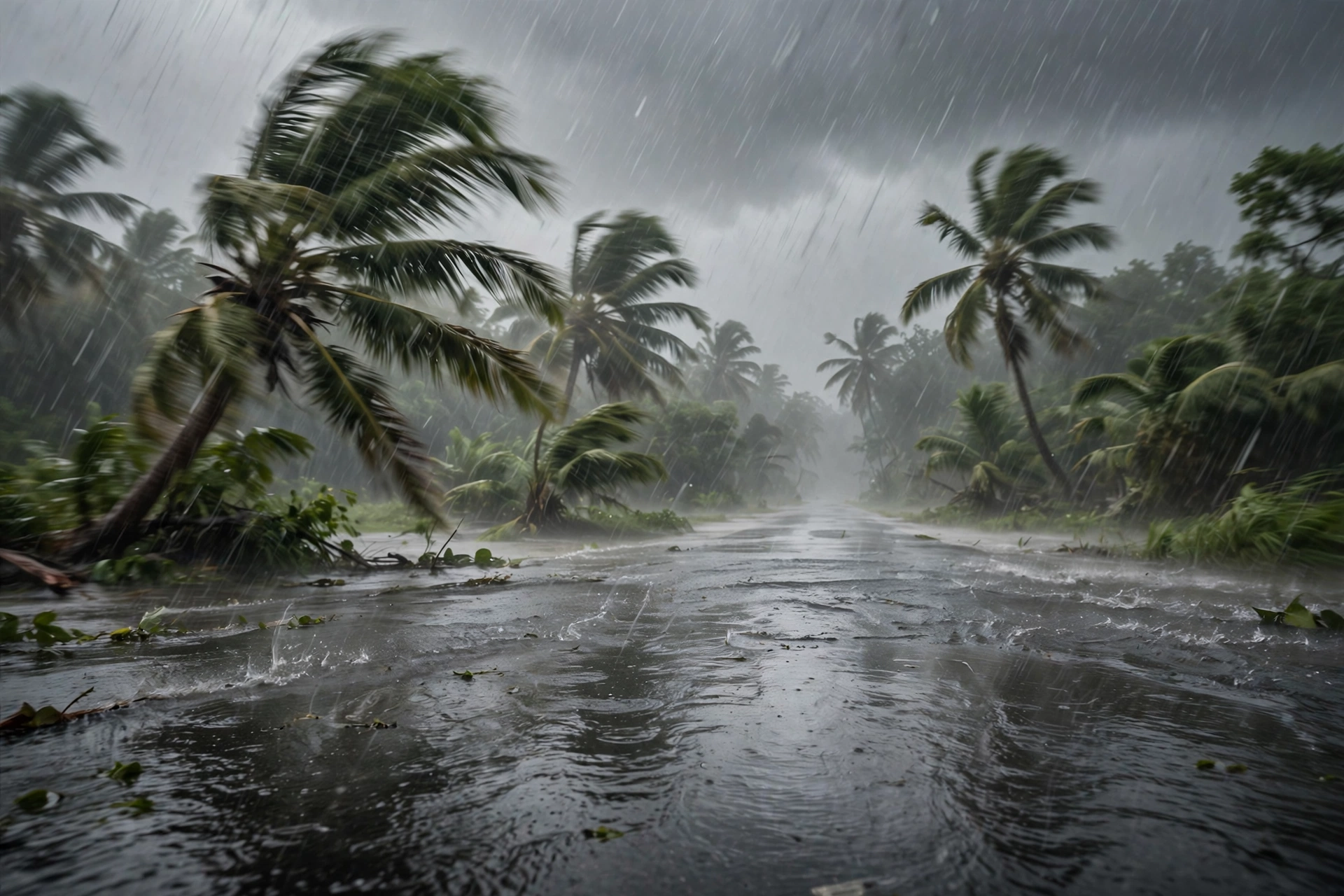
Water, not wind, is what has officials most worried. Several inches of rain had already fallen across eastern and southern parts of the Big Island by Saturday, and forecasters expect an additional 4 to 8 inches — with isolated amounts up to 10 inches — bringing storm totals to 10 to 20 inches, with maximum amounts of 25 inches, according to the hurricane center.
“Life-threatening, catastrophic flooding and mudslides are possible, especially in areas of steep terrain across the eastern and southern portions of the Big Island and Maui,” the hurricane center warned. Heavy rainfall is also expected on Hawaii’s other islands. Surf is another concern: east and southeast-facing shores of the Big Island, Maui and Molokai could see 10-to-14-foot breaking waves, accompanied by dangerous currents.
The flooding risk is compounded by what came before. Residents are still recovering from August’s Hurricane Lala, which produced heavy rain and winds strong enough to sweep around 100 homes off their foundations on the Big Island. The humanitarian nonprofit group CORE and other partners spent the week packing and shipping supplies — camp stoves, hygiene products and more — by air cargo from Oahu to the Big Island for a community relief hub that has been active since Lala, according to the AFP.
Hawaii Braces: Emergency Declaration, Guard Activated
President Donald Trump on Friday approved an emergency declaration for the state of Hawaii, authorizing the Federal Emergency Management Agency to coordinate assistance from across the federal government and provide funding support for emergency measures, the AFP reported.
Governor Josh Green issued an emergency proclamation and activated hundreds of Hawaii National Guard members. “This has been a season of big storms,” Green said. “We will rebuild whatever damage we experience, but I want everyone to shelter carefully with those that they love.”
State officials urged residents to assemble emergency kits. Hawaii County officials on the Big Island were urging residents in flood-prone areas to consider taking refuge at shelters being set up or other locations. Hawaiian Electric, the state’s primary utility, said crews that had been helping restore power on Kauai after this month’s Hurricane Lowell returned to Oahu, Maui and the Big Island in preparation for the storm.
Travel is also feeling the impact: Delta Air Lines issued a travel waiver covering Honolulu, Kahului on Maui and Kona on the Big Island for flights scheduled on September 26-27, and American Airlines issued a weather waiver covering Honolulu, Kahului, Kona and Lihue, allowing eligible travelers to change flights without a change fee.
A Historic Pacific Season: Polo and Odalys Join Nolo
Hurricane Nolo is not churning alone. The Pacific is in the grip of an extraordinary stretch: Category 4 Hurricane Polo, with winds of 145 to 155 mph, is heading toward Mexico’s Baja California peninsula, expected to make landfall Monday after bringing storm conditions to the southwestern coast, while Category 3 Hurricane Odalys spins in the open Pacific far from land.
This is only the third time in recorded history that three hurricanes, each with wind speeds of at least 105 mph, have been active at the same time in the region, said Philip Klotzbach, a senior research scientist with the Department of Atmospheric Science at Colorado State University. The only other times were August 16, 1993 (Keoni, Fernanda and Greg) and August 29-31, 2015 (Kilo, Ignacio and Jimena). Forecasters partly attribute the busy 2026 season to El Niño, which has created favorable low wind shear conditions and very warm water.
Polo’s remnants could even reach the United States early next week: the National Hurricane Center said distant moisture from Polo and Odalys may be transported into the southwestern US this weekend and early next week, potentially contributing to a heavy rainfall and flash flood threat in New Mexico and Texas.
Hurricane Nolo Hawaii: FAQs
Q: Will Hurricane Nolo make landfall in Hawaii?
A: The forecast track keeps Nolo’s center well south and southwest of the main Hawaiian Islands, with no direct landfall expected. However, the National Hurricane Center warns that tropical storm conditions are already underway and hurricane-force gusts, heavy rain and dangerous surf are affecting the islands regardless of the exact track.
Q: How much rain will Hurricane Nolo bring to Hawaii?
A: Storm totals of 10 to 20 inches are expected across eastern and southern parts of the Big Island, with maximum amounts of 25 inches. Heavy rainfall is also expected on Maui and the other islands, with forecasters warning of life-threatening flash flooding and mudslides, especially in steep terrain.
Q: What emergency measures are in place for Hurricane Nolo?
A: President Trump approved a federal emergency declaration on Friday, authorizing FEMA coordination and funding. Governor Josh Green issued an emergency proclamation, activated hundreds of Hawaii National Guard members, and counties have opened shelters in flood-prone areas. A hurricane watch and tropical storm warning are in effect for Hawaii County; Maui County is under a tropical storm watch.
Q: Why is this Pacific hurricane season considered historic?
A: Hurricanes Nolo, Polo and Odalys are active simultaneously — only the third time on record that three hurricanes of at least 105 mph have churned at once in the region, according to Colorado State University researcher Philip Klotzbach. The busy 2026 season is partly attributed to El Niño conditions.

[…] Hormuz proposal is off the table — declaring that he had rejected an Iranian offer to reopen the Strait of Hormuz and end fighting in the Middle East. The proposal, which Tehran says it announced at the UN General […]