
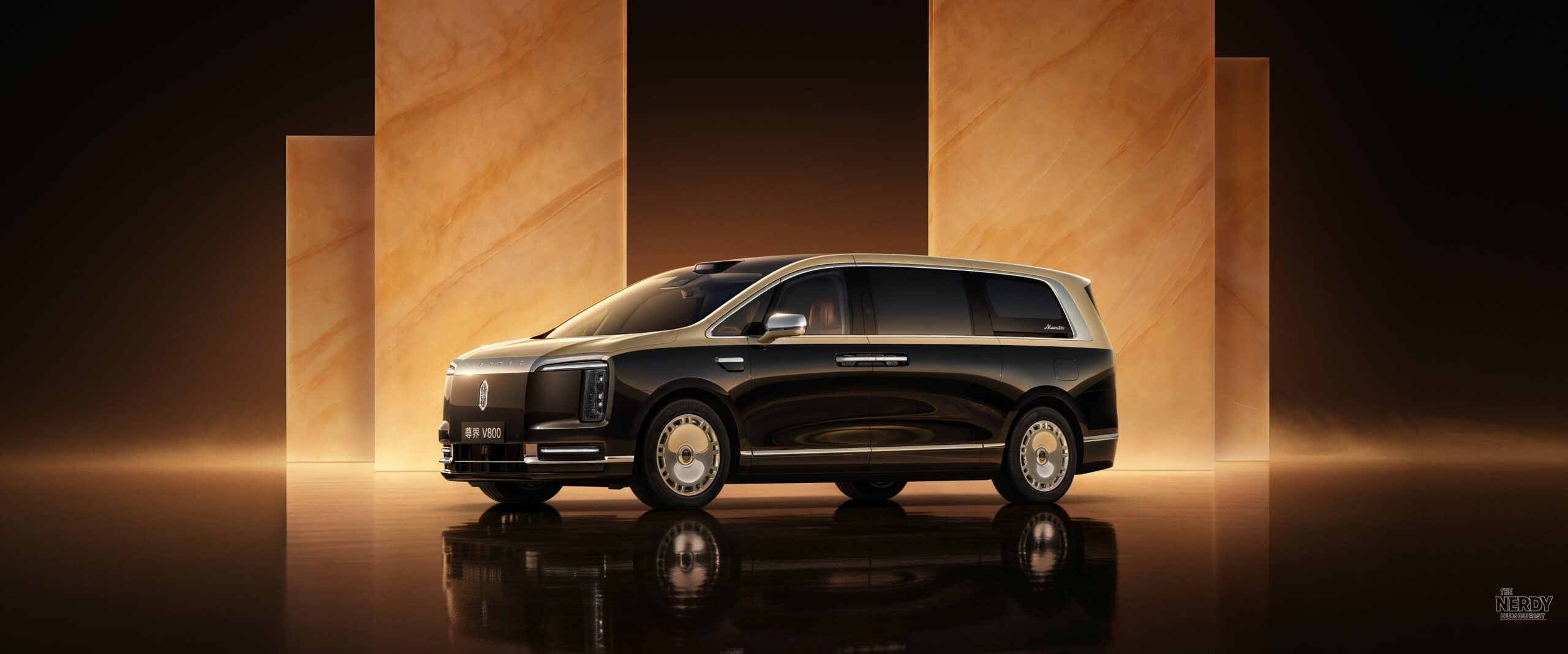
Beijing has opened a joint investigation into reports that brake pedals on Maextro’s flagship V800 luxury electric MPV failed during independent testing, the most serious safety test yet for the Huawei-backed brand’s premium ambitions. The Maextro brake pedal probe brings together three ministry-level regulators and lands as China’s car market suffers its steepest sales slump in years.
The Ministry of Industry and Information Technology (MIIT) said on Thursday that it had formed a joint investigation team with the Cyberspace Administration of China (CAC) and the State Administration for Market Regulation (SAMR) to verify the facts behind reports of brake pedal failures in tests of an electric vehicle made by the Huawei Technologies-backed Maextro luxury brand, according to the South China Morning Post.
What triggered the Maextro brake pedal probe
On October 8, ByteDance-owned car-information platform Dongchedi released a video showing that brake-pedal brackets snapped on all three Maextro V800 multipurpose vehicles used in a test of emergency braking from 100 km/h, the SCMP reported. The clip went viral across Chinese social media, and Communist Party mouthpiece People’s Daily said in a Sunday commentary that the incident underscored the importance of strengthened oversight over the country’s “rapidly developed” EVs.

Beijing’s top internet watchdog has a specific role in the probe. Independent analyst Gao Shen told the SCMP that the CAC would be responsible for sifting out misinformation about the matter online that could taint the reputation of Chinese carmakers, adding that consumers would be eager to see the truth amid the regulators’ heightened investigation efforts. The MIIT said the three ministry-level authorities “have paid close attention to the issue” and that relevant information would be released in a timely manner.
How Maextro and JAC responded
Maextro, jointly developed by Huawei and JAC and based in eastern China’s Anhui province, said in a Thursday statement that it would fully cooperate with the investigation team to safeguard consumers’ interests and support the development of China’s EV industry, according to the SCMP. On Sunday, the brand said it would address the brake pedal issue by the end of October. JAC assembles Maextro vehicles, while Huawei, through its Harmony Intelligent Mobility Alliance, supplies technology for smart driving and digital cockpits, the SCMP reported.
Separately, Maextro has disputed the testing conditions as extreme and outside normal operating requirements, according to TienCars, and said no similar failures had been reported in actual customer use since deliveries began. The brand pledged to improve the bracket design, offer existing owners a free upgrade, and review its testing procedures and production quality controls.
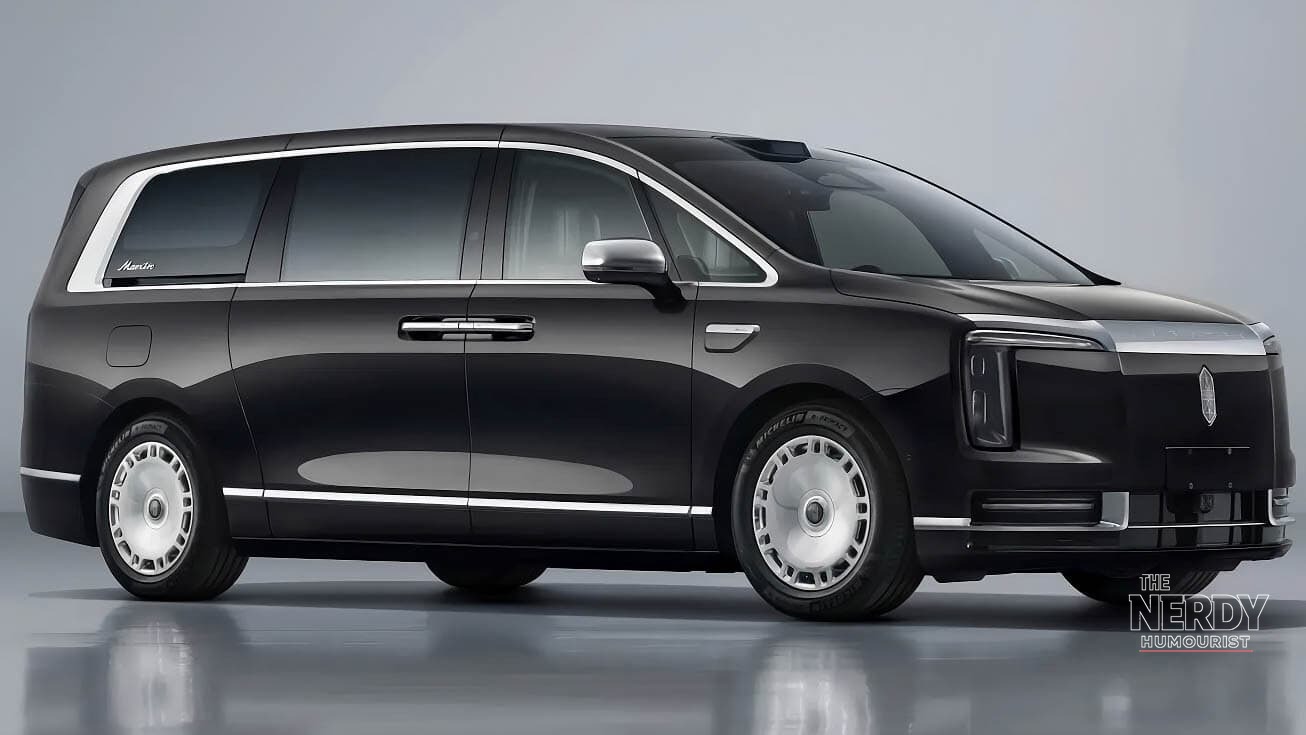
The V800 is the flagship model of Maextro, a luxury brand launched in August under Huawei’s Harmony Intelligent Mobility Alliance, according to TienCars. With a base price of 766,000 yuan (about US$113,582), it is one of the most expensive EV models in mainland China and competes in the premium people-carrier segment against established models such as the Toyota Alphard and Lexus LM.
Online rumor battle adds to the fallout
The dispute has spilled well beyond engineering. Dongchedi said on October 15 that online rumors — including claims that it invited bloggers to smear the brand and that its annual revenue exceeded 24.5 billion yuan — were false, that it had traced the sources and gathered evidence, and that it would take legal measures to protect its rights, according to finance outlet BigGo, which cited the platform’s statement. The platform said the revenue figure originated from an AI-generated online article in March.
Li Yanwei, an expert committee member of the China Automobile Dealers Association, noted that both the authoritative agency tests and the disputed tests had their respective merits, and that one result could not be used to negate the other, calling for the release of more complete third-party reports, according to BigGo.
Investors have already rendered a verdict of sorts. JAC Motors’ shares suffered a limit-down on October 8 — the day the Dongchedi video appeared — after hitting a near two-month high on September 30. The stock rebounded slightly on October 13 but closed in the red again, and as of the October 15 close traded at 20.34 yuan per share, down 3.6%, with market capitalization briefly falling below 50 billion yuan to 45.85 billion yuan (about US$6.9 billion), according to BigGo.
Draft rules would require 30,000 km of road testing
On Saturday, the MIIT, along with three other ministry-level departments, published draft rules stipulating that sufficient vetting measures — including 30,000 km (18,641 miles) of road testing — should be completed before any new model was offered to consumers, the SCMP reported. The draft, released on October 10 and open for public consultation through November 10, was prepared jointly by the MIIT and the public security, ecology and environment, and market regulation authorities, according to Gasgoo.
The proposal goes well beyond mileage. Reliability testing must span at least 30,000 km, while environmental validation must run for a minimum of one year — covering what Gasgoo described as “two winters and one summer.” Fully hidden door handles and folding or flexible displays would be banned, virtual controls for lighting, wipers and defrosting would require physical backups, and zero-gravity, rotating and fold-flat seats would be restricted while driving. Models accelerating from 0 to 100 km/h in under five seconds would face additional safety risk assessments, Gasgoo reported.
Automakers would no longer be allowed to accept suppliers’ validation reports at face value, and all related testing documents would have to be retained for at least six years, according to Gasgoo. Models with inadequate testing or falsified materials would be denied regulatory approval. New model applications submitted from January 1, 2027, would need the additional technical parameters and validation materials, while already-approved models would have until July 1, 2027, to submit supplementary filings — with production stops and recalls possible for those that fall short.
In August, MIIT vice-minister Xin Guobin said at a press briefing in Beijing that new auto products and technologies would be barred from entering the market unless they passed stricter approval procedures, according to the SCMP. Beijing is also carrying out a nationwide inspection campaign assessing the quality of Chinese-made cars.
Slumping sales raise the stakes
The probe arrives against a bleak market backdrop. Car sales in China slumped 21.7% year on year to 13.3 million units in the first nine months of 2026 due to narrowing government support such as smaller EV purchase subsidies and a resumption of consumption tax, the SCMP reported. China Passenger Car Association data put January–September cumulative passenger vehicle retail sales at 13.334 million units, down 21.7%, with September alone falling 28% to 1.618 million units — even as new energy vehicle penetration hit a record 67%.
The CPCA described September as an unusually weak peak season, blaming the Mid-Autumn Festival holiday’s late timing, a high comparison base from subsidy expirations a year earlier, persistently high oil prices, and AI-driven surges in memory and chip prices that slowed new model launches. The decline marked the 12th straight month of shrinking domestic retail sales. Globally, the shift away from combustion power is accelerating anyway — pure gasoline cars fell below 50% of global new-vehicle sales for the first time in a century in the first half of 2026.
Maextro brake pedal probe: key questions
What exactly are regulators investigating?
A joint team from the MIIT, the Cyberspace Administration of China and the State Administration for Market Regulation is verifying the facts behind reports that brake pedal brackets fractured on three Maextro V800s during Dongchedi’s October 8 emergency-braking test. Findings will be released “in a timely manner,” but no official conclusions have been announced, according to the SCMP.
Have the brake failures happened in real-world driving?
That remains unconfirmed. Maextro says no similar failures have been reported in actual customer use since deliveries began, and it disputes the test conditions as extreme. Authorities have not established whether the failures resulted from a manufacturing defect, a design weakness or the testing conditions themselves.
What has Maextro promised to do?
The brand says it will fully cooperate with investigators and address the brake pedal issue by the end of October, according to the SCMP. It has also pledged to improve the bracket design, give existing owners a free upgrade and review its testing and production quality controls, according to TienCars.
What would China’s draft testing rules change?
New models would need at least 30,000 km of reliability testing and a year of environmental validation covering “two winters and one summer” before reaching consumers, alongside bans on hidden door handles and folding displays and mandatory physical backups for key controls. The draft is open for comment until November 10, with new requirements potentially applying to approvals from January 1, 2027, according to Gasgoo.
Sources: South China Morning Post, Gasgoo, TienCars, China Passenger Car Association.


Leave a Reply
You must be logged in to post a comment.