Marvell Technology said Monday it will buy optical components maker Lumentum in a $115 billion all-stock deal, one of the biggest chip mergers ever announced. The Marvell Lumentum merger pairs a networking-chip designer with a company that makes the lasers and optical parts carrying data inside AI data centers. Both boards approved the agreement unanimously, and the companies say they expect the deal to close in the first half of 2028.
Here’s how the money works. Lumentum stockholders will get a fixed 4.500 shares of Marvell stock for each Lumentum share they hold. That works out to an implied enterprise value of about $115 billion for Lumentum, or roughly $1,132 per share, according to the companies’ joint announcement. The price represents a premium of about 23.9% over each company’s unaffected closing price on October 28, the last trading day before reports of deal talks surfaced. Once the deal closes, current Marvell stockholders would own about 67% of the combined company on a fully diluted basis, with Lumentum stockholders holding the other 33%.
Wall Street didn’t cheer. Marvell’s share price fell as much as 8% on Monday after the announcement, while Lumentum shares dropped 12.5%, according to AFP. The timing didn’t help. The deal landed days after a selloff hammered companies tied to artificial intelligence, and investors have started asking harder questions about whether the industry’s enormous spending boom will pay off. A $115 billion all-stock bet, announced into that mood, read to some traders as a lot of confidence — and a lot of risk.
So why do it? The answer sits inside the data centers themselves. AI systems now move staggering amounts of data between accelerators, switches and servers, and copper wiring is hitting its physical limits over those distances. Light travels farther and faster. Optical connections, which turn electrical signals into light and send them down fiber, have become the way big AI clusters stay fast without burning through ever more power. Marvell designs the networking chips and custom processors that run many of those links. Lumentum makes the lasers, optical transceivers and optical switching gear on the other side of the connection. Put together, the companies say, they can sell the whole link.
What each company brings to the Marvell Lumentum merger
Marvell’s chairman and chief executive, Matt Murphy, will lead the combined company. Three Lumentum directors, including Lumentum president and chief executive Michael Hurlston, will join Marvell’s board. Murphy framed the deal as a once-in-a-generation opening. “AI infrastructure is undergoing a fundamental architectural shift toward optical connectivity, creating an opportunity that comes along once in a generation,” he said in the announcement, adding that “the companies that move first and help define this transition will set the standard for decades to come.”
Lumentum, based in San Jose, California, brings more than lasers. Its portfolio covers optical transceivers, optical circuit switching and indium phosphide chip manufacturing, a compound semiconductor technology used in high-speed optical parts. Marvell, meanwhile, contributes electrical and optical interconnect products, network switching and custom silicon for AI accelerators. The companies put the combined addressable market at $550 billion — a company estimate, not an independent measurement, and one that assumes the optical shift keeps accelerating. They also said they see a path to more than $1 billion in annual run-rate cost savings, and that the deal should add to Marvell’s non-GAAP earnings per share in the first year after closing. Those are company claims, and they depend on execution that hasn’t happened yet.
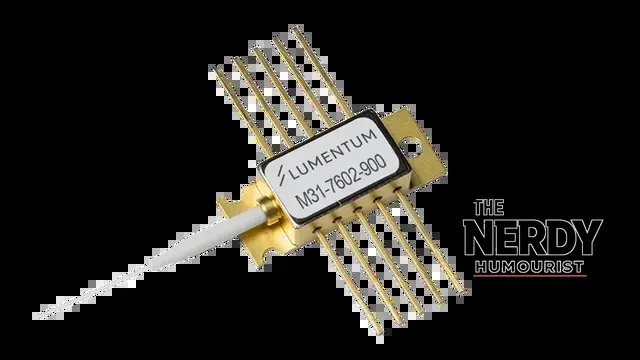
Lumentum reported results alongside the announcement, and the numbers explain part of the price tag. For its fiscal first quarter, the company reported adjusted earnings of $4.57 a share on revenue of $1.26 billion, compared with $1.10 a share and $533.8 million in revenue a year earlier, according to reports on the announcement. That’s growth of roughly 136.5% in revenue year over year. The company also guided to roughly $1.6 billion in revenue for the next quarter. Demand for its optical parts has been so strong that Hurlston said in October that Lumentum’s optical parts were sold out through early 2029, according to trade coverage of the deal.
Why the Marvell Lumentum merger still has a long road ahead
Nothing closes tomorrow. The transaction still needs approval from both companies’ stockholders plus regulatory clearances, and the expected first-half-2028 closing date leaves more than a year for conditions to change. Because the exchange ratio is fixed, the deal’s dollar value will move with Marvell’s share price every day until closing. If Marvell’s stock keeps sliding, Lumentum holders get less than $1,132 a share in value. If it rallies, they get more. That floating value is a standard feature of fixed-ratio stock deals, but at $115 billion it makes the headline number a snapshot, not a promise.
Regulators will also take a close look. Optical networking sits at the center of AI infrastructure, and the deal joins two suppliers that many data center operators already depend on. Rival chip and optical suppliers may respond with deals of their own, and analysts will weigh the promised cost savings against the dilution Marvell shareholders are accepting — roughly a third of the combined company going to Lumentum holders. The companies haven’t said what name the combined company will use or where it will be headquartered, and until closing, the two will keep operating separately.
One detail worth noting: Nvidia, the world’s most valuable company and the dominant AI chip supplier, invested $2 billion in each of the two companies earlier this year, according to the New York Times. Neither company’s announcement mentions those investments. Nvidia also competes in networking technology and has been pushing its own optical plans, so its role as an investor in both sides of this deal will draw attention as the merger moves through review.
For readers keeping score on the chip industry’s AI boom, this deal sits alongside other big semiconductor stories we’ve covered, including Tower Semiconductor’s record third-quarter results and Samsung’s record profit on AI memory demand. The pattern is consistent: AI demand is reshaping who owns what in the chip supply chain, and the biggest deals now revolve around moving data faster, not just computing it faster. Whether this one pays off depends on a bet that’s easy to state and hard to prove — that light, not copper, carries the next decade of AI.
Frequently Asked Questions
What is the Marvell Lumentum merger?
Marvell Technology agreed on November 2, 2026, to acquire Lumentum Holdings in an all-stock deal with an implied enterprise value of about $115 billion. Each Lumentum share converts into 4.500 Marvell shares, and the deal is expected to close in the first half of 2028 if stockholders and regulators approve it.
Why is Marvell buying Lumentum?
Marvell says AI data centers are shifting to optical connections because copper wiring can’t keep up with the data traffic between AI accelerators. Marvell makes networking chips and custom processors; Lumentum makes the lasers and optical parts. Together, they want to sell the complete connection.
What happens to the share prices?
Both stocks fell on the announcement day — Marvell as much as 8% and Lumentum about 12.5%, according to AFP. Because the deal is all stock at a fixed ratio, its final dollar value will rise or fall with Marvell’s share price until closing.
When will the deal close?
The companies expect the first half of 2028, but that’s their expectation, not a guarantee. Stockholder votes and regulatory approvals still have to happen first.