
Samsung Electronics has guided to the largest quarterly operating profit ever recorded by a technology company — and it is not close. The South Korean giant said on October 8 that its Samsung Q3 record profit would come in at roughly KRW 107.4 trillion, about $80 billion, a year-on-year surge of some 782.5%. If the final numbers hold, it would be the first time any tech company has cleared KRW 100 trillion in operating profit in a single quarter, extending Samsung’s run to four straight quarters of record earnings.
That figure is not a rounding error. According to preliminary guidance reported by KED Global, revenue for the quarter is expected at KRW 195 trillion (roughly $145 billion), up 126.6% from a year earlier. The story behind the numbers is a familiar one by now: the artificial intelligence boom has turned memory chips — the unglamorous silicon that stores and moves data — into one of the most valuable commodities on the planet.
Samsung Q3 Record Profit: The Headline Numbers
The guidance, released ahead of Samsung’s full quarterly report, contains few details — Samsung traditionally issues a sparse earnings preview and follows up with divisional breakdowns later. What it does confirm is extraordinary:
- Operating profit: KRW 107.4 trillion (~$80 billion), up 782.5% from KRW 12.17 trillion in Q3 2025.
- Revenue: KRW 195 trillion (~$145 billion), up 126.6% year on year.
- Milestone: the first quarterly operating profit above KRW 100 trillion by any global technology company, per KED Global.
- Streak: the fourth consecutive quarter of record operating profit for Samsung.
One important caveat: these are preliminary figures. Samsung itself notes that estimates may vary slightly, and the full audited results are due on October 29. SamMobile, which first flagged the magnitude of the beat, also reports that profit margin for the quarter reached roughly 55% — which would be the highest in Samsung’s history.
Samsung Q3 Record Profit Powered by the AI Memory Boom
The engine behind the Samsung Q3 record profit is the company’s Device Solutions division — the semiconductor business that makes it the world’s largest memory chipmaker, a position it has held for decades. Demand for high-bandwidth memory (HBM), DRAM, and NAND flash is being driven almost entirely by AI infrastructure: the servers and data centers that train and run large AI models need vast quantities of fast, high-capacity memory, and buyers are paying up to get it.
This is not a short-term spike, according to industry watchers. Analysts cited by the outlets covering the guidance estimate that the imbalance between memory supply and demand could persist through 2028, as data center buildouts continue to outpace what chipmakers can produce. The tight market has also been a tailwind for peers — Micron’s recent earnings showed a comparable dynamic, with the US memory maker guiding to strong demand and a massive order backlog of its own.
HBM4, Nvidia, and the Capacity Race
The most strategically important part of Samsung’s memory story right now is HBM4, the sixth generation of high-bandwidth memory that feeds directly into AI accelerators. Samsung has confirmed it has started selling HBM4 chips to Nvidia, the dominant supplier of AI GPUs, and reports indicate the company has also passed Nvidia’s qualification tests for its next-generation HBM4E chips.
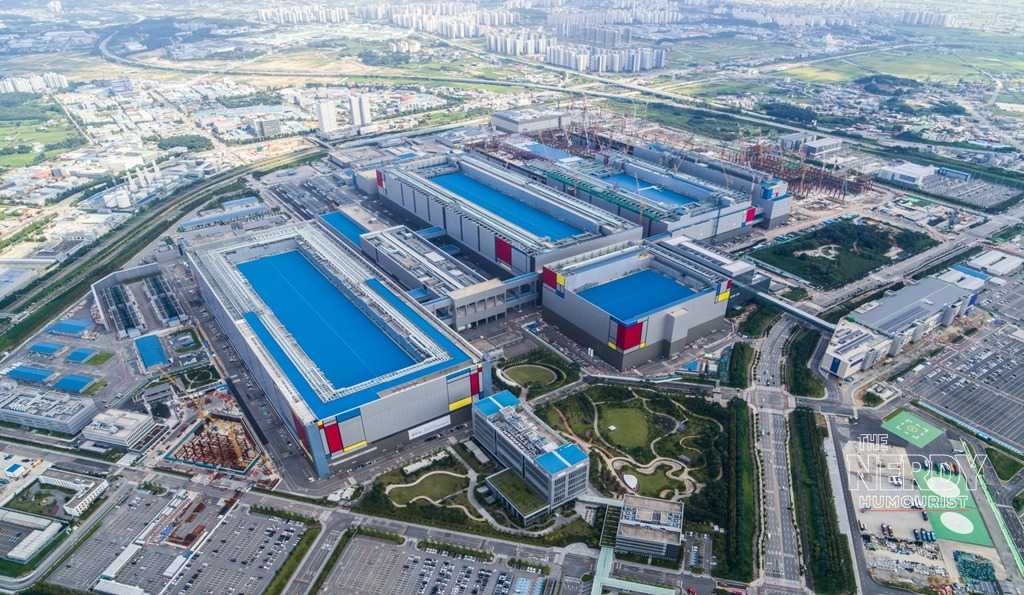
To keep up, Samsung plans to ramp HBM4 DRAM production capacity by up to 70%, with new capacity centered on its Pyeongtaek campus — the company’s main chip plant and the site of a major new DRAM facility. The expansion is a direct bet that hyperscaler and chip-designer demand keeps climbing. Nvidia remains the customer that matters most: the US company’s appetite for memory has reshaped the entire industry, and its own financial firepower was on display in its record $150 billion share-buyback authorization.
Not Every Division Is Sharing the Wealth
Remarkably, the record quarter is almost entirely a memory-chip story. Samsung’s other businesses are struggling, according to analyst estimates reported by SamMobile — and remember, these divisional figures are estimates, with the official breakdown due October 29:
- Foundry and System LSI: an estimated combined operating loss of around $743 million, weighed down by chip-fabrication operations in Texas even as the foundry business improves.
- Samsung MX (mobile devices): an estimated operating loss of about KRW 1.5 trillion (~$1.11 billion) — once the company’s most lucrative division, now squeezed by the very same rising memory prices that are enriching the chip business.
- Digital appliances and TV: an estimated operating loss of roughly KRW 500 billion (~$371.5 million), attributed to higher chip costs and stiff competition from Chinese brands in the TV market.
The irony is hard to miss: soaring memory prices are making Samsung’s components business enormously profitable while raising the cost base of its phones, tablets, and televisions. It is the same dynamic playing out across the electronics industry as memory costs climb.
What Analysts Expect Next
If the analysts are right, this is not the peak. SamMobile reports that analysts estimate Samsung’s operating profit next year could reach KRW 550 trillion (roughly $408.7 billion) — about 45% higher than this year’s estimates. To be clear, that is an analyst projection, not company guidance, and it rests on the assumption that the memory supercycle keeps running.
There are risks to that thesis. Memory is a famously cyclical industry, and previous booms have ended with overcapacity and price collapses. New capacity — from Samsung’s own Pyeongtaek expansion to rival SK Hynix’s planned fabs — will eventually catch up with demand. But for now, with AI data center spending still accelerating, the market is betting the good times last.
The full picture arrives October 29, when Samsung publishes its finalized Q3 results with divisional detail. Until then, the preliminary guidance stands as one of the most dramatic earnings beats in corporate history — a $80 billion quarter powered by the silicon at the heart of the AI boom.
Frequently Asked Questions
Q: How much profit did Samsung make in Q3 2026?
A: In preliminary guidance released October 8, Samsung said it expects Q3 2026 operating profit of KRW 107.4 trillion, roughly $80 billion — up about 782.5% from the same quarter in 2025.
Q: Why is Samsung’s Q3 2026 profit so high?
A: The surge is driven by AI-related demand for memory chips — HBM, DRAM, and NAND flash used in AI servers and data centers — which has pushed prices and volumes sharply higher for the world’s largest memory chipmaker.
Q: Are these figures final?
A: No. Samsung’s announcement is preliminary earnings guidance, and the company notes the numbers may vary slightly. Full audited results with divisional details are due on October 29.
Q: How much revenue did Samsung make in Q3 2026?
A: Samsung guided to quarterly revenue of KRW 195 trillion (about $145 billion), an increase of 126.6% compared with Q3 2025.
Sources
- KED Global — Samsung flags $80 bn Q3 profit, highest quarterly earnings for any global tech firm
- SamMobile — Samsung earns record-breaking $80 billion profit, thanks to the rise of AI

Leave a Reply
You must be logged in to post a comment.