
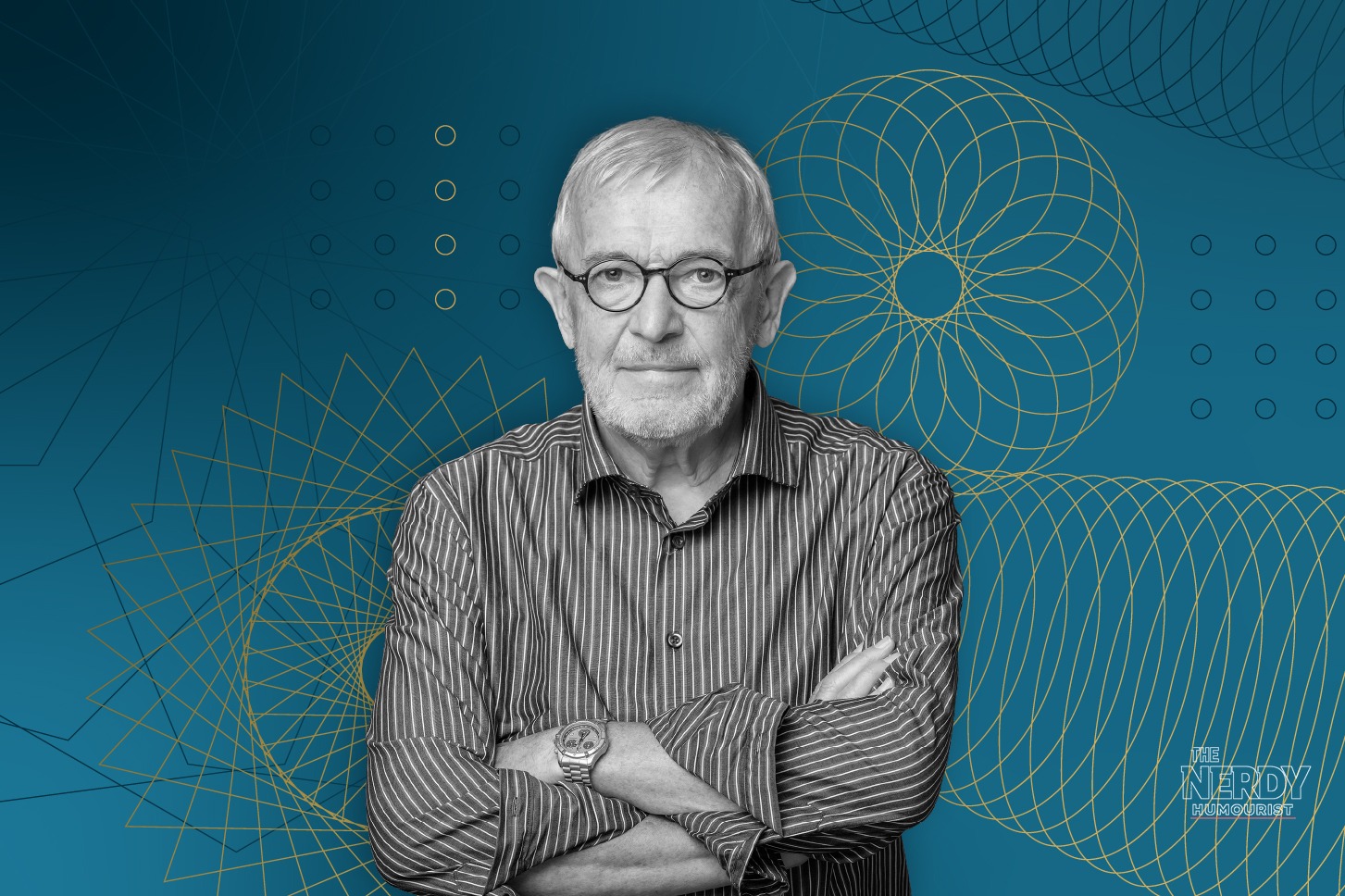
The Nobel Prize Physics 2026 winners list has exactly one name: Francis Halzen. The Belgian-American particle physicist was awarded the 2026 Nobel Prize in Physics on Tuesday “for decisive contributions to the IceCube Neutrino Observatory and the discovery of high-energy neutrinos of astrophysical origin,” the Royal Swedish Academy of Sciences announced in Stockholm.
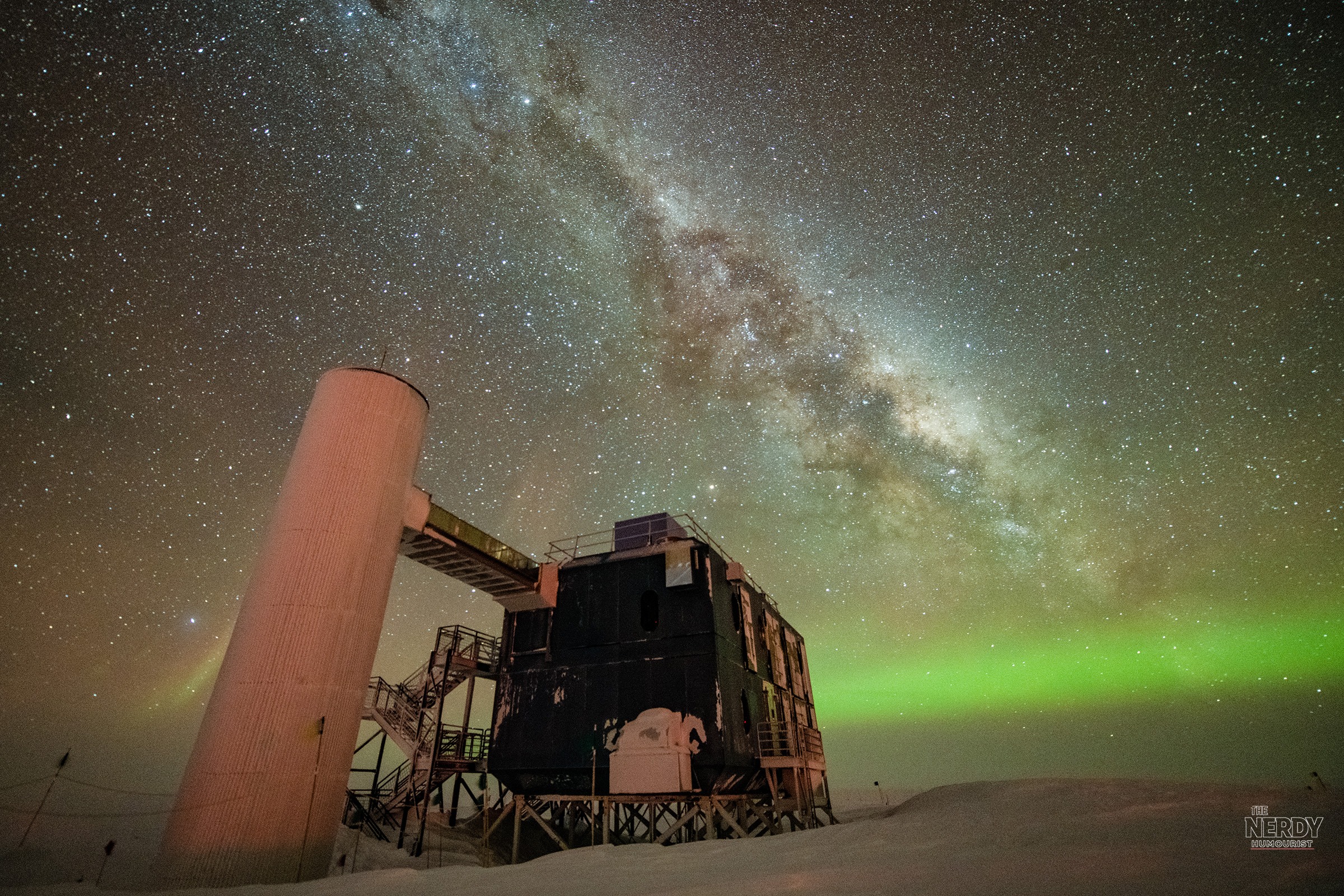
Halzen, 82, a professor at the University of Wisconsin–Madison, conceived and led the construction of IceCube — a telescope built not of glass and steel but of a cubic kilometer of Antarctic ice. It is the world’s largest neutrino detector, and its findings opened an entirely new window on the universe. The prize carries 12 million Swedish kronor, about $1.2 million, according to Reuters.
Who Is Francis Halzen, the Nobel Prize Physics 2026 Winner?
Francis Louis Halzen was born on March 23, 1944, in Tienen, Belgium, and trained at the Catholic University of Leuven. He is the Hilldale and Gregory Breit Distinguished Professor at the University of Wisconsin–Madison and directs its Institute for Elementary Particle Physics. As the principal investigator of the IceCube Neutrino Observatory at the Amundsen–Scott South Pole Station, he has spent decades championing an idea that most of the physics world initially considered outlandish.
His honors already include the American Physical Society’s Medal for Exceptional Achievement in Research (2026), the Balzan Prize for Astroparticle Physics (2015) and the Bruno Pontecorvo Prize (2018). But IceCube — the detector he pushed into existence against long odds — is the work that defines him.
The 1988 Idea: A Telescope Made of Antarctic Ice
Halzen first presented plans for the apparatus in 1988, CNN reported, envisioning a vast network of sensors frozen into the glacial ice at the South Pole to capture neutrinos — nearly massless, chargeless particles streaming from the most violent events in the distant universe. His insight was that the ultra-clear Antarctic ice sheet itself could serve as the detector medium.
“When we started this project, everybody realized this was maybe a good idea but very few thought it would work, including myself,” Halzen told the Nobel news conference by phone from Italy. “So this was kind of an adventure where success wasn’t guaranteed.”
Halzen led an international team of researchers and engineers who drilled into the ice and built the instrument. “His vision and scientific leadership have been fundamental for the IceCube Neutrino Observatory — a cubic kilometre of ice that is equipped with light sensors,” the prize-giving body said. “His tenacity and scientific vision has paved the way for a new kind of astronomy,” said Nobel committee chair Mark Pearce.
How IceCube Catches Ghost Particles
Neutrinos are often called “ghost particles” because they interact so weakly with matter that trillions of them pass through your body — and the entire Earth — every second without a trace. The rare high-energy neutrinos IceCube hunts are millions to billions of times more energetic than the neutrinos streaming from the Sun, and unlike light, they travel across the universe without changing direction — so they point straight back at where they were born.
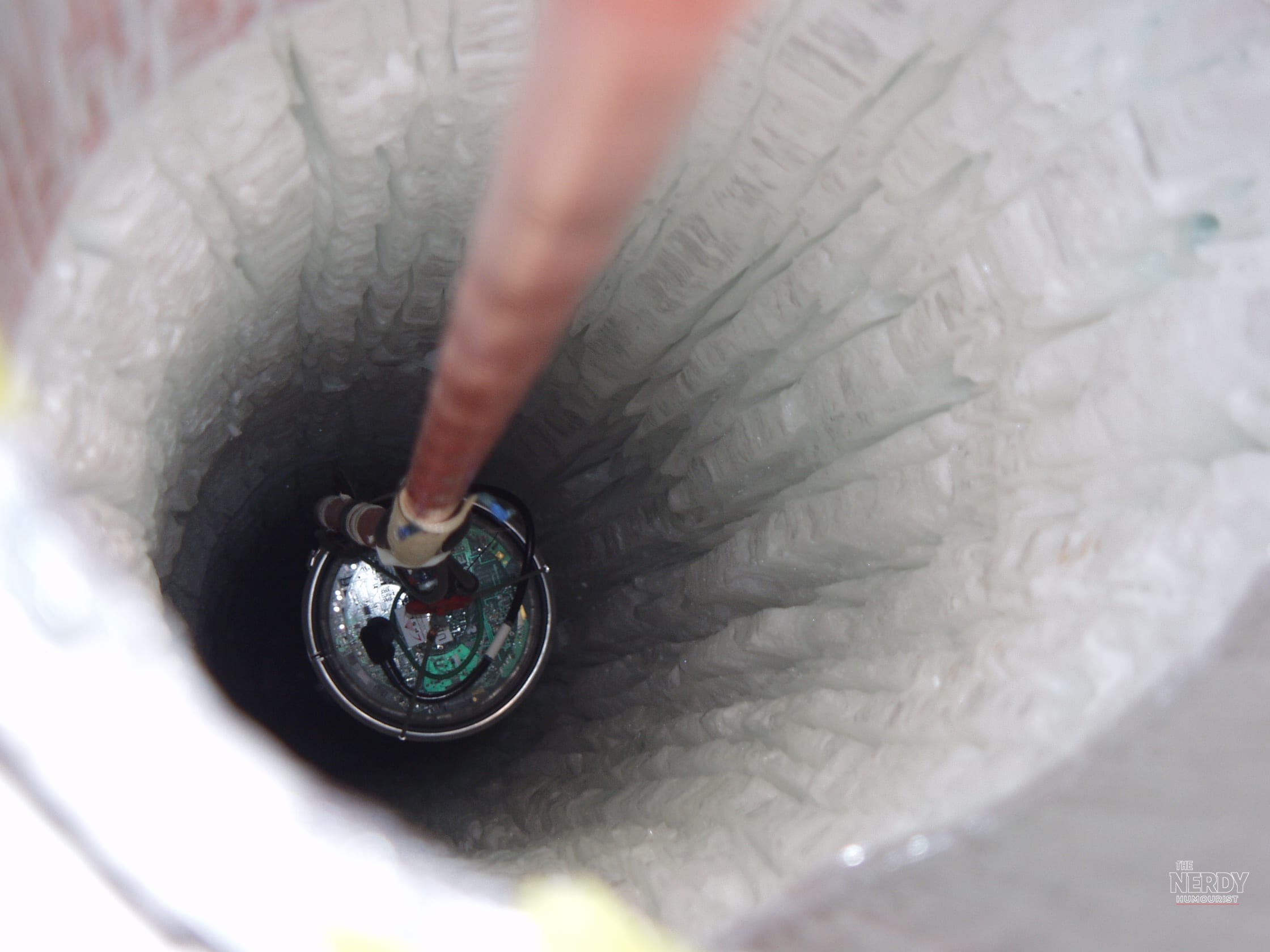
IceCube spans a cubic kilometer of ice, one billion tons of instrumented Antarctic ice, with 5,160 light sensors frozen into the sheet at depths of 1.5 to 2.5 kilometers. When a high-energy neutrino very rarely collides with an atomic nucleus in the ice, it produces secondary particles moving faster than light travels in ice — creating a faint blue flash called Cherenkov light. The sensors catch that glow, letting scientists reconstruct the neutrino’s energy and the direction it came from.
The result is a new kind of astronomy: observing cosmic accelerators such as black holes and exploding stars directly through particles that conventional telescopes cannot see.
From First Cosmic Neutrinos to Distant Blazars
The detector was completed in 2010, and the discoveries followed fast. In 2013, IceCube confirmed the existence of very-high-energy neutrinos arriving from outer space — proving not only that astrophysical neutrinos exist but that a cubic-kilometer ice telescope could actually detect them, according to the IceCube Collaboration.
In 2018 came the first pinpointing of a source: the blazar TXS 0506+056, a known active galaxy 4 billion light-years away whose supermassive-black-hole-powered jets point straight at Earth. The detection — a neutrino arriving in coincidence with a flare of gamma rays — marked the first time researchers could say where an astrophysical neutrino came from.
Then, in 2022, the collaboration reported neutrino emission from NGC 1068 (Messier 77), an active galaxy 47 million light-years away in the constellation Cetus, with some 80 high-energy neutrinos traced to its obscured core. “One neutrino can single out a source. But only an observation with multiple neutrinos will reveal the obscured core of the most energetic cosmic objects,” Halzen said at the time — a milestone he called “the next big step towards the realization of neutrino astronomy.”
A Rare Solo Physics Prize
The physics prize is frequently shared, and this year’s solo award stood out. Richard Fitzgerald, editor-in-chief of Physics Today, noted that it had been a while since the physics prize went to a single individual — but that while building the massive facility took a team of hundreds, the breakthrough “all started with one person,” CNN reported.
Learning of the prize, Halzen called it “a great surprise” and said, “It is a great pleasure to hear about this prize.”
Last year’s physics prize went to U.S.-based scientists John Clarke, Michel Devoret and John Martinis for experiments demonstrating macroscopic quantum tunneling in an electric circuit — research seen as advancing next-generation computing.
Nobel Week: What’s Next After the Nobel Prize Physics 2026 Winner
The physics announcement was the second of this year’s Nobels. On Monday, the medicine prize went to Karl Deisseroth, Peter Hegemann and Georg Nagel for optogenetics — the light-controlled switch for nerve cells (read our story on the 2026 Nobel Prize in Medicine).
Chemistry follows on Wednesday, literature on Thursday, and peace on Friday, with the Nobel Memorial Prize in Economic Sciences announced next Monday. Halzen will receive his medal from King Carl XVI Gustaf at a ceremony in Stockholm on December 10, the anniversary of Alfred Nobel’s death, followed by the traditional banquet at Stockholm City Hall.
FAQ
Who won the 2026 Nobel Prize in Physics?
Francis Halzen, an 82-year-old Belgian-American particle physicist at the University of Wisconsin–Madison, won the 2026 Nobel Prize in Physics alone — “for decisive contributions to the IceCube Neutrino Observatory and the discovery of high-energy neutrinos of astrophysical origin.”
What is the IceCube Neutrino Observatory?
IceCube is the world’s largest neutrino detector: roughly a cubic kilometer of Antarctic ice at the South Pole, instrumented with 5,160 light sensors frozen at depths of 1.5 to 2.5 kilometers. When a rare high-energy neutrino collides with an atomic nucleus in the ice, it produces a faint blue Cherenkov flash that the sensors record, revealing the particle’s energy and origin.
Why do high-energy neutrinos matter?
Neutrinos are “ghost particles” — nearly massless and chargeless — that travel across the universe without changing direction, pointing back at extreme cosmic sources like black holes and exploding stars that are invisible to conventional telescopes. IceCube’s first cosmic-neutrino detection in 2013, the 2018 blazar TXS 0506+056 source identification, and the 2022 NGC 1068 galaxy findings launched neutrino astronomy as a new field.
How much is the 2026 Nobel Prize in Physics worth?
The 2026 physics prize carries 12 million Swedish kronor — about $1.2 million — which Halzen receives in full as the sole laureate. He will be presented with the medal by Sweden’s King Carl XVI Gustaf in Stockholm on December 10.
Sources: Reuters; CNN; Scientific American; IceCube Neutrino Observatory / University of Wisconsin–Madison

Leave a Reply
You must be logged in to post a comment.