
Nvidia’s China AI chip share has fallen to 34% in the first half of 2026, as U.S. export controls continued to restrict supplies of its products and domestic rivals led by Huawei seized the opening, according to new data from research firm IDC seen by Reuters.
The figures mark a significant erosion of the American chipmaker’s once-dominant position in China’s data-centre AI-chip market — the world’s second-largest — and underline how Washington’s technology restrictions are reshaping one of the most competitive segments of the global semiconductor industry.

Nvidia’s China AI chip share drops as shipments plunge 44%
Nvidia shipped 678,000 AI accelerators in China from January through June, down 44% from a year earlier, IDC’s data showed. AI accelerators are the specialized chips used to train and run artificial intelligence models.
Huawei, meanwhile, shipped 572,000 AI accelerators in the same period, up from more than 300,000 a year earlier, giving it a 28% share of the overall market, according to IDC. That leaves the gap between the two companies at just six percentage points — a dramatic narrowing for a market Nvidia once commanded almost unchallenged.
A crowded domestic field
Nvidia and Huawei are no longer the only names that matter. Alibaba’s chip-design unit T-Head held a 7% share in the first half, followed by Cambricon with 5%, Baidu’s Kunlunxin with 4% and Hygon with 3%, IDC said. Nine of the 11 Chinese chipmakers tracked by the research firm increased shipments from a year earlier.
Total AI-accelerator shipments in China reached 2.008 million units in the first half of 2026. Shipments of graphics processing units — the chips most widely used to train AI models — fell 26% to 991,000 units, as supplies eligible for sale in mainland China remained limited, IDC said.
Shipments of other AI accelerators, a category that includes chips designed for specific AI tasks such as running trained models, rose nearly 80% to 1.016 million units, overtaking GPUs by volume. Huawei, T-Head, Kunlunxin and Cambricon together accounted for 95% of that non-GPU segment, which IDC said was being adopted by government agencies, internet companies and telecoms providers.
Export controls keep reshaping Nvidia’s China AI chip share
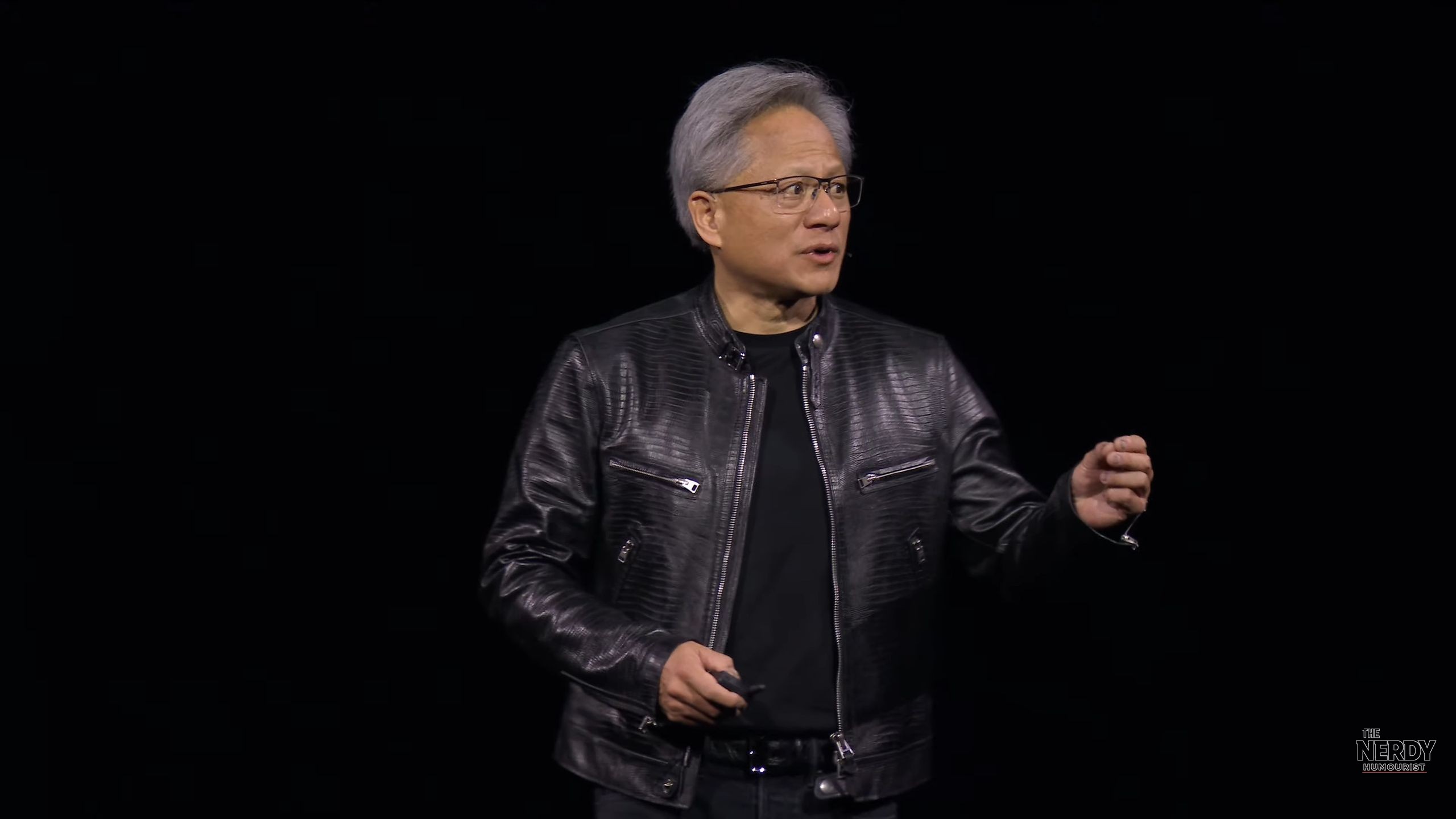
Nvidia CEO Jensen Huang has repeatedly criticized Washington’s export curbs, saying the policy forced a U.S. company to cede China’s $50 billion AI chip market to Huawei. Nvidia did not respond to Reuters’ request for comment on the IDC figures.
IDC did not specify which Nvidia products made up its 34% market share, or whether the figure included cutting-edge chips such as the B200 and B300, which are barred from export to China but have reportedly been smuggled into the country. That uncertainty means the official shipment data may not capture the full picture of how much Nvidia silicon is actually running in Chinese data centers.
Competition, IDC said, is shifting from the performance of a single chip to system-level capabilities, including how well chips work together in a larger computing cluster — an area where Huawei has been investing heavily.
Looking ahead, IDC expects total accelerator shipments in China to grow 19% this year, even as GPU shipments fall 9% — a sign that the market’s expansion is increasingly being driven by domestic, non-GPU designs rather than American graphics processors.
The market-share shift also lands as Nvidia’s broader business continues to boom elsewhere: the company recently announced a $150 billion buyback, the biggest ever, underscoring that its China challenges have not dented its record-breaking global momentum.
Frequently asked questions
What is Nvidia’s share of China’s AI-chip market now?
According to IDC data seen by Reuters, Nvidia held 34% of China’s data-centre AI-chip market in the first half of 2026, down from a year earlier, after shipping 678,000 AI accelerators — a 44% year-over-year decline.
How close is Huawei to overtaking Nvidia in China?
Huawei shipped 572,000 AI accelerators in H1 2026, up from more than 300,000 a year earlier, giving it a 28% share — just six percentage points behind Nvidia, according to IDC.
Why is Nvidia losing share in China?
U.S. export controls have restricted China’s access to Nvidia’s most powerful AI chips, limiting the products it can sell there, while Beijing has promoted domestic alternatives and required Chinese firms to seek approval to import compliant Nvidia chips.
Will Nvidia recover its China market share?
That remains uncertain. IDC expects overall accelerator shipments in China to grow 19% this year while GPU shipments fall 9%, suggesting the market’s growth is shifting toward domestic non-GPU designs. Nvidia has not commented on the IDC figures.
Sources: IDC data as reported by Reuters, October 13, 2026. Reporting by Reuters; Nvidia did not respond to Reuters’ request for comment.

Leave a Reply
You must be logged in to post a comment.