

A little-known startup is making a big claim about how much intelligence you can squeeze out of each watt. On October 5, Brooklyn-based Reflection AI unveiled Beam, its first open-weight model — a sparse mixture-of-experts system with 501 billion total parameters but only 23 billion active for any given token. The Reflection AI Beam model is being pitched not as the raw-score champion of the open-model world, but as the most efficient path to top-tier reasoning, according to reports on the launch.
The company was founded in 2024 by two Google DeepMind alumni: CEO Misha Laskin, who led reward modeling for Gemini, and CTO Ioannis Antonoglou, a co-creator of AlphaGo and AlphaZero who later ran reinforcement learning from human feedback for Gemini. Reflection has raised big money fast — it exited stealth in March 2025 with $130 million, then raised a $2 billion Series B led by Nvidia at an $8 billion valuation, and a further $2.5 billion Series C this year that pushed its valuation to $25 billion, per CNBC. Nearly a 50-fold jump in two years.
What the Reflection AI Beam Model Is Built On
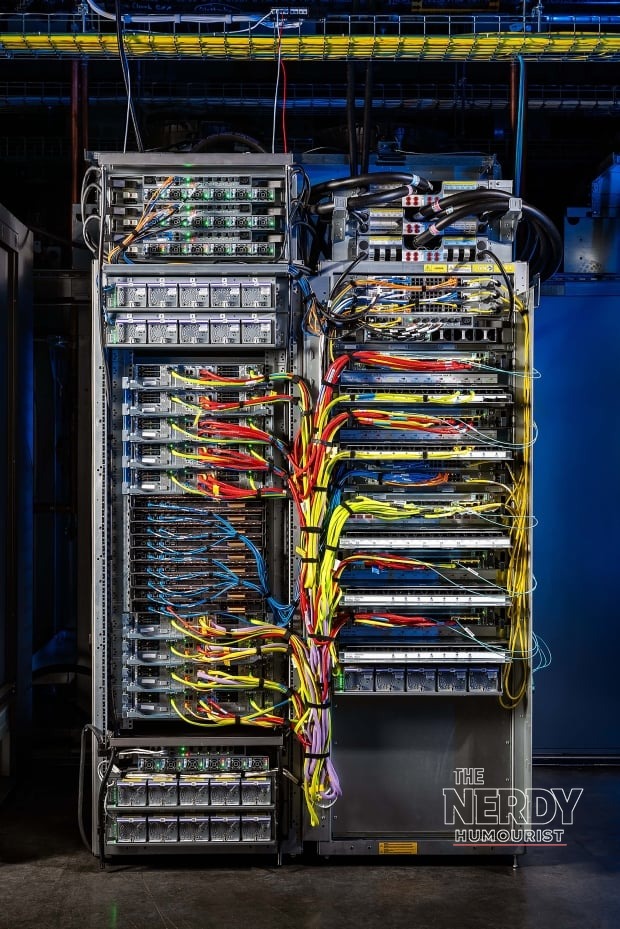
Beam is designed for coding, complex reasoning and agentic workloads — the tasks where models have to plan, use tools and write working code, not just chat. The architecture is a sparse mixture-of-experts (MoE): instead of running the full network on every token, a routing mechanism sends each part of a request to a handful of specialized “expert” subnetworks. Only about 23 billion of the model’s 501 billion parameters fire per token, which keeps the cost of each answer down even though the total model is enormous.
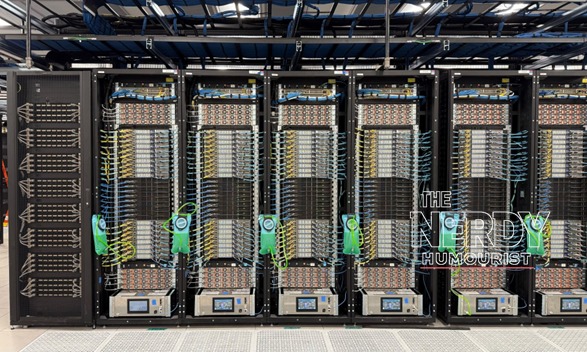
The training numbers are equally large. Reflection says Beam was pretrained on 23.8 trillion tokens, followed by a four-week reinforcement-learning phase run on a roughly 10,500-node Nvidia GB300 cluster that generated more than 100 million rollouts, according to a technical breakdown of the launch. The model supports up to one million tokens of effective context.
Reflection AI Beam Model Benchmarks: Close to GLM-5.2, Behind the Leaders
Reflection’s own announcement is refreshingly honest: Beam “advances the Western open-weight frontier” but trails the top open models on raw capability. On Terminal Bench v2.1, a test of real command-line work, Beam scored 80.1 — essentially level with Z.ai’s Chinese-built GLM-5.2 at 81.0, but behind Kimi K3 at 88.3 and DeepSeek V4.1 Flash at 90.6. On SWE-bench Verified, a software-engineering benchmark, Beam scored 80.9 against 70.7 for Nvidia’s Nemotron 3 Ultra.
The company’s argument is about the cost of those scores. Reflection says Beam scores comparably to GLM-5.2 on advanced reasoning benchmarks while using roughly three to four times less inference compute. Take that figure as approximate: Reflection estimated it with a formula — twice the active parameter count times the average number of generated tokens — and calls it a rough guide, not a measurement of real serving cost. Prompt processing, attention costs and serving overhead are all left out. If you run coding agents around the clock, your real bill depends on your prompts and hardware.
When You Can Actually Get the Reflection AI Beam Model
Here is the catch: you cannot download it yet. The weights, technical report and model card are promised under the permissive Apache 2.0 license — but only later this month. For now, Beam is a waitlisted beta API with early-access signups.
Once the weights land, they will be among the most commercially usable in the open-model space. Apache 2.0 allows developers and companies to download the model, run it on their own hardware and customize it freely — a contrast with custom licenses that add attribution or usage conditions, like Moonshot AI’s Kimi K3 license. Distribution deals with Hugging Face, AWS Marketplace and Azure’s AI model catalog are expected to make deployment close to one-click, according to the launch breakdown.
Why the Reflection AI Beam Model Matters in the Open-Weight Race
Open-weight large language models have been China’s game for the past year. DeepSeek shook the industry with low-cost, high-performance releases, and Moonshot’s Kimi line, Alibaba’s Qwen and Zhipu’s GLM have been trading places at the top of the leaderboard ever since — while OpenAI, Google and Anthropic keep their best models closed. Reflection, a startup founded two years ago, is now positioning itself as the Western answer, backed by Nvidia, in a chip-startup funding race that keeps escalating.
The deeper argument is economic. Agentic coding systems burn enormous inference budgets, and the startup betting its future on efficiency thinks cheaper-per-answer models will win the long game. Whether Beam’s reported efficiency holds up outside Reflection’s own charts is something the community can test — once the weights actually ship.
FAQ
What is the Reflection AI Beam model?
Beam is the first open-weight model from Reflection AI, announced October 5, 2026. It is a sparse mixture-of-experts system with 501 billion total parameters and 23 billion active per token, built for coding, reasoning and AI-agent workloads.
When will Beam’s weights be available?
The weights, technical report and model card are promised under the Apache 2.0 license later in October 2026. For now, Beam is available only as a waitlisted beta API with early-access signups — nobody can download it yet.
How does Beam compare to Chinese open models?
On Reflection-reported benchmarks, Beam scores close to Z.ai’s GLM-5.2 (Terminal Bench v2.1: 80.1 vs 81.0) while using three to four times less inference compute, but it trails DeepSeek V4.1 Flash (90.6) and Kimi K3 (88.3) on raw scores. Reflection itself frames Beam as “advancing the Western open-weight frontier” rather than claiming the overall lead.
Who is behind Reflection AI?
Reflection AI was founded in 2024 by former Google DeepMind researchers Misha Laskin (CEO) and Ioannis Antonoglou (CTO). It is backed by Nvidia, which led its $2 billion Series B, and is currently valued at $25 billion after a $2.5 billion Series C, according to CNBC.
Sources: WowTale, MarkTechPost, Help Net Security, NowADays AI

Leave a Reply
You must be logged in to post a comment.