
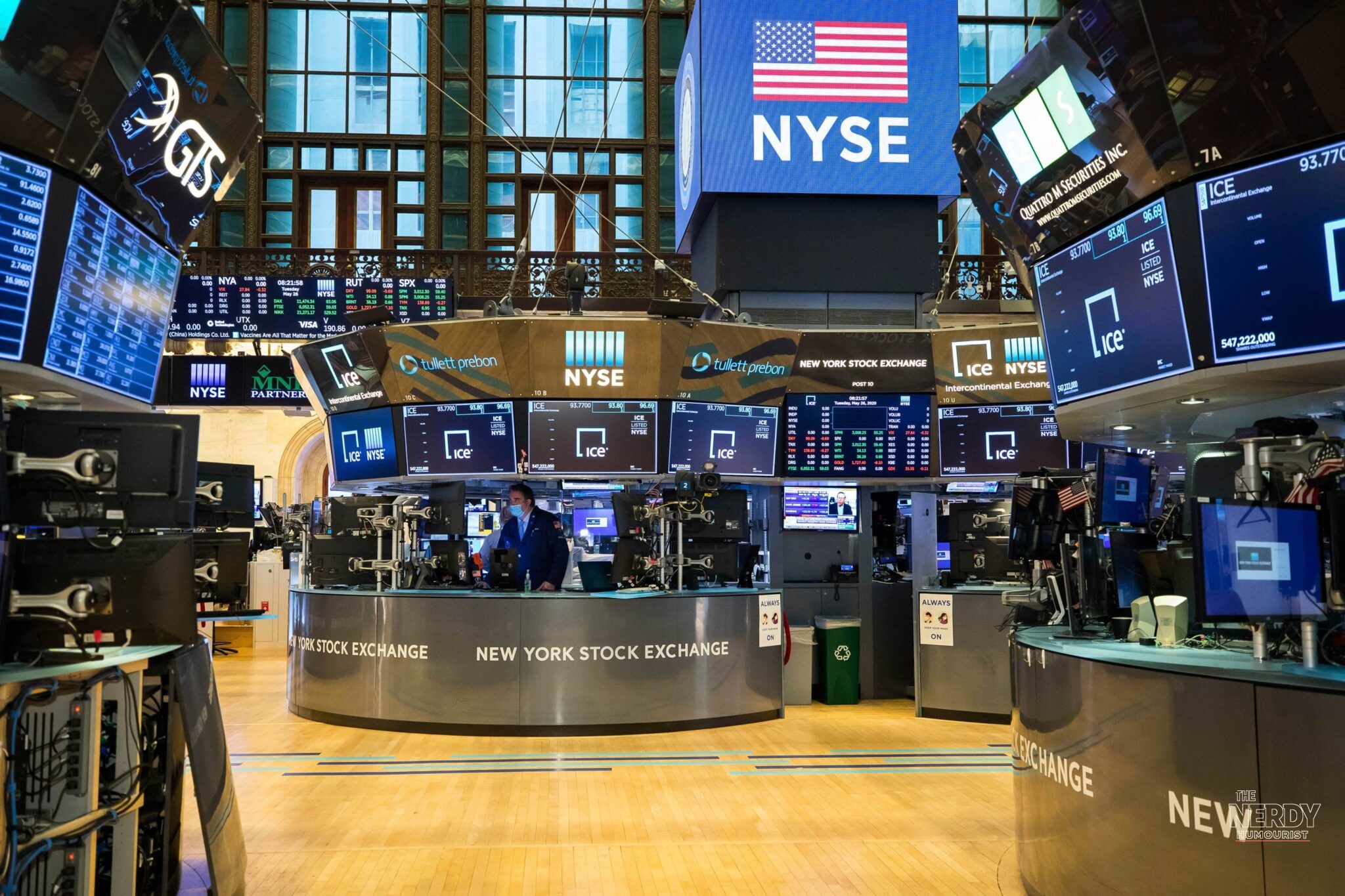
Wall Street loves bad news — at least when it means the Federal Reserve may hold fire. The September jobs report, released Friday by the U.S. Labor Department, showed the economy added just 29,000 nonfarm payrolls last month, far below the roughly 84,000 to 90,000 economists had expected. Investors read the weakness as proof the Fed has little reason to raise rates at its October meeting, sending the S&P 500 up about 0.7% to a closing record-challenging 7,722.72, according to The Straits Times.
The rally was broad. The Dow Jones Industrial Average added 250.4 points, or 0.49%, to close at 51,176.96, while the Nasdaq Composite jumped 1.2% to 27,190.86 — its second-highest close on record, the report said. Nvidia hit an all-time high as investors rotated back into growth names, and Investor’s Business Daily noted the jobs data arrived alongside Nike earnings and Tesla delivery figures in a packed Friday session.
September Jobs Report: 29,000 Jobs Added, Unemployment Rises to 4.2%
The headline numbers in the September jobs report painted a clear picture of a cooling labor market. The 29,000 payroll gain was roughly a third of consensus expectations, and the unemployment rate ticked up to 4.2% from 4.1%, above expectations that it would hold steady, Republic World reported, citing TradingView data.
“Today’s news was OK insofar as it means the economy isn’t roaring,” said Robert Bernstone, head of trading at SummitTX Capital, according to The Straits Times. He added that “cautious optimism is kind of where people are” — a sentiment echoed across trading desks that have spent weeks gaming out whether the Fed would tighten again before year-end.
Fed October Rate-Hike Odds Collapse After the Miss
The most dramatic market reaction came in rate expectations. CME FedWatch pricing now assigns roughly a 22–24% probability to a 25-basis-point rate hike at the Fed’s October 27–28 meeting, down sharply from 64.2% just a week ago, per The Straits Times. In other words, traders who had spent September bracing for another hike are now betting the central bank stands pat.
That repricing is what turned a weak jobs print into a stock-market rally. Lower-for-longer rate expectations lift the present value of future earnings, and the October meeting — the last before the Fed’s December decision — has become the focal point of the debate over whether this cycle’s tightening is truly over.
Revisions Show the Slowdown Started Earlier
The weakness in the September jobs report was not an isolated blip. The Labor Department also revised prior months sharply downward: August job growth was cut to 133,000 from an initially reported 162,000, and July’s numbers were revised from a 21,000-job gain to a 10,000-job decline — meaning the economy actually shed jobs in July, according to Reuters data cited by The Straits Times.
Taken together, the three-month average of job creation is now running near its weakest pace of the post-pandemic era. For the Fed, which watches labor-market slack closely, the downward revisions reinforce the case that policy is already restrictive enough — and that hiking again in October risks pushing a cooling economy too far.
Why Bad Economic News Became Good News for Stocks
The market’s logic was on full display Friday. Softer payrolls and rising unemployment reduce the odds of an October rate hike, which supports equity valuations and bond prices alike. It is the familiar “bad news is good news” trade: investors are pricing a Goldilocks outcome in which the economy slows just enough to keep the Fed on hold without tipping into recession.
The risk, of course, is that the labor market deteriorates faster than the data suggests. If October’s report shows further weakening, the same weakness that lifted stocks on Friday could start to look like the early stages of a downturn — a scenario that would test the “cautious optimism” Bernstone described.
September Jobs Report: What It Means for Investors
For now, the takeaway from the September jobs report is straightforward: the Fed’s October meeting looks far less hawkish than it did a week ago, and equity markets are rewarding that shift. The Nasdaq’s second-highest close on record and Nvidia’s all-time high show investors are again willing to pay up for growth when the rate threat recedes.
Sector watchers are also connecting the labor-market softness to corporate belt-tightening. Auto manufacturers, for instance, are feeling demand shifts acutely — see how Ford’s EV sales collapsed 80% in Q3 — a reminder that hiring freezes and layoffs in manufacturing feed directly into the payroll data investors trade on.
Attention now turns to the inflation data due ahead of the October 27–28 Fed meeting. If prices stay contained while hiring stays weak, the case for the Fed to stand pat gets even stronger — and the odds of an October hike could fall further still.
September Jobs Report FAQ
How many jobs did the U.S. add in September 2026?
Employers added just 29,000 nonfarm payrolls in September 2026, according to Labor Department data reported October 2 — well below the 84,000–90,000 economists had expected.
What is the current U.S. unemployment rate?
The unemployment rate ticked up to 4.2% from 4.1% in September, above expectations that it would remain unchanged, according to TradingView.
What are the odds of a Fed rate hike in October 2026?
CME FedWatch pricing now implies roughly a 22–24% chance of a 25-basis-point rate hike at the Fed’s October 27–28 meeting, down from 64.2% a week earlier, per The Straits Times.
Why did stocks rally on weak jobs data?
Investors interpreted the soft September jobs report as reducing the likelihood of an October Fed rate hike. Lower rate expectations boost equity valuations, pushing the S&P 500 up 0.7% and the Nasdaq 1.2% to its second-highest close on record.
Sources: The Straits Times; Investor’s Business Daily; Republic World.

Leave a Reply
You must be logged in to post a comment.