
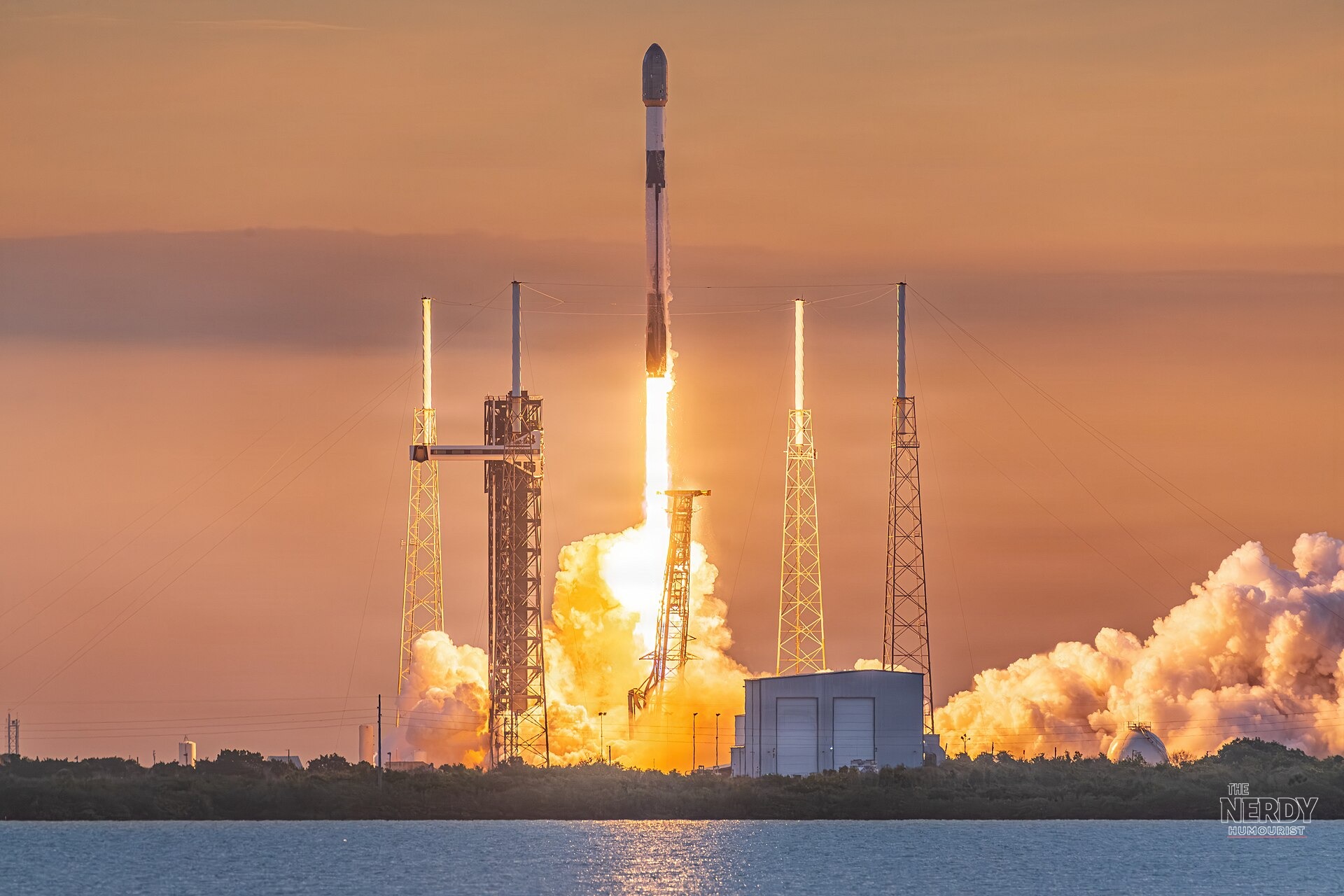
SpaceX announced late Thursday, October 8, 2026, that it has agreed to acquire the nationwide 800 MHz low-band spectrum portfolio of Grain Management in a SpaceX spectrum deal the Wall Street Journal valued at roughly $8 billion in cash. The acquisition would give the rocket company up to 14 megahertz of paired spectrum to build out Starlink Mobile, its planned phone service for ordinary smartphones.
The news landed hard on Wall Street. On Friday, October 9, shares of the three major U.S. wireless carriers plunged as investors priced in a powerful new competitor: T-Mobile fell 13.27% to $148.58, AT&T dropped 9.81% to $22.17, and Verizon slid 8.75% to $41.65 — wiping roughly $39 billion in combined market value in a single session, according to dpa-AFX coverage of the Journal’s reporting. SpaceX (SPCX) shares rose about 1.3%.
What the SpaceX spectrum deal covers
Under the agreement, SpaceX would acquire 100% of Grain Management’s nationwide portfolio of 800 MHz licenses, covering roughly the 817–824 MHz and 862–869 MHz frequency ranges. The companies did not disclose the financial terms themselves; the $8 billion cash figure was reported by the Wall Street Journal, citing people familiar with the matter, and carried by outlets including Reuters and dpa-AFX.
This is not SpaceX’s first spectrum purchase this year. The company earlier acquired about 65 MHz of frequencies from EchoStar for a combined $19.6 billion, giving it a growing stockpile of airwaves as it prepares to launch Starlink Mobile in 2027. The plan, according to the company, is a hybrid architecture that combines terrestrial infrastructure with its satellite constellation to connect standard mobile phones.
Carrier stocks plunge on the SpaceX spectrum deal
Friday’s selloff was historic for the U.S. telecom sector:
- T-Mobile fell 13.27% to close at $148.58 — its worst single day since it began trading in 2013, and its lowest close in a year.
- AT&T dropped 9.81% to $22.17.
- Verizon lost 8.75% to $41.65 — its worst single-day decline since 2002.
Channel News Asia reported that the three carriers were the biggest percentage decliners on the S&P 500 in afternoon trading. The rout spread overseas: Deutsche Telekom fell 7.9%, France’s Orange lost 2.5%, and Spain’s Telefonica slipped 4.6%, dragging the pan-European STOXX 600 Telecommunications index down 2.9% to its lowest level since late January.

Why 800 MHz matters for Starlink Mobile
The strategic value of the SpaceX spectrum deal lies in physics. Low-band spectrum like 800 MHz travels much farther than higher frequencies and penetrates buildings far more effectively — the exact capabilities Starlink’s existing direct-to-cell service has lacked. Satellites orbiting hundreds of miles up can already connect phones outdoors, but reaching someone standing inside their kitchen is a different problem, and it is one terrestrial carriers solved decades ago with this kind of spectrum.
There is also a practical advantage for consumers: the vast majority of smartphones already support the 800 MHz band, meaning no new phone would be required to use a future Starlink Mobile service. Reuters noted that pairing the 800 MHz holdings with Starlink’s existing 2 GHz spectrum gives SpaceX a shot at indoor coverage without asking customers to buy new hardware.
The T-Mobile twist in the deal
The deal carries an awkward irony for T-Mobile. Grain Management bought this exact 800 MHz portfolio from T-Mobile in a transaction completed on August 11, 2026 — paying $2.9 billion in cash plus its own 600 MHz licenses. Barely two months later, those airwaves are headed to the company investors now see as T-Mobile’s newest threat.
SpaceX executives have not hidden their ambitions. President Gwynne Shotwell said on the company’s August earnings call — its first — that she expects Starlink Mobile to take customers from AT&T, Verizon, and T-Mobile. For more on the mobile effort, see our earlier coverage of SpaceX’s FCC approval to deploy up to 15,000 satellites for Starlink Mobile.

Analysts and regulators weigh in
Wall Street analysts broadly read the purchase as a credibility boost for Starlink Mobile. Evercore ISI said the acquisition gives SpaceX what it described as the foundations of a more developed network, while JPMorgan said it makes the long-term opportunity for Starlink Mobile more credible. An Evercore analyst also noted that the implications for the incumbents are somewhat negative, with their defenses against low-band spectrum claims weakening.
There are caveats. Bernstein estimates that building out a full competitive network could cost anywhere from $50 billion to $130 billion, and analysts cautioned that established carriers face limited near-term risk because a rival network takes years, vast infrastructure, and enormous capital to construct.
The transaction still requires approval from the Federal Communications Commission. FCC Chair Brendan Carr welcomed the development, calling increased competition in the spectrum market positive for American consumers. SpaceX has been on a dealmaking run this year — including a $40 billion commitment for Nvidia chips — and the Grain Management purchase is its boldest move yet toward becoming a full mobile carrier.
Frequently asked questions
How much is SpaceX paying for Grain Management’s spectrum?
The companies did not disclose the price. The Wall Street Journal reported that SpaceX would pay approximately $8 billion in cash, according to people familiar with the matter.
What is 800 MHz low-band spectrum?
It is a slice of radio airwaves that travels long distances and penetrates buildings better than higher frequencies, making it ideal for broad-area mobile coverage. SpaceX plans to use it to give Starlink Mobile reliable indoor service.
When could Starlink Mobile launch?
SpaceX has said it plans to launch the mobile service in 2027. The deal still needs FCC approval before the spectrum transfer can close.
Will the deal hurt T-Mobile, AT&T, and Verizon?
Investors clearly think so — the three carriers shed roughly $39 billion in combined market value on October 9. Analysts say the near-term threat is limited, but the long-term competitive picture is now more uncertain.

Leave a Reply
You must be logged in to post a comment.