
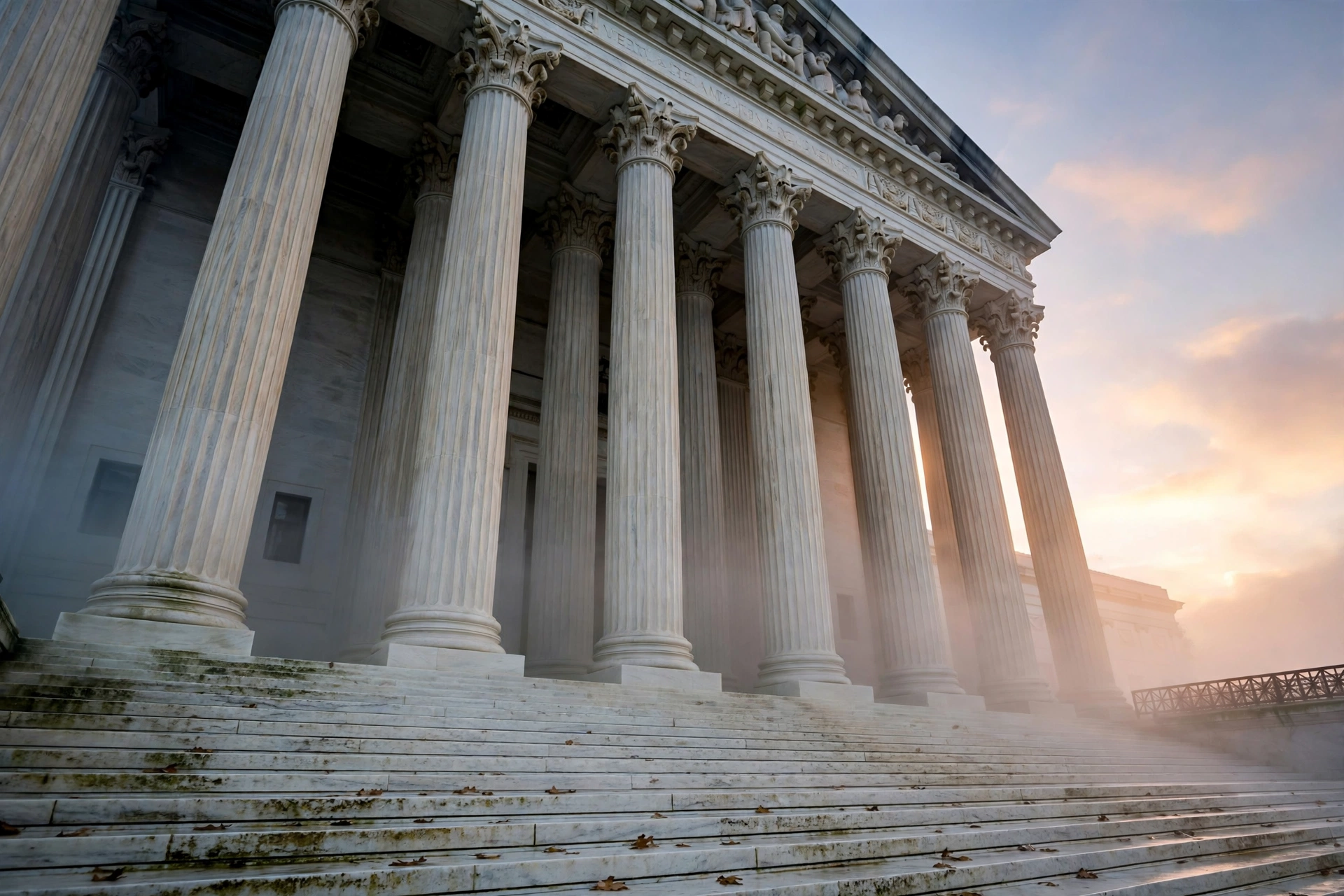
The US Supreme Court agreed on October 1, 2026, to hear a dispute over the Trump administration’s mandatory immigration detention policy — a case that could determine whether millions of immigrants in the United States illegally can be held without a bond hearing for the duration of their deportation proceedings.
The justices took up the administration’s appeal of a ruling by the 2nd US Circuit Court of Appeals, in the case Rhoney v. Barbosa da Cunha, which stems from a lawsuit brought by the ACLU and the New York Civil Liberties Union involving a Brazilian national, Reuters reported. The Supreme Court immigration detention Trump case is now one of the highest-stakes items on the Court’s docket.
What the policy does
In July 2025, the Department of Homeland Security issued guidance declaring that immigrants in the US illegally are subject to mandatory detention without a bond hearing for the entire duration of their removal proceedings — which can take months or even years, according to Reuters.
The policy broke with a nearly three-decade-old interpretation of federal law under which immigrants already living in the United States could be released on bond while pursuing their cases. Under the new reading, detention is mandatory even for longtime residents with no criminal record who have been living and working in the country for years.
A circuit split forces the Court’s hand
The legal challenge to the policy has been remarkably broad. Hundreds of federal district judges have ruled against it — nine out of ten, according to the ACLU — and nine federal appeals courts have also rejected it. But the 5th and 8th Circuits upheld the policy, creating the kind of circuit split that often prompts Supreme Court intervention, USA Today reported.
Civil-liberties groups argue the policy reads a 1996 immigration law — long understood to apply mainly to people apprehended at or near the border — far beyond its intended scope. The administration counters that the statute’s mandatory-detention provision plainly covers immigrants in the US without authorization regardless of where they are apprehended.
Timeline and stakes
The Court will hear the case during its new term, which begins October 5, 2026, with a decision likely by June 2027, according to USA Today. If the administration prevails, millions of immigrants could face mandatory detention under the expanded reading of the 1996 law.
The stakes extend beyond detention beds: the ruling could reshape enforcement strategy nationwide, since the threat of detention without bond hearings gives federal agents significant leverage over immigrants with pending cases. It also arrives as the administration presses a wider enforcement agenda — including the revocation of more than 250,000 visas — making immigration the defining legal battleground of Trump’s second term.
How the Court may lean
The Supreme Court’s 6-3 conservative majority has allowed a number of Trump’s hardline immigration policies to take effect during his second term, Reuters reported. That track record leads many legal analysts to see the administration as having a plausible path to victory, though the near-uniform rejection of the policy by lower courts — including judges appointed by Republican presidents — suggests the administration’s reading of the statute faces serious skepticism.
The ACLU, which brought the underlying case, said in a statement that the justices should affirm that the Constitution does not permit the government to lock up longtime residents for years without even a hearing on whether detention is necessary.
Broader significance for the detention system
Whatever the Court decides in the Supreme Court immigration detention Trump dispute, the case will define the outer bounds of federal detention power for years. A ruling for the administration would give DHS the authority to detain virtually anyone without legal status for the length of proceedings — potentially swelling the detention population far beyond current capacity. A ruling against it would restore the decades-old bond-hearing regime and could force the release of thousands currently held under the 2025 guidance.
Legal scholars also note the case tests how far the Court will let the executive branch reinterpret long-settled statutory meanings. The July 2025 guidance reversed 28 years of agency practice; whether an administration can unilaterally rewrite a statute’s settled meaning through guidance — rather than legislation — is a question that reaches well beyond immigration law.
FAQ
What is the Supreme Court immigration detention case about?
The case, Rhoney v. Barbosa da Cunha, challenges the Trump administration’s July 2025 policy requiring mandatory detention without a bond hearing for immigrants in the US illegally for the duration of their deportation proceedings.
When will the Supreme Court decide the immigration detention case?
The Court will hear the case in its new term starting October 5, 2026, with a decision expected by June 2027, according to USA Today.
How many people could be affected by mandatory immigration detention?
Potentially millions. Reuters reported the policy applies to immigrants in the US illegally nationwide, and USA Today noted a win for the administration would subject millions to mandatory detention under an expanded reading of a 1996 law.
Why did the Supreme Court take the case?
A circuit split: nine federal appeals courts ruled against the policy while the 5th and 8th Circuits upheld it. The justices typically step in to resolve such splits in how federal law is applied.
Sources: Reuters, ACLU, USA Today, SRN News (Reuters)

Leave a Reply
You must be logged in to post a comment.