
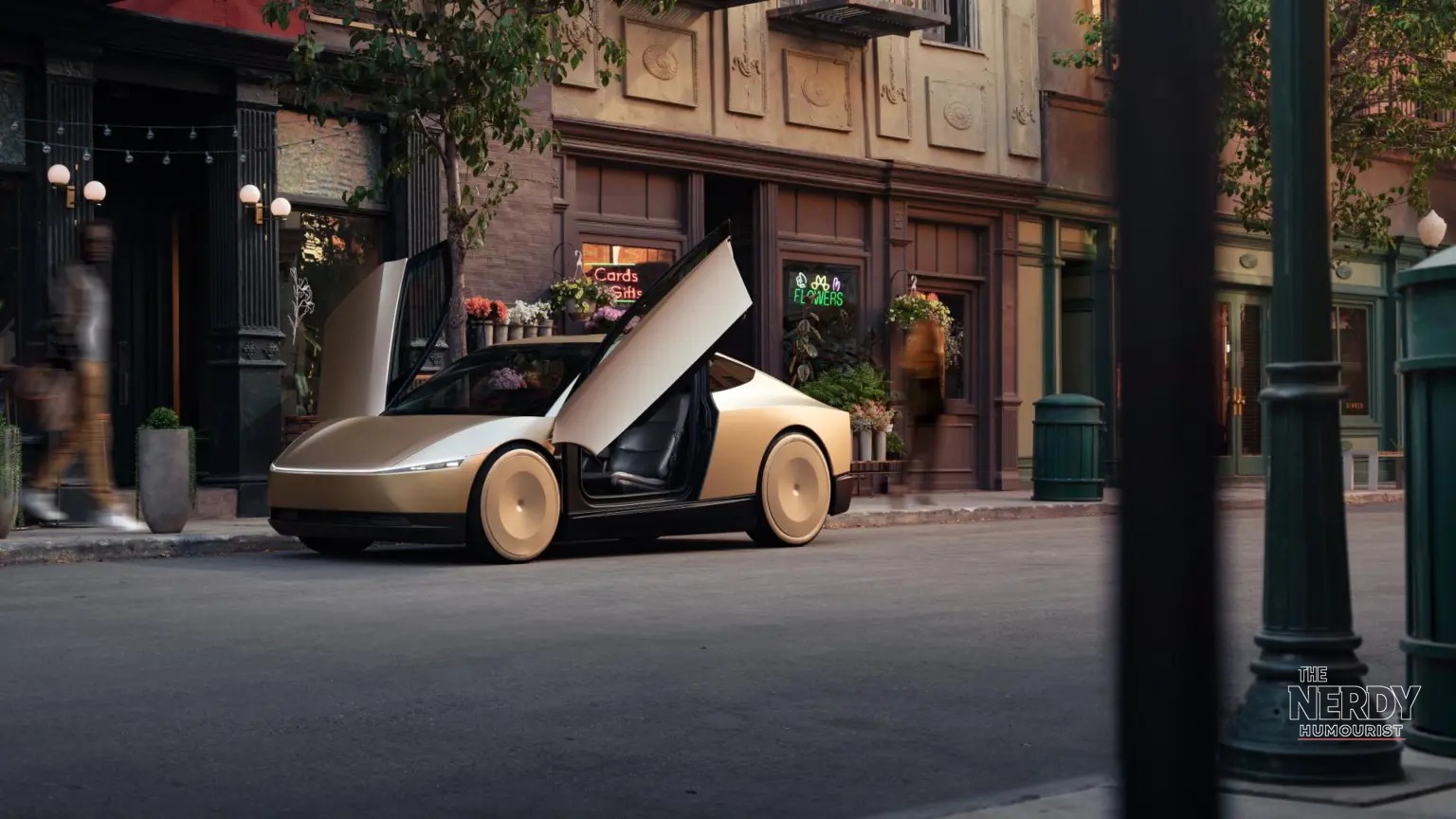
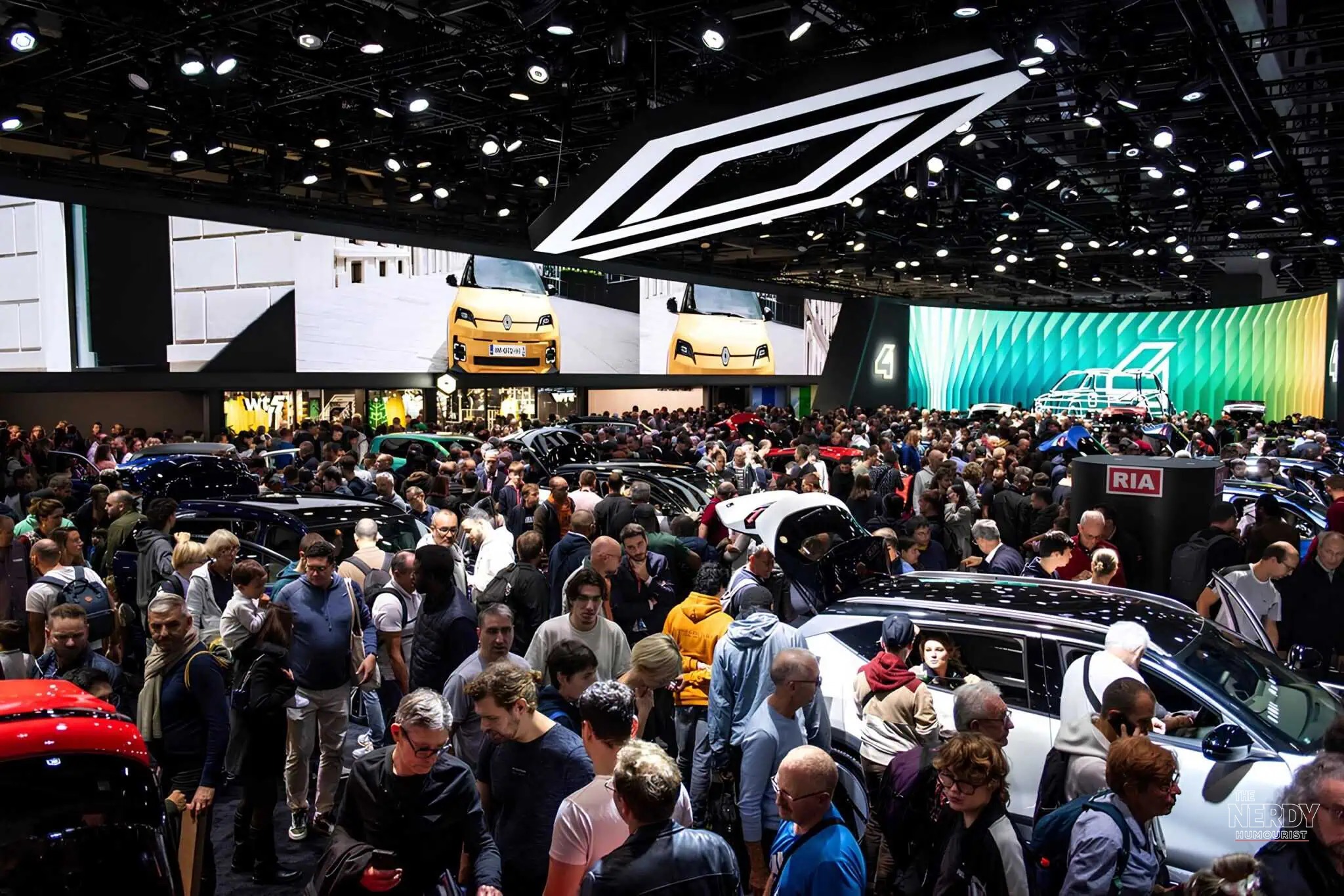
Tesla’s purpose-built robotaxi, the Tesla Cybercab, made its European debut this week as the 2026 Paris Motor Show opened to the press on October 12. The steering-wheel-free two-seater — shipped over from the company’s operational ride-hailing fleet in Austin, Texas — is drawing crowds at Tesla’s stand in Hall 7.1, where visitors can also sign up for free test drives of Tesla’s driver-assist software.
A working robotaxi, not a prototype
The Cybercab on display in Paris is not a concept car or a static mockup. According to the show’s organizer, the vehicle comes from Tesla’s operational robotaxi fleet in the United States, rather than being a prototype built for the show circuit, as reported by Drive Tesla Canada. Autoblog reports that the Paris exhibit is part of Tesla’s Austin fleet, which reportedly includes some 300 vehicles. Tesla began offering paid rides to the public in the Texas capital on September 3.
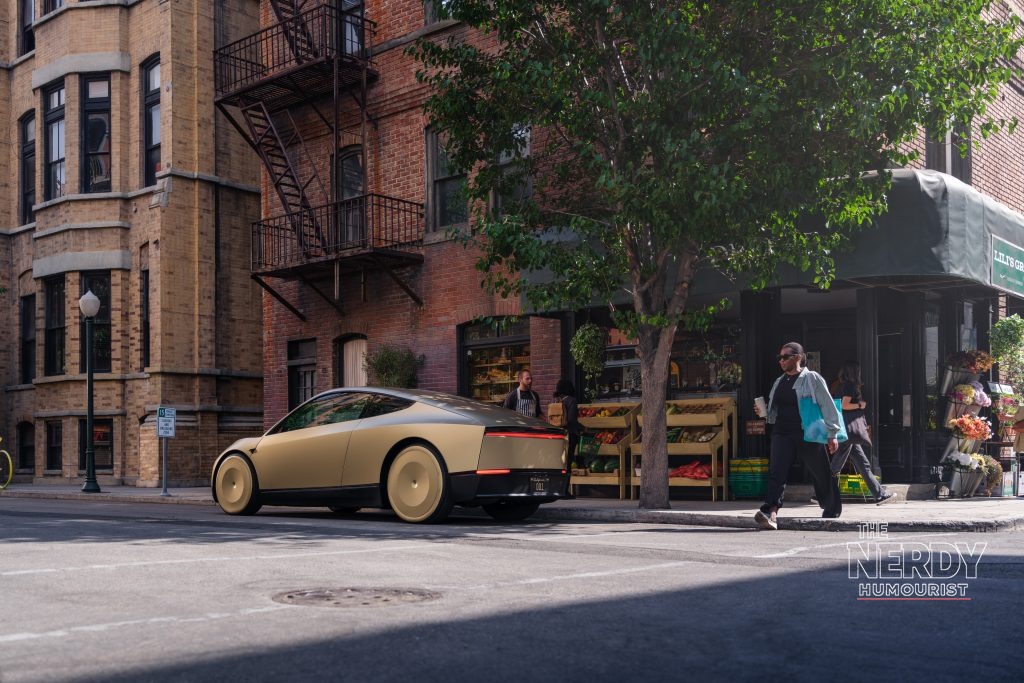
That detail matters. The Cybercab was designed from the ground up without traditional driver controls — it has no steering wheel and no pedals. Showing a working fleet vehicle, rather than a one-off show car, signals that Tesla’s robotaxi program is further along than a design study. Musk has described the robotaxi as the future backbone of a widespread service he aims to operate across most of the United States, and has vowed to eventually put thousands of these cars on the road, according to Market Briefs.
Tesla’s presence in Paris is notable in itself. The company has attended very few auto shows, preferring to hold its own launch events instead, as Autoblog notes. The Mondial de l’Auto runs from October 12 to 18 at Paris Expo Porte de Versailles, where Tesla occupies Stand C25 in Hall 7.1. Alongside the Cybercab, the stand features the Model 3 and Model Y, the Optimus Gen 2 humanoid robot, Tesla Energy home products, and a Supercharger stall.
Free FSD test drives on the show floor
The Cybercab itself is for display only — visitors cannot ride in it. But Tesla is offering something else on the show floor: free test drives of its Full Self-Driving (Supervised) system in six production Model 3s.
The drives run in a separate “Autonomous Lab” at gate H of Hall 7.1, according to Teslant’s account of the show’s test program, drawing on MotorsActu’s reporting. Each session follows a secured route of about 25 minutes, with a host in the car explaining the system’s behavior: pedestrian detection, automatic emergency braking, lane keeping, adapting to traffic, assisted lane changes, and automated parking. Slots are booked on site by QR code, not online, from 9:30 a.m. to 7:30 p.m. on the public days, October 13 through 18.
Tesla has one rival in the lab: Chinese automaker XPeng is bringing two L03s with its NGP driver-assistance and VLA 2.0 software — the car it priced from €35,600 in Germany — and the two brands are the only automakers demonstrating assisted driving at the show, Teslant reports.
The timing of the FSD showcase is deliberate. European drivers have logged more than 100 million kilometers on FSD (Supervised) so far, according to Tesla, via Drive Tesla Canada. Tesla renamed the system “Tesla Assisted Driving” on its European websites in recent days, responding to regulators’ concerns that the original name was misleading, as Autoblog reported on October 12. Eight EU countries already allow the system, with a decision on EU-wide recognition expected in December, according to Drive Tesla Canada.
Tesla has said a European Cybercab rollout could come as early as 2027 — but only if it clears regulatory and infrastructure hurdles. For starters, the Cybercab needs European approval for a vehicle designed without conventional driving controls, which could take some time, Autoblog notes. Elon Musk has hinted it could eventually happen, responding to a German owner asking about the Cybercab by saying, “Hopefully soon in Europe too,” as reported by Drive Tesla Canada.
Why the Cybercab matters for Tesla’s bottom line
Tesla’s stock performance this year explains why the company is leaning so heavily into the robotaxi story in Paris. According to Barchart, Tesla shares were down about 16% in 2026 as of October 7, closing near $377.8 after touching roughly $300 in July. The stock trades at about 343 times trailing earnings and around 159 times forward earnings — far above typical auto-industry valuations — which means investors are assigning value to robotaxis, artificial intelligence, and Tesla’s robotics ambitions rather than to car sales alone.
The core car business still matters, though. In the second quarter, revenue reached $28.24 billion, up 26% year over year, while automotive revenue increased 23% to $20.52 billion, Barchart reports. Profitability was less encouraging: net income declined 5% to $1.11 billion, adjusted earnings came to $0.33 per share, and free cash flow was negative as Tesla increased spending on AI, autonomy, and manufacturing. Capital expenditures are expected to exceed $25 billion this year.
There was one piece of good news for the EV business: Tesla delivered 486,532 vehicles in the third quarter of 2026, down 2.1% from last year’s record but about 24,558 above Wall Street’s consensus of 461,974, according to StockMoguls. Tesla’s stock rose about 4.8% intraday on October 2 following the announcement.
Meanwhile, federal regulators in the United States are still investigating the Cybercab. According to StockMoguls, Tesla received a 30-day extension from NHTSA, giving it until October 30, 2026, to answer questions about how it certified the steering-wheel-less vehicle and its plans to scale commercial operations. The inquiry runs in parallel with the European approval process.
Tesla’s push into AI and autonomy is also reshaping how the company shows up in public. German automaker BMW opted out of this year’s Paris show to curb costs, according to TipRanks — while Tesla, once an auto-show skeptic, is using the Mondial’s biggest stage to pitch a future in which the car itself is only the beginning.
Read next: Tesla’s FSD approval progress in Europe
Frequently Asked Questions
What is the Tesla Cybercab?
The Cybercab is Tesla’s purpose-built robotaxi: a two-seat electric vehicle designed from the ground up with no steering wheel or pedals. It was first unveiled at Tesla’s “We, Robot” event in 2024 and joined Tesla’s paid robotaxi fleet in Austin, Texas, in September 2026.
Where is the Tesla Cybercab on display?
The Cybercab is on display at the 2026 Paris Motor Show (Mondial de l’Auto) at Stand C25 in Hall 7.1 of Paris Expo Porte de Versailles, from October 12 to 18. The vehicle shown is part of Tesla’s operational Austin fleet.
Can visitors ride in the Tesla Cybercab in Paris?
No. The Cybercab is for display only at the Paris Motor Show. However, visitors can take free 25-minute test drives in six Model 3 vehicles equipped with Tesla’s FSD (Supervised) driver-assistance system, booked on site by QR code during public days.
When could the Tesla Cybercab launch in Europe?
Tesla has said a European rollout could come as early as 2027, but that depends on clearing regulatory approvals for a vehicle with no conventional driving controls. A decision on EU-wide recognition of Tesla’s driver-assist system is expected in December 2026.

Leave a Reply
You must be logged in to post a comment.