
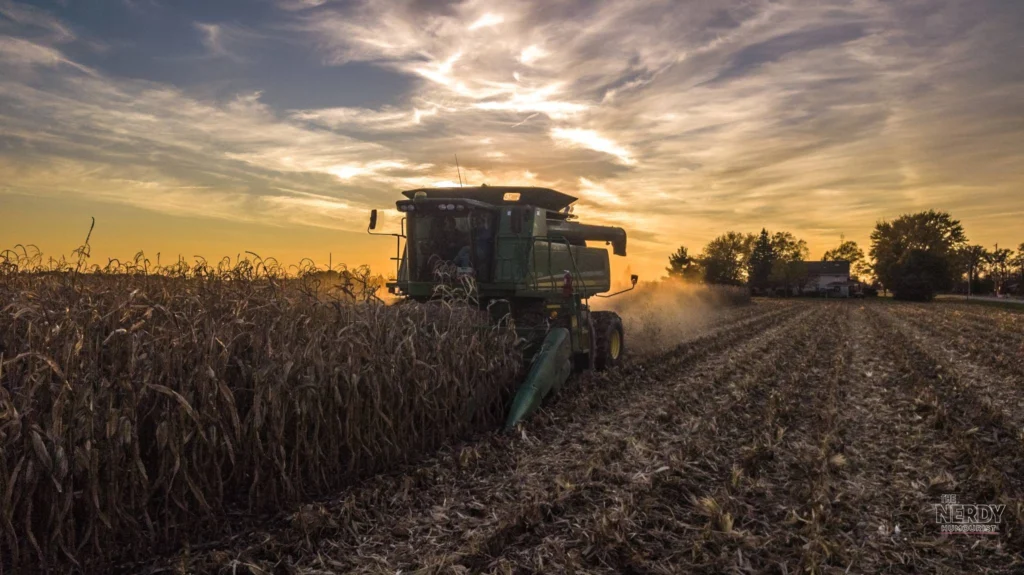
President Donald Trump announced on Monday, October 19, that the U.S. Department of Agriculture will launch a new “harvest fuel relief program” providing $8 billion in one-time payments to American farmers to offset soaring diesel costs during this year’s harvest season, according to Reuters.
“Tonight, I’m also pleased to announce that the Department of Agriculture will be launching a new harvest fuel relief program, providing our farmers with $8 billion in support to offset diesel costs during this harvest season,” Trump told a midterm campaign crowd at the Heartland Credit Union Arena in Park City, Kansas, where he was stumping for Republican Sen. Roger Marshall.
The announcement marks the latest in a series of financial pledges the president has made to voters in the run-up to the November midterm elections, where control of Congress is at stake. The Republican Party currently holds narrow majorities in both the Senate and the House, and the GOP has been working to shore up support in farm states with competitive Senate races as input costs climb.
USDA Details How the Payments Will Work
In a statement issued after Trump’s speech, the USDA said it would make $8 billion available “for one-time payments to American farmers this harvest season to provide relief during temporary market disruptions and increased input costs.”
According to the department’s official release, dated October 19, the program — formally dubbed the Harvest Fuel Relief (HFR) program — will provide proportional support to producers using a uniform formula designed to cover a portion of modeled losses during the 2026 crop year. The calculation will draw on Farm Service Agency–reported planted acres, the Economic Research Service’s cost-of-production estimates, and the World Agricultural Supply and Demand Estimates for yields and prices.
The $8 billion in payments is authorized under the Commodity Credit Corporation Charter Act and will be administered by the department’s Farm Service Agency. Commodity-specific payment rates for Title I commodities are expected to be released in November, while the payment methodology for other eligible commodities will be announced at a later date.
U.S. Secretary of Agriculture Brooke L. Rollins joined Trump in the announcement. “President Trump is the most pro-farmer president of my lifetime and he is continuing to put Farmers First every day,” Rollins said, according to the USDA release. “This $8 billion dollar investment will help bring certainty to our farmers during this harvest so they can continue to feed our nation.”

No Crop Insurance Requirement — But Applications Need Login.gov
In a notable departure from some previous farm programs, the USDA said participation in the Harvest Fuel Relief program will not require producers to carry crop insurance. The department is nevertheless encouraging farmers to use the enhanced risk-management tools included in the Working Families Tax Cuts Act to manage future price volatility.
Farmers interested in participating are being urged to set up a Login.gov account before the application period opens. The USDA said it plans to make pre-filled applications available online for producers whose Login.gov accounts are connected to USDA systems, which could streamline what has historically been a paperwork-heavy process.
The department is also seeking input from producers of non–Title I commodities. Specialty crop growers and fishermen are being encouraged to submit data on their higher fuel costs so the USDA can consider those expenses when setting payment rates.
Why Now: Diesel Costs, Midterms and a Shaky Farm Belt
The program arrives as diesel prices — the lifeblood of the harvest season, when combines run around the clock — remain elevated. Reuters reported that Trump’s approval rating has been low amid concerns over the cost of living, and that the administration has attributed rising fuel prices to the ongoing US-Israeli war on Iran, which has disrupted global energy supplies.
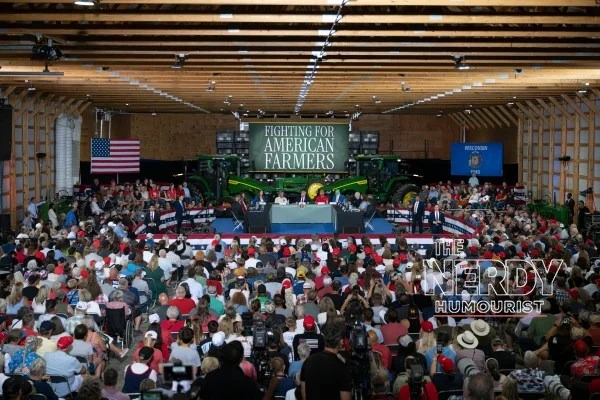
Trump and the Republican Party have been scrambling to maintain support in farm states with competitive Senate races, Reuters noted, as costs have risen and farmers have grown restless about trade disruptions and input prices.
At the Kansas rally, Trump compared the new fund to the $12 billion Farmer Bridge Assistance program paid out earlier this year, and to the roughly $28 billion in farm support delivered during his first administration, including $12 billion disbursed ahead of the 2018 midterms. Fox Business reported that Trump credited Sen. Marshall personally: “And Roger Marshall is the leader who fought for that to happen. Roger got it to happen.”
The president added that more funding could follow if Republicans hold Congress: “And when the Republicans win, we will pass even more funding for our farmers. We love our farmers.”
Not Everyone Is Convinced It Arrives in Time
While farm groups welcomed the announcement, questions remain about timing. With harvest already underway across the Corn Belt and payment rates for Title I commodities not expected until November, some producers worry the relief may arrive after the bills for fuel, repairs and labor have already come due.
The USDA’s statement did not give a firm date for when the application window would open or when checks would go out, saying only that commodity-specific rates would be released next month. As reported by Pulse2, the department plans to publish the payment methodology for other eligible commodities at a later date — leaving specialty crop growers in a holding pattern for now.
Critics of the administration have also argued that the $8 billion, while substantial, covers only a fraction of the input-cost increases farmers have absorbed this year, and that one-time payments do little to address the structural pressures — from fuel markets to trade policy — driving farm-sector stress. The USDA countered in its release that the uniform formula approach is intended to deliver relief quickly and equitably, modeled on the earlier Farmer Bridge Assistance program.
What Happens Next
The immediate milestones are straightforward: payment rates for Title I commodities in November, an application period to open after that, and pre-filled applications for producers already registered through Login.gov. Farmers watching the program should keep an eye on the USDA’s announcements for the methodology covering non–Title I commodities — including specialty crops and fisheries — where rates remain undetermined.
With the midterms just weeks away and farm-belt voters among the constituencies the administration is most actively courting, the $8 billion Harvest Fuel Relief program has quickly become one of the signature policy promises of the campaign’s closing stretch. Whether it translates into ballots at the polls will depend, in part, on how fast the money reaches the fields.
FAQ
What is the Harvest Fuel Relief program?
It is an $8 billion USDA program announced October 19, 2026, that will make one-time payments to American farmers during the 2026 harvest season to offset diesel costs and other increased input expenses.
Who qualifies for the payments?
The program covers producers of Title I commodities, with commodity-specific payment rates to be released in November 2026. The USDA is also collecting data from specialty crop growers and fishermen to set rates for other eligible commodities. Crop insurance is not required to participate.
How will payment amounts be calculated?
Using a uniform national formula based on FSA-reported planted acres, Economic Research Service cost-of-production estimates, and World Agricultural Supply and Demand Estimates yields and prices — modeled on the earlier Farmer Bridge Assistance program.
When will farmers get paid?
The USDA has not announced a firm payment date. Commodity-specific rates arrive in November, and the application period will open after that. Farmers are advised to set up a Login.gov account connected to USDA systems to receive pre-filled applications.


Leave a Reply
You must be logged in to post a comment.