

The three men who control the world’s biggest nuclear arsenals sit down together today. Donald Trump, Xi Jinping and Vladimir Putin meet in Shenzhen for the first-ever trilateral summit between the leaders of the United States, China and Russia.
The meeting runs on the sidelines of the Asia-Pacific Economic Cooperation summit in the southern Chinese tech hub. Trump has put nuclear arms control at the top of his list. Iran and North Korea are on the agenda too. And nobody in any of the three capitals is promising a deal.
It is the kind of gathering that would have sounded far-fetched a year ago. Now it is the closing act of Trump’s Asia trip, and the whole point, by Washington’s own telling, is to get the three leaders talking about the weapons that could end the world — before the rules that kept them in check disappear altogether.
What the Trump Xi Putin trilateral summit will cover
Nuclear arms come first, at least for Trump. He has insisted the issue sit at the centre of the three-way talks, even though Beijing has pushed back against making it the centrepiece. China has repeatedly objected to joining arms negotiations with Washington and Moscow, which hold far larger nuclear arsenals.
The stakes are plain. New START, the last treaty limiting American and Russian strategic nuclear forces, expired on February 5, 2026. It capped each side at 1,550 deployed strategic warheads, 700 deployed delivery vehicles, and 800 deployed and nondeployed launchers and heavy bombers. Since February, no binding limits have applied to either arsenal.
China never joined that treaty. Pentagon estimates put its stockpile at around 600 warheads, while the US and Russia are each estimated to hold more than 5,000. Beijing’s position, restated in an April 2026 report on the nuclear Non-Proliferation Treaty, is that it will not accept equal trilateral disarmament talks under present conditions. That gap — between what Trump wants to discuss and what China will discuss — is the summit’s central tension.
Iran is on the agenda as well. The three-way talks come as the US conflict with Iran drags on, and Trump said new strikes on Iran were unlikely as talks progressed. North Korea is the open question. Yonhap reported that uncertainty remains over whether Trump will meet North Korean leader Kim Jong-un during his visit to China.
Ukraine is the odd one out. White House officials have said Trump is not expected to raise the war in Ukraine during the trilateral itself. That is a striking omission, given the war has run for more than four years and Trump and Putin’s last meeting, in Alaska in 2025, was built around trying to end it. The war will hang over the day regardless. It just won’t be on the formal agenda for the three-way session.
Why the Trump Xi Putin trilateral summit is unlikely to produce a deal
Ask the analysts and the answer is consistent: symbolism, not substance. BusinessWorld reported that the meeting brings together the leaders of the world’s three largest nuclear powers for an unusual diplomatic gathering that is “unlikely to produce major agreements”. A senior US official put it more bluntly, telling reporters: “We do not expect to get to any kind of agreement.”
There is one piece of paper in play. Kremlin foreign policy aide Yuri Ushakov said on Monday that the three countries were in intensive consultations over a draft joint statement, and that Russia had conveyed its position to China, according to Russia’s TASS news agency. Whether the three sides will actually adopt a joint statement is still unclear.
UN Secretary-General Antonio Guterres has said the United Nations stands ready to support any denuclearisation effort that comes out of the meeting. That is the kind of line you get when nobody wants to predict failure, but nobody can describe success either.

The honest read is that this is a first conversation, not a negotiation. A comprehensive nuclear treaty would need months of technical work by arms-control teams that have barely spoken since New START lapsed. A settlement of the Iran conflict or the Ukraine war would need far more than three leaders in one room. What Shenzhen can do is put the three of them on the record, together, saying the arsenals matter. That sounds small. In a year when the last treaty died, it counts for something.
How Thursday is set up in Shenzhen
Trump arrived in Shenzhen on Wednesday, November 18. Xi greeted him at the airport — an unusual gesture from the Chinese leader, and one that set the tone for a visit Beijing is treating as a major event.
Trump and Putin have already crossed paths. The two men shared a brief handshake and a few words at a photo opportunity on Wednesday, placed on either side of Xi. Russia’s Interfax news agency said they did not have a substantive conversation.
Thursday’s schedule stacks the meetings. Trump holds a bilateral meeting and a working lunch with Xi ahead of the trilateral. US and Russian officials said he would also have a one-on-one meeting with Putin, though Russian officials added that no full-scale bilateral negotiations were planned at that session.
The APEC stage was set on Wednesday. Xi told the summit that countries should end trade “protectionism” and support free and open trade. Putin used his speech to criticise Western sanctions. Both speeches landed hours before Trump touched down — a reminder that the three leaders arrive in Shenzhen with very different ideas about how the world should work, and that the trilateral is happening anyway.
The road to Shenzhen
The meeting was a week in the making. The White House and the Kremlin announced it first, and China’s Foreign Ministry confirmed the date on Monday, November 16. It is the first time the three leaders have ever met three-way.
Trump and Putin last sat down in Alaska in August 2025, for talks that failed to end Russia’s war in Ukraine. Trump and Xi last met in Busan, South Korea, on October 30, 2025, on the sidelines of last year’s APEC gathering — and Trump visited Beijing in May 2026. None of those meetings produced the kind of arms deal Trump is now chasing.
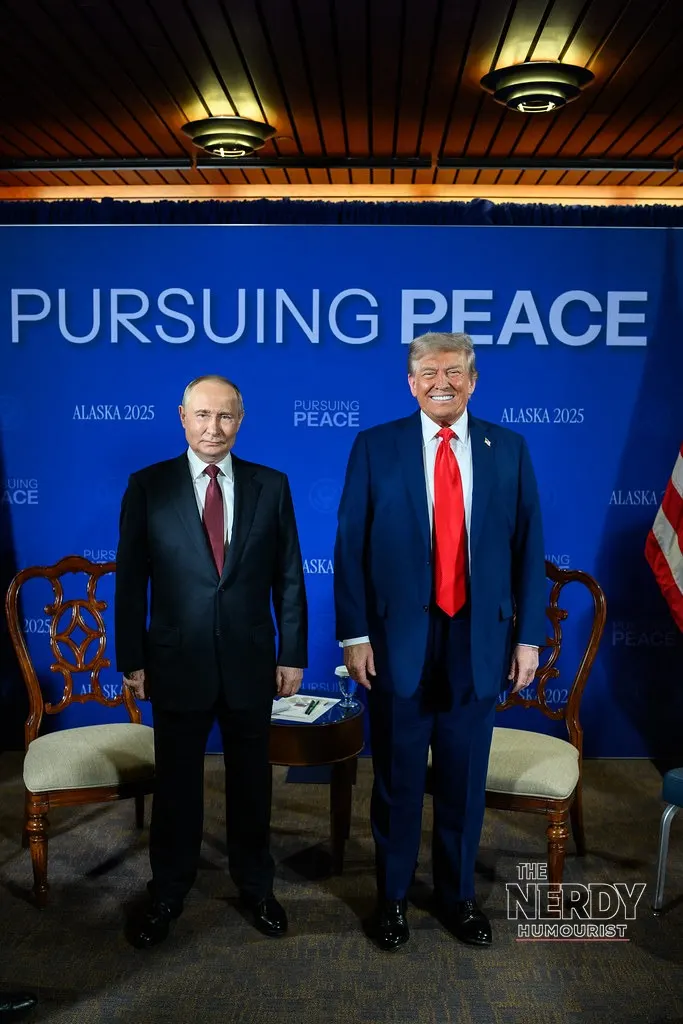
Some have reached for a historical comparison. The Indian Express noted that some compare the Shenzhen meeting with the 1945 Yalta summit — and that the comparison stops at symbolism. No Yalta-style agreement has been reached or announced, and none is expected today.
That is probably the right way to look at it. Three leaders, one table, no treaty on it. The cameras will get their picture. The question is whether the conversation that follows does anything the last nine months of drift did not.
Frequently asked questions
What is the Trump Xi Putin trilateral summit?
It’s the first-ever three-way meeting between the leaders of the United States, China and Russia. Trump, Xi and Putin meet in Shenzhen on Thursday, November 19, on the sidelines of the APEC leaders’ summit.
What are they talking about?
Nuclear arms control is the main item, at Trump’s insistence. Iran and North Korea are also on the agenda. White House officials have said Trump is not expected to raise the Ukraine war during the trilateral itself.
Will they sign a deal?
No, not by any official’s account. A senior US official said they do not expect to reach any kind of agreement, and analysts describe the meeting as heavier on symbolism than substance. A draft joint statement is under discussion, but nobody has confirmed it will be adopted.
Why does it matter if nothing is agreed?
Because it’s the first time the three leaders have met three-way, and it comes nine months after New START — the last binding US-Russia nuclear treaty — expired. Getting the three nuclear powers talking in one room is a starting point, not a finish line.


Leave a Reply
You must be logged in to post a comment.