
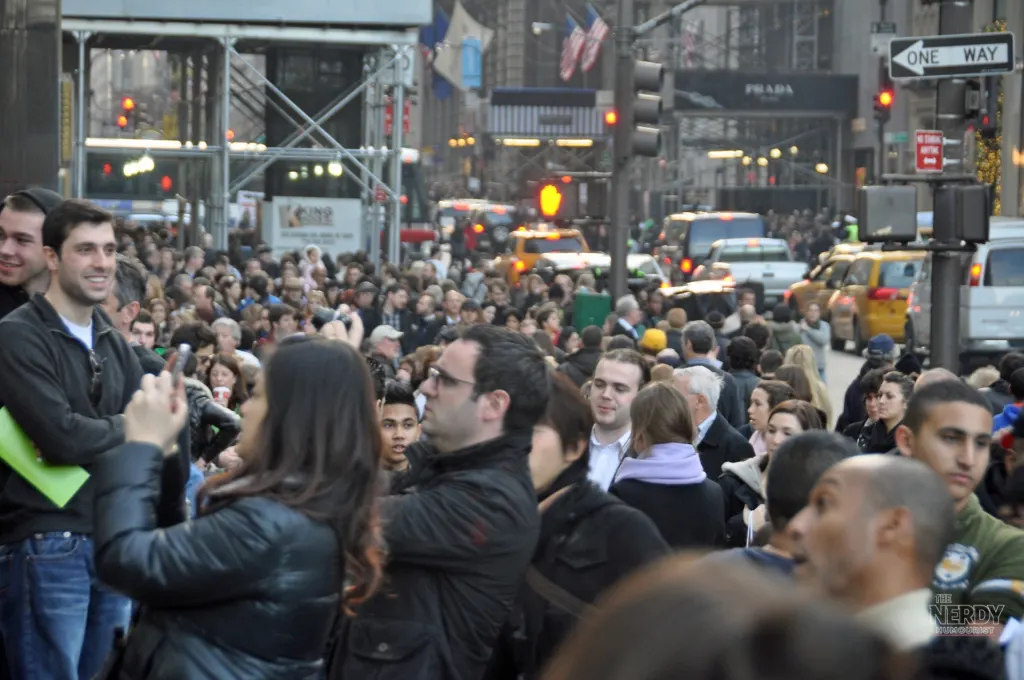
Americans suddenly feel a lot better about the economy. US consumer confidence jumped in November to its highest level in nearly two years, blowing past what economists expected and landing just as the holiday shopping season kicks off.
The headline figure: the Conference Board said its consumer confidence index jumped to 103.3 this month, the highest level since January 2025, from an upwardly revised 91.9 in October. That’s an 11.4-point leap in a single month. Economists polled by Reuters had forecast a reading of 92.5. The actual number beat that by miles.
It was the second big monthly gain in a row. October’s reading had already improved by 7.5 points. Two months ago, the mood looked grim. Now it doesn’t.
US consumer confidence: the numbers
The headline figure wasn’t the only thing that moved. Both parts of the index improved sharply.
The Present Situation Index, which measures how people feel about business and job conditions right now, rose 13.7 points to 132.8. The Expectations Index, which tracks what people think the next six months will bring, climbed 9.9 points to 83.6. That’s the second consecutive month of improvement for the headline index, and the gains showed up across the board — current conditions and the outlook both.
Jobs sit at the heart of it. The share of people saying jobs were plentiful rose to 30.8% in November, up from 26.2% in October. Fewer people said jobs were hard to get. When people feel secure in their jobs, they spend. When they don’t, they pull back. Right now, more Americans feel secure.
Prices still sting, though. Consumers’ expectations for inflation over the next 12 months eased to 5.7%, down for a second month. That’s movement in the right direction, but 5.7% is still a long way from the kind of inflation people were used to before prices took off. The mood improved. The grocery bill didn’t shrink.

What drove the jump
The midterm elections look like the trigger. Americans voted on November 3, and Democrats took control of Congress from President Donald Trump’s Republican Party. The Conference Board’s survey ran from November 1 to 17, so most responses came after the results were in.
“Consumer confidence rallied again in November, potentially due to lower uncertainty following the midterm elections,” said Fergus McCormick, a senior economist at the Conference Board. He added that write-in responses in November were slightly less negative than in previous months. “While consumers continued to express frustration with high prices and rising costs, some comments cited hope for the general economy.”
The improvement wasn’t spread evenly across the political spectrum. The sharp improvement in confidence was driven by respondents identifying as Democrats and Independents, according to Reuters. That pattern makes sense. When your side wins, the economy tends to look brighter to you. When it loses, the same numbers look worse.
October’s gain had a different driver. The Conference Board tied that one to easing retail gas prices. Cheaper fuel put a little money back in people’s pockets, and the mood lifted. November’s gain looks more political: an election settled, uncertainty down, and a wave of relief among voters who got the result they wanted.
None of this means the economy itself changed overnight. It didn’t. What changed is how people feel about it. Confidence surveys measure mood, not output. But mood matters, because it shapes what people do next.
US consumer confidence and holiday spending
Timing is everything here. The survey landed days before Black Friday, the biggest shopping weekend of the year. Retailers watch this index closely, and a jump like this one is the kind of news they want to hear.
A confident consumer is a spending consumer. That’s the textbook link, and it’s held up well over the years. People who feel good about their jobs and the economy are more likely to buy the bigger TV, book the trip, or say yes to the extra gift. A jump of 11.4 points in one month is the kind of move that makes store managers breathe easier.
Bitcoin slid below $60,000 last week, a reminder that markets and Main Street don’t always move together. Stocks have had a rough November too. But the confidence survey suggests ordinary households aren’t feeling the same chill as investors — at least not right now.
Still, don’t overread it. Confidence isn’t cash. A survey can’t pay a credit card bill, and it can’t bring down the price of eggs. Plenty of households are still stretched, still watching every dollar, still annoyed at the checkout. The Conference Board’s own write-in responses said as much: frustration with high prices hasn’t gone away. It’s just sharing space with a bit of hope now.

Why economists still sound cautious
There’s one number worth watching closely: the Expectations Index at 83.6. Readings below 80 on that gauge have long been treated as a warning sign that a recession could be ahead. November’s reading sits above that line, which is good news. But it’s only just above it. One bad month could drag it back under.
Then there’s the politics of it. A confidence jump driven by one side’s voters after an election can fade fast if the new Congress hits gridlock, or if the economy throws up a bad jobs report. Election bounces are real, but they’re fragile. They depend on the good feeling lasting longer than the news cycle.
And the inflation picture hasn’t cleared. Consumers still expect prices to rise 5.7% over the next year. That’s down from where it was, but it means people still expect their money to buy less twelve months from now. A confident consumer who still expects prices to climb is a careful spender, not a careless one.
A better mood, not a fixed economy
Strip away the politics and the survey tells a simple story. Americans spent the summer feeling gloomy about money. Two months of gains have pulled the headline index back to where it was in January 2025. That’s a real recovery in sentiment, and it came faster than almost anyone forecast.
Whether it lasts is another question. The next survey will show if November was a turning point or a blip. For now, though, the country heads into the holidays feeling better than it has in nearly two years. Retailers will take it. So will anyone hoping the economy keeps its footing into 2026.
FAQ
What is US consumer confidence right now?
US consumer confidence jumped to 103.3 in November 2026, according to the Conference Board. That’s the highest reading since January 2025, up 11.4 points from a revised 91.9 in October.
Why did US consumer confidence jump in November?
The Conference Board pointed to lower uncertainty after the November 3 midterm elections, in which Democrats took control of Congress. The jump was driven mainly by respondents identifying as Democrats and Independents, and by growing optimism about the job market.
What is the Present Situation Index?
It’s one half of the Conference Board’s survey, measuring how Americans feel about current business and job conditions. It rose 13.7 points to 132.8 in November. The other half, the Expectations Index, rose 9.9 points to 83.6.
Does higher consumer confidence mean people will spend more for the holidays?
Usually, yes — confident consumers tend to spend more, and the jump comes just before Black Friday. But confidence isn’t the same as cash. High prices are still squeezing household budgets, so the holiday season may be strong without being a blowout.


Leave a Reply
You must be logged in to post a comment.