
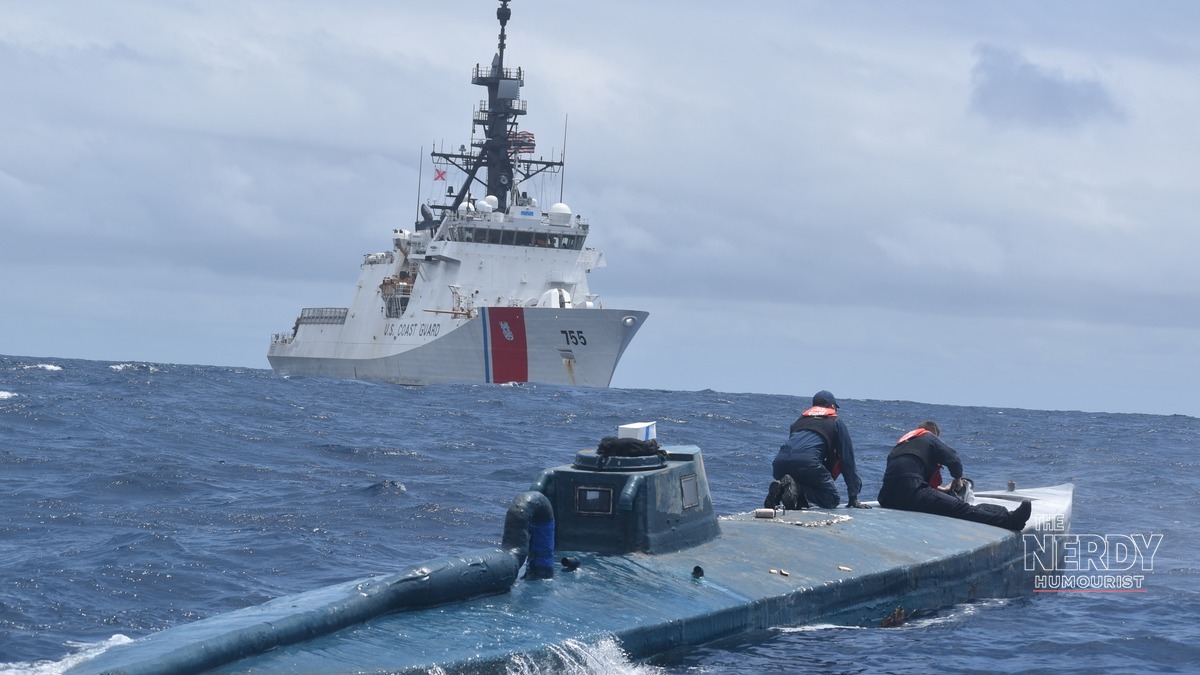
The US military has carried out another lethal strike on an alleged drug-smuggling vessel in the Caribbean, killing four people the Pentagon described as “narco-terrorists” — the latest U.S. strike in a campaign of boat attacks that now stretches across the Caribbean and the Eastern Pacific and has killed more than 235 people since September 2025.
U.S. Southern Command (SOUTHCOM) said Joint Task Force Western Hemisphere “executed a lethal, kinetic strike on a go-fast vessel operating along established narco-trafficking routes in the Caribbean” on October 4, and announced the operation a day later on social media. The announcement included video that appeared to show an explosion engulfing a moving speedboat.
SOUTHCOM Says “Confirmed Intelligence” Tied the Boat to Drug Trafficking
“Confirmed intelligence revealed the vessel’s active involvement in narco-trafficking,” SOUTHCOM said in its statement, adding: “The operation killed four narco-terrorists.” The command did not identify the dead, say which organization the vessel was linked to, or release any evidence that drugs were aboard the boat.
That pattern — a short announcement, a grainy video, and no public evidence — has held for nearly every strike in the campaign. The Pentagon has refused to release the identities of those killed in the strikes or to publish the intelligence behind the targeting decisions. Reuters reported that the administration has provided no proof that the vessels carried narcotics, even as it insists each was ferrying drugs.
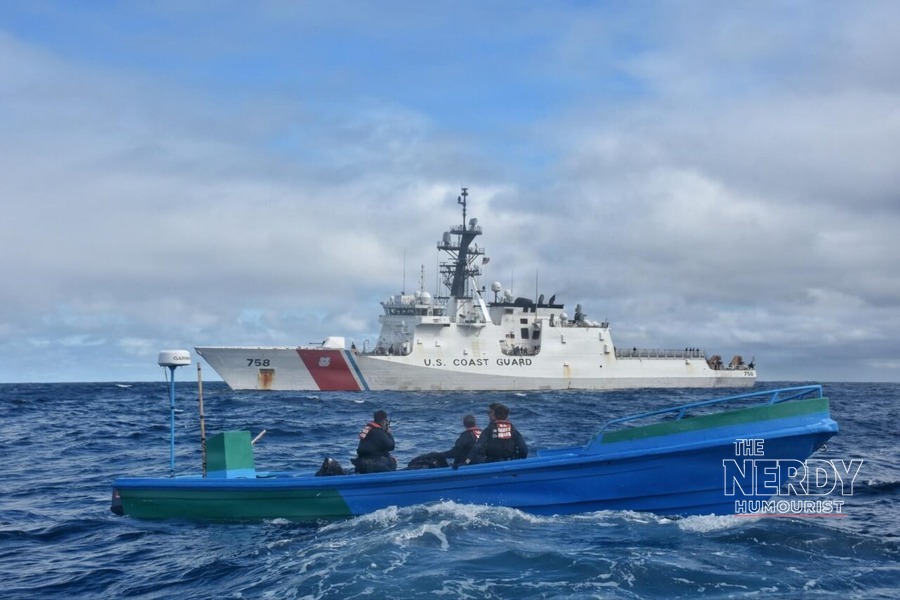
Death Toll in Eastern Pacific and Caribbean Strikes Passes 235
The October 4 attack was the 71st announced strike of the campaign, according to tracking by Just Security, which puts the toll at 238 dead — including 23 listed as missing and presumed dead — with only three known survivors. Media tallies based on U.S. military announcements cite at least 235 killed across 70 strikes.
The campaign began on September 2, 2025, when U.S. Special Operations forces struck vessels in the Caribbean. It has since expanded into the Eastern Pacific, the ocean corridor where much of South America’s cocaine is smuggled north toward the United States. The Trump administration calls the effort Operation Southern Spear and describes it as a war against “narco-terrorists” operating across the Western Hemisphere.
The Eastern Pacific Front: From Narco-Subs to Go-Fast Boats
While the latest strike hit the Caribbean, the Eastern Pacific has become a major front of the campaign. The most recent announced Eastern Pacific strike came on August 23, 2026, when SOUTHCOM said Joint Task Force Western Hemisphere killed two alleged narco-terrorists on a low-profile vessel — the first publicly announced strike under the newly formed task force.
Announcing that operation, SOUTHCOM commander Gen. Francis L. Donovan said: “When I ordered the establishment of Joint Task Force Western Hemisphere, it was precisely for this purpose: to accelerate, synchronize, and execute lethal actions against these destabilizing narco-terrorist networks.” He added: “We are committed to imposing total systemic friction on narco-terrorists — disrupting their operations, dismantling their leadership, and eliminating cartel terror across the region.”
Earlier Pacific strikes this year included a June 18 operation that killed three people and a June 3 operation that killed two, both on vessels the military said were “operated by Designated Terrorist Organizations.” A June 21 strike killed two people and left six survivors who were later listed as missing and presumed dead. The first Eastern Pacific strike of the campaign was carried out on October 21, 2025, killing two people, according to the Just Security timeline.
Legal Questions Grow as Critics Call the Strikes “Extrajudicial Killings”
The legality of the strikes has been questioned by lawmakers, legal experts, and rights advocates in the United States and abroad. Human Rights Watch, Amnesty International, and independent United Nations experts have called the attacks unlawful extrajudicial killings, arguing the targets are civilians who pose no immediate threat to the United States.
Ben Saul, the UN special rapporteur on human rights and counterterrorism, has said there are “reasonable grounds to believe” the attacks “constituted crimes against humanity of murder under customary international law,” according to Reuters. The American Civil Liberties Union has dismissed the administration’s justifications as “unsubstantiated, fear-mongering claims.”
Sen. Rand Paul, a Kentucky Republican, has raised concerns about killing people without due process and the possibility that innocent people could be among the dead. And on September 30, a federal judge in the Southern District of New York ordered the government to hand over for closed-door review the Justice Department’s Office of Legal Counsel memorandum said to provide the legal basis for the lethal boat-strike campaign — and to name every person who has seen it.
The Administration’s Defense: “Unlawful Combatants” and an “Armed Conflict”
The Trump administration has argued that the strikes are military self-defense operations under U.S. Title 10 authority. In 2025, the Associated Press reported on an administration memo stating that the United States is in a “non-international armed conflict” with designated drug cartels, with the president directing the Pentagon to “conduct operations against them pursuant to the law of armed conflict.”
In early October, the White House told Congress it considers the alleged traffickers “unlawful combatants” and the drug trade an “armed attack against the United States,” according to a memo reported by USNI News. President Donald Trump has said the boats carry fentanyl, which he designated a weapon of mass destruction in December — though research by the Government Accountability Office has found that most fentanyl entering the country comes through passenger vehicles crossing the border from Mexico.
Defense Secretary Pete Hegseth has defended the pace of the strikes, saying their purpose is deterrence: “Stop sending your drugs to our country and poisoning the American people,” he told an audience in January.
What Comes Next: Land Strikes and a Wider Campaign
The October 4 strike landed days after the administration signaled the campaign could expand further. Trump has said U.S. forces “knocked out” a drug facility on Venezuela’s shore, and he has mused publicly about authorizing strikes on land targets — an escalation that remains unconfirmed, with no publicly announced land strike as of this writing.
The administration has also been pursuing regional security deals under a U.S.-led “Shield of the Americas” coalition to extend joint military operations against designated criminal groups across Latin America. Hegseth said during a visit to Panama in August that Colombia, Guatemala, and Honduras had agreed to joint operations on their soil, though Guatemala later denied reaching such a deal, and Ecuador launched similar joint missions with the United States in March.
The boat campaign is unfolding alongside a broader expansion of the American military posture — from a third carrier deployment toward the Persian Gulf to record fuel prices as the Iran standoff rattles energy markets — underscoring how the strikes fit into a wider show of force.
US Strike on “Narco-Terrorists”: FAQs
Q: When did the latest U.S. strike on a suspected narco boat happen?
A: On October 4, 2026, SOUTHCOM said Joint Task Force Western Hemisphere carried out a lethal strike on a go-fast vessel in the Caribbean, killing four people the military called “narco-terrorists.” The operation was announced on October 5 with video of the explosion. It is the most recent strike the military has publicly announced.
Q: How many people have died in the campaign since September 2025?
A: At least 235 people have been killed across 70 strikes, according to military announcements tallied by media outlets. An independent tracker maintained by Just Security puts the toll at 238 dead across 71 strikes as of October 4 — including 23 listed as missing and presumed dead — with only three known survivors.
Q: Why do human rights groups call the strikes illegal?
A: Critics including Human Rights Watch, Amnesty International, and UN experts say the strikes amount to extrajudicial killings because the people targeted were not charged with crimes, given trials, or shown to pose an imminent threat. UN special rapporteur Ben Saul has said there are “reasonable grounds to believe” the attacks could constitute crimes against humanity of murder under customary international law.
Q: What does the Trump administration say justifies the strikes?
A: The administration says the United States is in a “non-international armed conflict” with designated drug cartels and characterizes the targets as “unlawful combatants,” citing what it calls confirmed intelligence that the vessels are trafficking narcotics. It has not publicly released the legal memorandum or the intelligence behind individual strikes.

Leave a Reply
You must be logged in to post a comment.