
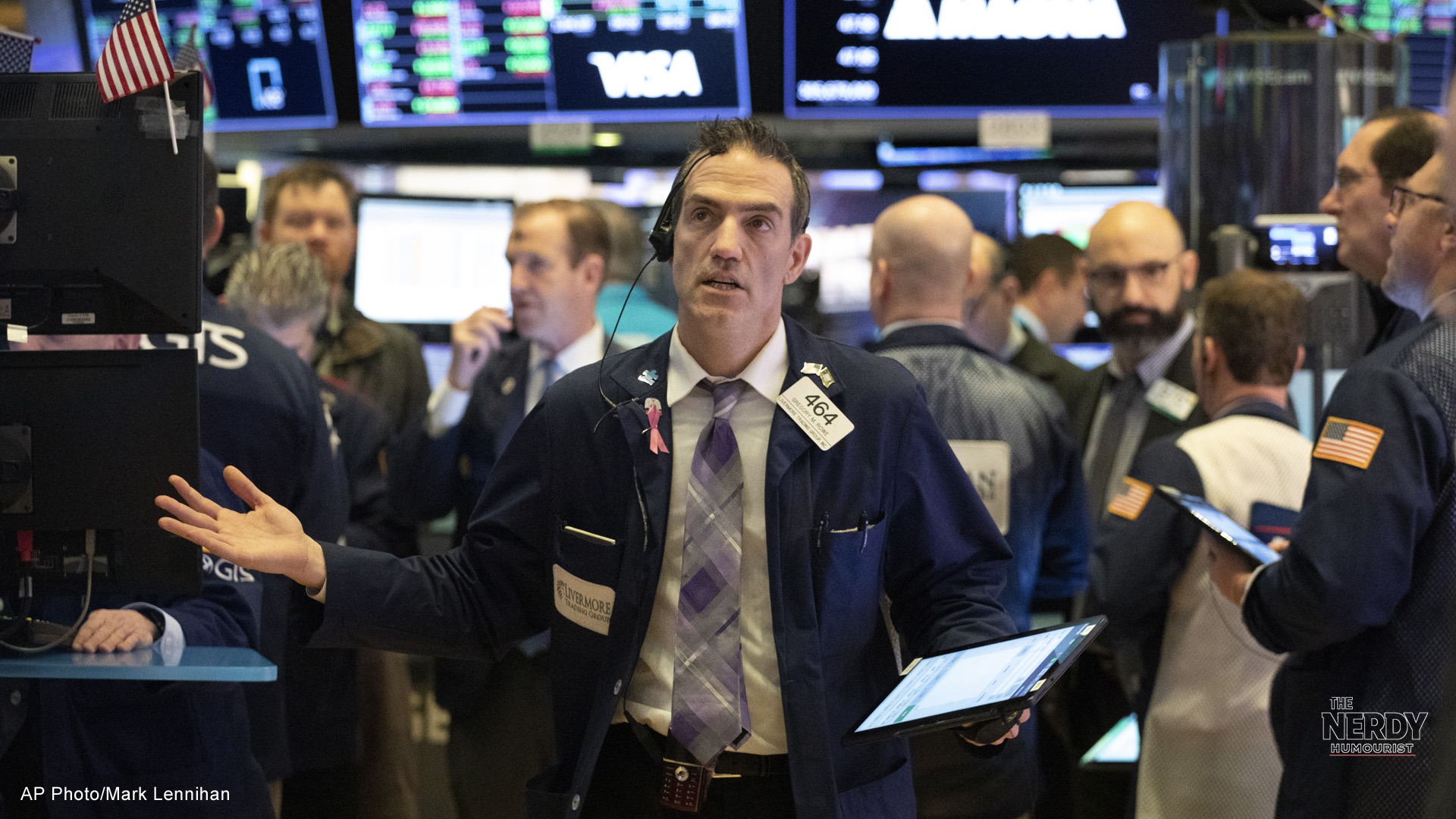
Wall Street suffered its worst trading day since October on Friday, as a selloff in big technology companies dragged the broader market lower and a hot jobs report revived fears that the Federal Reserve could be forced to hike interest rates at some point this year. The S&P 500 sank 2.6% — its biggest one-day drop since October 10, when the Trump administration threatened to impose a 100% tariff on imported goods from China — according to BANKBIT’s coverage of the session.
The losses pushed the benchmark index to its first losing week in 10, snapping one of the market’s longest weekly win streaks of the year.
The damage
The Dow Jones Industrial Average fell 1.4%, while the Nasdaq composite slumped 4.2%, BANKBIT reported. The tech-heavy Nasdaq’s slide capped a brutal stretch for the AI trade: for the full week ended October 16, the Nasdaq composite lost 4.48% — its worst week since late June — while the S&P 500 fell 1.9% and the Dow actually gained 0.67%, according to a weekly market review.
Technology stocks dragged the market lower as the companies that powered the S&P 500 to a series of records over the past two months saw some of the steepest losses:
- Micron Technology slid 13.3% on Friday — the biggest loss of any stock in the S&P 500 — and finished the week down 14.6%, according to market data.
- Broadcom dropped 7.9%.
- Nvidia fell 6.2%.
- Meta declined 5.5% following a published report that the social media giant may seek a new stock offering to raise funds for AI infrastructure spending.
For the week, the Philadelphia Semiconductor Index lost 11.41% — its worst week since April 2025 — while memory and storage names were hit hardest: SanDisk fell 17.9% and Western Digital dropped 16.4%, according to market reviews.
The hot jobs report that revived rate-hike fears
The selloff wasn’t purely about tech valuations. A stronger-than-expected jobs report on Friday boosted expectations that the Federal Reserve will be forced to hike interest rates at some point this year — a sharp reversal from the rate-cut hopes that had supported markets through much of 2026, BANKBIT reported.
The rate jitters had been building all week. September consumer prices rose 0.6% on the month and 3.7% from a year earlier — above the 3.6% expected — as gasoline jumped 9.1%, while wholesale prices climbed 1.3% against a 0.5% forecast, lifting the annual rate to 6.3%, a four-year high, according to the Detroit Free Press’s weekly market roundup. Odds of a Fed rate hike at the October 27–28 meeting jumped from about 22% to near 50% after the CPI report, then fell back to roughly 17% by Friday after Fed Chair Kevin Warsh gave no signal in remarks from Bangkok. “I don’t prejudge meetings,” he said.
Bonds became the refuge: the 10-year Treasury yield fell to about 5.10% after Thursday’s biggest one-day drop since June, and the 30-year eased to 5.43% from 5.73%.
CoreWeave, AI financing doubts, and Musk’s memory comments
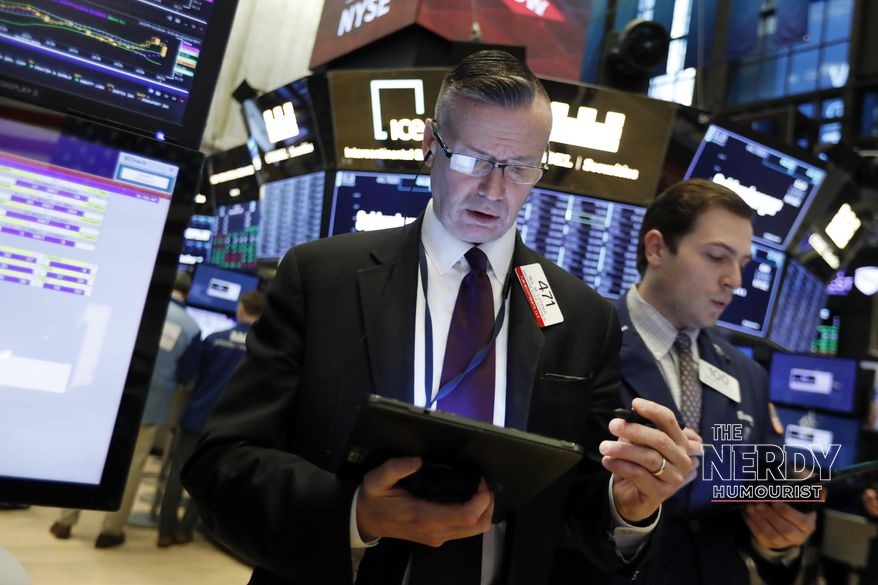
At the center of the week’s stress was CoreWeave, the AI cloud provider. Its stock plunged 15.5% on Wednesday as the cost of insuring its debt reached a record, with its 9% notes falling to about 80 cents on the dollar — a yield above 15%, the Free Press reported. It fell 11.91% on Friday, ending the week down roughly 25%.
Market reports pointed to broader worries about how the AI build-out is being financed, with the semiconductor sector fund SMH losing 10.5% for the week. A Gartner forecast that more than 80% of neocloud providers would stop operating independently by 2030 added to the gloom, according to market coverage.
Memory makers took the hardest blow of all. The rout began early in the week after China’s CXMT announced a year-end server memory launch, stoking fears of future oversupply, and intensified when Elon Musk weighed in: on October 13, Musk wrote on X that Micron had been “reasonable” on future memory prices while others had been “extortionate,” and later warned that China would be making “a lot of RAM” in 2028, according to AIStockWire’s weekly recap.
What the internals showed
Beneath the index-level carnage, the picture was more nuanced. Stocks within the S&P 500 were nearly evenly split between gainers and losers, and 352 of the index’s 502 stocks actually rose for the week — the median stock gained 2.6%, according to a market analysis. The decline was concentrated in a handful of megacap tech names: the seven largest companies fell about 2.9% as a group, with only Apple rising, gaining 2.0%.
In other words, the week’s selloff was less a market-wide panic than a violent rotation — out of the AI trade and into blue chips and bonds. The Dow closed at a one-month high even as the Nasdaq burned.
Friday’s closing levels told the story: the S&P 500 finished at 7,659.44, the Nasdaq at 26,140.03, and the Dow at 52,002.41, according to portfolio-terminal’s weekly review.
FAQ
How much did the S&P 500 fall on Friday?
The S&P 500 sank 2.6% on Friday, October 16 — its biggest one-day drop since October 10, when the Trump administration threatened a 100% tariff on Chinese imports, according to BANKBIT.
Why did tech stocks fall?
A combination of forces: worries about how the AI build-out is being financed (centered on CoreWeave’s plunging bonds), a hotter-than-expected jobs report reviving Fed rate-hike fears, inflation data running above forecasts, and oversupply fears in memory chips after CXMT announced a year-end server memory launch.
Which stocks fell the most on Friday?
Micron Technology slid 13.3% — the biggest loss among S&P 500 stocks — followed by Broadcom at 7.9%, Nvidia at 6.2%, and Meta at 5.5%. For the full week, the Philadelphia Semiconductor Index lost 11.41%, its worst week since April 2025.
Was it the whole market, or just tech?
Mostly tech. While the S&P 500 fell 1.9% for the week, 352 of its 502 stocks actually rose, and the median stock gained 2.6%. The Dow — heavy on blue chips — gained 0.67% on the week.
Market data cited reflects figures reported for the October 16 session and is not financial advice. Related reading: September CPI and the Fed rate outlook and Fed Chair Warsh’s Bangkok remarks on rate-hike odds. Sources: BANKBIT (AFP syndication), Detroit Free Press/Benzinga, Portfolio Terminal, AIStockWire, Backtest.


Leave a Reply
You must be logged in to post a comment.