
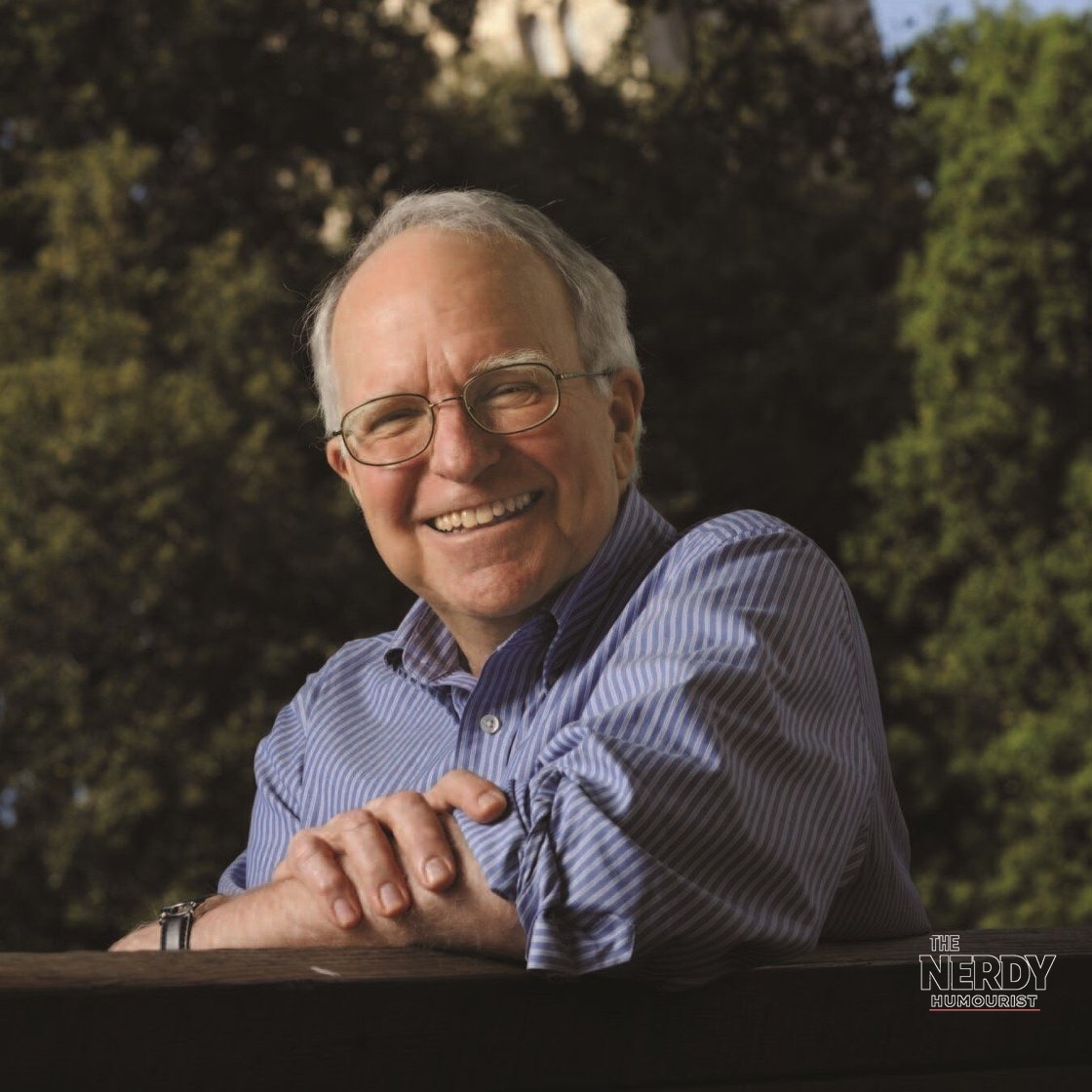
The Nobel Economics Prize 2026 has been awarded to American economists Robert E. Hall and Michael Woodford for building the macroeconomic models that help central banks and governments steady their economies when shocks hit. The Royal Swedish Academy of Sciences announced the award in Stockholm on Monday, the final prize of the 2026 Nobel season.
Hall, a professor at Stanford University, and Woodford, a professor at Columbia University, will share 12 million Swedish kronor — about $1.2 million — the standard award across all Nobel categories this year. They were honoured “for microeconomic foundations of macroeconomic stabilisation,” the Academy said.
The prize formally carries the name Sveriges Riksbank Prize in Economic Sciences in Memory of Alfred Nobel. It was announced on October 12, 2026, the last of the year’s Nobel announcements after prizes in medicine, physics, chemistry, literature and peace were handed out last week.
The Citation: Micro Foundations of Stabilisation
At its heart, the Academy’s citation is about a deceptively simple question: how can governments and central banks keep the economy on an even keel when energy crises, spending shocks or financial jolts send it veering off course?
Hall and Woodford’s answer was to build new macroeconomic models with proper microeconomic foundations — models grounded in how individuals and households actually make decisions, rather than crude relationships between aggregate variables like inflation, production and consumption.
On the basis of these models, the Academy said, well-timed fiscal and monetary policy measures can reduce the intensity of damaging swings in the economy. “The laureates have helped us smooth out the economy’s peaks and troughs,” the Academy noted in its statement.
“The laureates’ work has provided us with a stable theoretical foundation for the models that are now used by central banks and governments around the world,” said John Hassler, chair of the Committee for the Prize in Economic Sciences. “With them, we are better equipped to deal with shocks in the economy, such as energy crises or sudden changes in how much households consume.”
The Academy added that their models have been “extremely helpful in dealing with the economic downturns that have affected us.”
The Key Insight: Expectations Are Forward-Looking
Central to the laureates’ work is the recognition that households and businesses are “forward-looking” when they make decisions — about how much to save, what prices to set, or whether to invest. People do not just react to what the economy is doing today; they act on what they expect it to do tomorrow.
That insight has a powerful practical consequence: governments and central banks can influence those expectations simply by communicating their plans for fiscal and monetary policy — and thereby “move the economy in the right direction,” as the Academy put it.
It is why central bankers’ speeches now move markets, and why inflation targeting — saying publicly what inflation will be, and being believed — has become the dominant operating framework of modern monetary policy. Woodford’s work on interest-rate policy and the communication of central bank intentions helped make that framework rigorous; Hall’s research on labor markets and household behaviour grounded the models in how people really act.
The Laureates
Robert E. Hall, born in Palo Alto, California, in 1943, is a professor of economics at Stanford University and a senior fellow at the Hoover Institution. His career has spanned labour economics, the study of unemployment, and the behaviour of households and firms — the microeconomic building blocks the Academy singled out.

Michael Woodford, born in Chicopee, Massachusetts, in 1955, is a professor at Columbia University in New York. His landmark work on monetary policy — including his influential research on how central banks should set interest rates and explain themselves — reshaped how economists think about stabilisation policy in practice.
Each laureate will receive 6 million Swedish kronor, roughly $598,000, according to the Academy. They will be presented with their medals and diplomas in Stockholm on December 10, the anniversary of Alfred Nobel’s death, alongside the other 2026 laureates.
The Prize That Is Not Quite a Nobel
Strictly speaking, the economics prize is not one of the original Nobel Prizes. Alfred Nobel’s 1895 will established five awards — in physics, chemistry, medicine, literature and peace. The economics prize was created in 1968 through a donation from Sweden’s central bank, the Sveriges Riksbank, in Nobel’s memory, and was first awarded in 1969.
That technicality has not stopped it from becoming the most prestigious honour in the economics profession. The great majority of its laureates have been from the United States, and only three women have ever won it — most recently Claudia Goldin in 2023 for her research on how gender has shaped pay and employment in the United States.
Last year’s prize went to Joel Mokyr, Philippe Aghion and Peter Howitt for their work on “creative destruction” — how new technology and production methods can boost growth and living standards.
The 2026 Nobel Season Comes to a Close
With Monday’s announcement, the 2026 Nobel season is officially over. It began last week with the medicine prize for Karl Deisseroth of the US and Germans Peter Hegemann and Georg Nagel, followed by the physics prize for Belgian Francis Halzen, the chemistry prize for France’s Henri Kagan and Japan’s Kenso Soai, and the literature prize for Canadian-Icelandic writer Anne Carson.
The peace prize went on Friday to South African jurist Navi Pillay for her efforts to promote peace and international law — a choice that has reverberated through this week’s news, including the reaction from Washington. For more on that decision, read our coverage of Pillay’s 2026 Nobel Peace Prize win, and for the season’s literary pick, see Anne Carson’s Nobel literature win.
Monday’s economics announcement closes out a season that has spanned immunotherapy-adjacent medicine, particle physics and the microeconomic roots of macroeconomic stability — a fitting finale for a prize devoted to the idea that the small decisions of ordinary households add up to the fate of whole economies.
FAQ: Nobel Economics Prize 2026

Who won the 2026 Nobel Economics Prize?
Robert E. Hall of Stanford University and Michael Woodford of Columbia University, two American economists, were awarded the 2026 Sveriges Riksbank Prize in Economic Sciences in Memory of Alfred Nobel on October 12, 2026.
What was the citation for the 2026 economics prize?
The laureates were honoured “for microeconomic foundations of macroeconomic stabilisation” — new models grounded in individual and household decision-making that let central banks and governments design better-timed fiscal and monetary policy.
How much is the Nobel Economics Prize worth in 2026?
12 million Swedish kronor, about $1.2 million, shared equally between the two laureates. Each will receive 6 million kronor, roughly $598,000.
Is the economics prize a real Nobel Prize?
Not technically. It was established in 1968 by Sweden’s central bank in memory of Alfred Nobel and first awarded in 1969 — it is not among the five prizes created by Nobel’s 1895 will. But it is presented with the others in Stockholm on December 10 each year and is the most prestigious honour in economics.

Leave a Reply
You must be logged in to post a comment.