
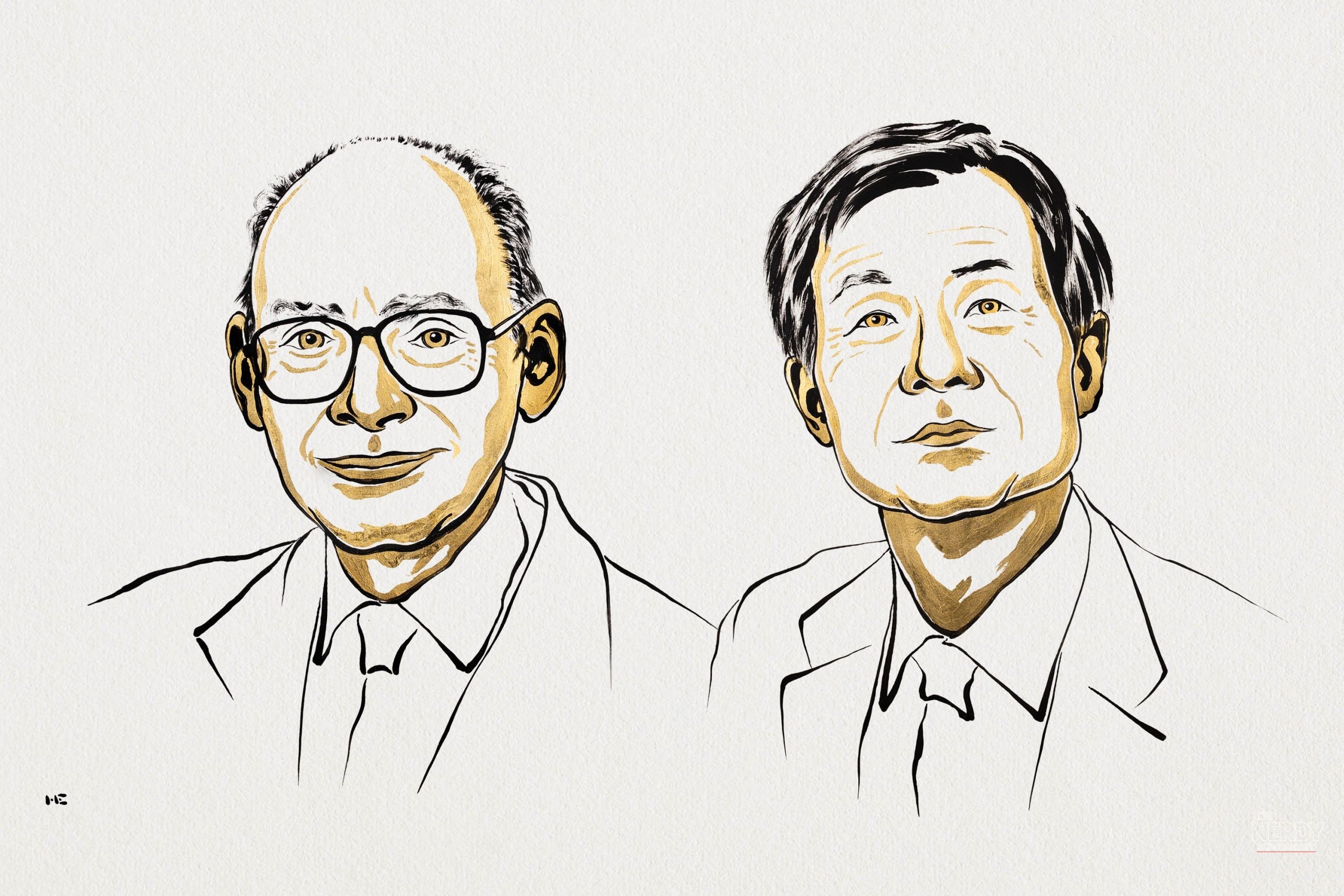
The Nobel Prize Chemistry 2026 winners are Henri B. Kagan and Kenso Soai. The Royal Swedish Academy of Sciences announced on Wednesday that the French and Japanese chemists share the prize “for the discovery of non-linear effects and autocatalysis in asymmetric organic synthesis” — work that solved a century-old mystery: how molecules that exist as mirror images of each other can end up one-handed, the way life itself is.
The prize carries 12 million Swedish kronor, about $1.2 million, shared between the two laureates, Reuters reported. Kagan, 95, is an emeritus professor at Université Paris-Saclay (formerly Université Paris-Sud) in Orsay, France; Soai is based at the Tokyo University of Science in Japan.
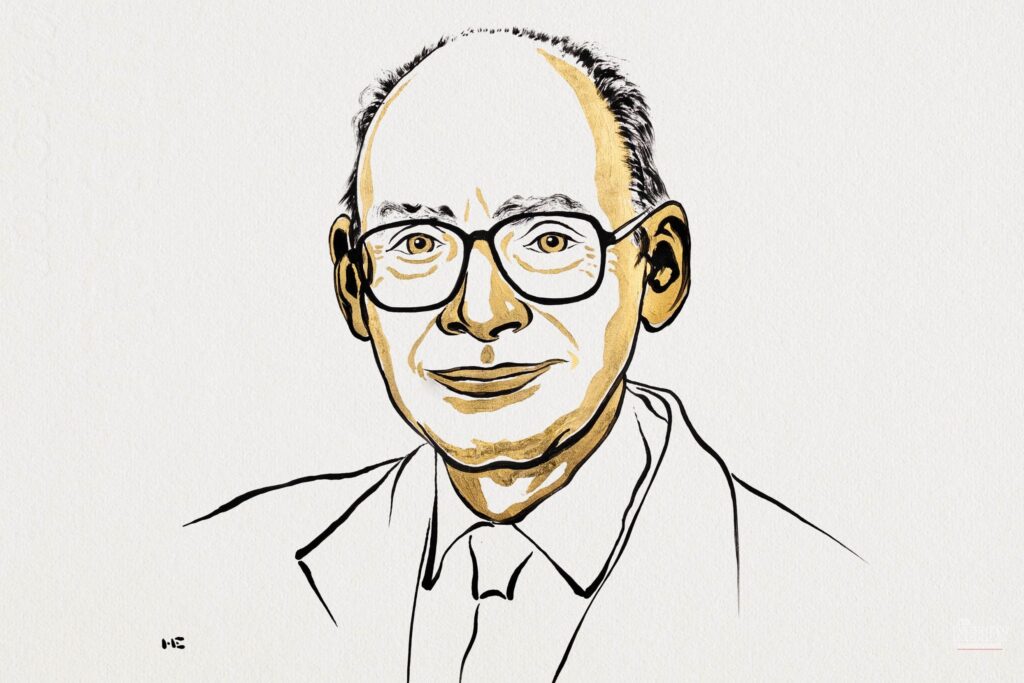
Who Is Henri B. Kagan, the Nobel Prize Chemistry 2026 Co-Winner?
Henri Boris Kagan was born on December 15, 1930, in Boulogne-Billancourt, France. A graduate of the Sorbonne and the École nationale supérieure de chimie de Paris, he earned his PhD at the Collège de France under J. Jacques and later became a pioneer of asymmetric catalysis at Université Paris-Sud in Orsay, where he is now emeritus professor.
Kagan’s fingerprints are all over modern chemistry. In 1972 he and Dang-Tuan-Phat developed the DIOP ligand, a chiral diphosphine that launched an entire family of catalysts used in pharmaceutical manufacturing. His trophy cabinet already includes the 2001 Wolf Prize in Chemistry (shared with K. Barry Sharpless and Ryōji Noyori), the Ryoji Noyori Prize, and the 2005 Benjamin Franklin Medal, and he is a member of the French Academy of Sciences.
There is even a measure of poetic justice in this year’s award. In 2001, the Nobel Prize in Chemistry went to Sharpless, Noyori and William S. Knowles for asymmetric synthesis — and many chemists protested that Kagan, one of the field’s founders, had been left out because the prize can be shared by at most three people. Twenty-five years later, the Academy has corrected the record.
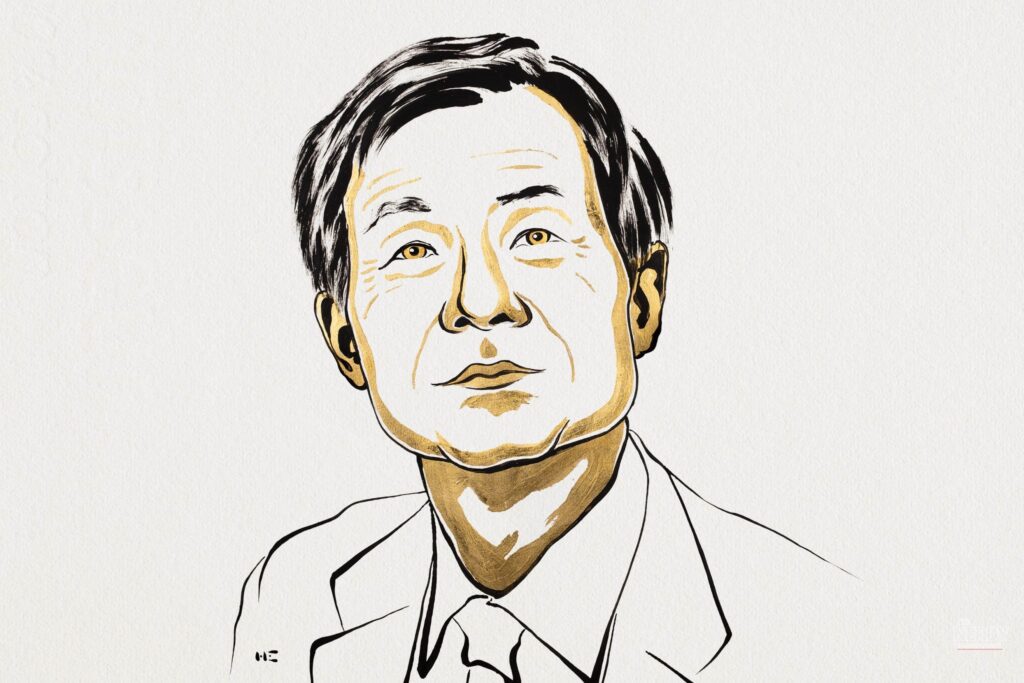
Who Is Kenso Soai, the Nobel Prize Chemistry 2026 Co-Winner?
Kensō Soai (硤合 憲三), born in 1950 in Japan, received his PhD in 1979 from the University of Tokyo under Teruaki Mukaiyama, then conducted postdoctoral research with Ernest L. Eliel at the University of North Carolina. He joined the Tokyo University of Science as a lecturer in 1981, became associate professor in 1986 and full professor in 1991, and now works in its Department of Applied Chemistry.
Soai’s honors include the Inoue Prize, the Chirality Medal, the Chemical Society of Japan Award, Japan’s Purple Ribbon Medal, and the 2023 Ryoji Noyori Prize. Reached by the Nobel committee while he was out shopping near his home, Soai told journalists by phone: “I’m very excited to receive the very nice news. Of course this is one of the most exciting days in my life.”
The Mirror-Molecule Mystery the Nobel Prize Chemistry 2026 Solved
Some molecules, like amino acids and the sugars in DNA, exist as two variants that are each other’s non-identical mirror images — chemists call this chirality, from the Greek word for hand. But living organisms use only one of the two “hands.” Amino acids in your cells bend light one way; the sugars in your DNA bend it the other. How could life’s chemistry become one-handed?
The question goes back to Louis Pasteur’s mid-19th-century experiments with tartaric acid. In 1953, the theoretical physicist Charles Frank of the University of Bristol sketched a mathematical model showing how a reaction could produce homochirality — but only if three conditions were met: a chiral catalyst driving an asymmetric reaction, enhancement of one mirror image over the other, and autocatalysis, in which the reaction manufactures its own catalyst and amplifies itself. For decades, nobody could build such a reaction in the lab.
Kagan’s Non-Linear Effects: Breaking a Century-Old Assumption
In the early 1980s, chemists trying to make pure single mirror images — critical for drug manufacturing after the thalidomide tragedy of the early 1960s showed that the wrong mirror image of a drug can be harmful — assumed a simple linear rule: mix two mirror-image catalysts in some proportion, and the product would carry that same proportion.
In 1986, Kagan questioned the assumption and tested it. When he combined the two mirror forms in the catalyst, the product came out skewed — the excess of one mirror image was greater than in the catalyst, and his plotted results formed a curve, not a straight line. He had discovered non-linear effects in asymmetric catalysis, describing three different reactions that showed the phenomenon. As NobelPrize.org’s popular-science account explains, this fulfilled the second condition of Frank’s model — and it became a field of chemistry in its own right, both a tool for probing reaction mechanisms and a route to purer drugs.
The Soai Reaction: Asymmetry That Copies Itself
Soai forged the final link. Noticing the similarities between a reaction’s catalyst and its product, he spent the early 1990s trying molecule after molecule until he found one — a chiral substance called 5-pyrimidyl alkanol — that could create itself. In a 1995 publication, he reported starting with just a 2 percent excess of one mirror image and ending with an 87 percent excess: the reaction amplified asymmetry on its own, with no outside help.
By 2003 he had a reaction in which an excess of one mirror image made copies of itself — reaching 99.99 percent purity, the winner chosen by pure chance at the start.
Why the Nobel Prize Chemistry 2026 Work Matters
The discoveries are already embedded in daily life. “Their work has been revolutionary for chemists who develop reactions for the manufacture of pharmaceuticals, flavors, scents and new materials,” the Nobel committee said — because getting the right mirror image, and only the right one, is what makes medicines safe and effective.
And the deeper question endures. “Henri Kagan and Kenso Soai have provided a solution to a chemical mystery that is over a century old: how homochirality can emerge spontaneously,” said Heiner Linke, chair of the Nobel Committee for Chemistry. “The chemical reactions they have developed are spectacular.” David Pendlebury of Clarivate’s Institute for Scientific Information added that the prize “recognizes discoveries whose influence has unfolded over decades” — a reminder, he said, that “transformative advances often emerge from sustained, curiosity-driven research.”
Nobel Week 2026: What Comes Next
Chemistry is the third prize announced this year. On Monday, the medicine prize went to Karl Deisseroth, Peter Hegemann and Georg Nagel for optogenetics (read our coverage of the 2026 Nobel Prize in Medicine), and on Tuesday the physics prize went to Francis Halzen for the IceCube Neutrino Observatory (read our coverage of the 2026 Nobel Prize in Physics). The literature prize is announced Thursday, peace on Friday, and economic sciences next Monday.
Last year’s chemistry prize went to Susumu Kitagawa, Richard Robson and Omar M. Yaghi for metal-organic frameworks — structures that can trap gases and harvest water from desert air. Kagan and Soai will receive their medals from Sweden’s King Carl XVI Gustaf at the Stockholm ceremony on December 10, the anniversary of Alfred Nobel’s death.
FAQ
Who won the Nobel Prize Chemistry 2026?
Henri B. Kagan, 95, of France (Université Paris-Saclay) and Kenso Soai of Japan (Tokyo University of Science) jointly won the 2026 Nobel Prize in Chemistry “for the discovery of non-linear effects and autocatalysis in asymmetric organic synthesis.” They share 12 million Swedish kronor (about $1.2 million).
What are non-linear effects in asymmetric synthesis?
Non-linear effects, discovered by Henri Kagan in 1986, occur when the mirror-image purity of a reaction’s product does not match the purity of the catalyst that drove it — a small excess of one mirror image in the catalyst can produce a much larger excess in the product. This lets chemists make purer single mirror images, which is essential for manufacturing safe pharmaceuticals.
What is the Soai reaction?
The Soai reaction is an autocatalytic reaction — discovered by Kenso Soai and reported in 1995 — in which the product of a chemical reaction catalyzes its own formation, amplifying a tiny initial excess of one mirror image into near-total purity (up to 99.99 percent). NobelPrize.org calls it one of the most spectacular chemical experiments ever conducted, and it offered the first lab demonstration of how homochirality — life’s one-handedness — could emerge spontaneously.
Why does chirality matter for medicines?
Many drug molecules exist as two non-identical mirror images: one has the therapeutic effect, while the other can cause unnecessary or harmful side effects — as the thalidomide tragedy of the early 1960s showed. The discoveries recognized by the Nobel Prize Chemistry 2026 give chemists fundamental new tools for making only the desired mirror image in pharmaceuticals, flavors, scents and materials.
Sources: Reuters; CNN; The Wall Street Journal; NobelPrize.org (popular information); NobelPrize.org (all prizes 2026)

Leave a Reply
You must be logged in to post a comment.