
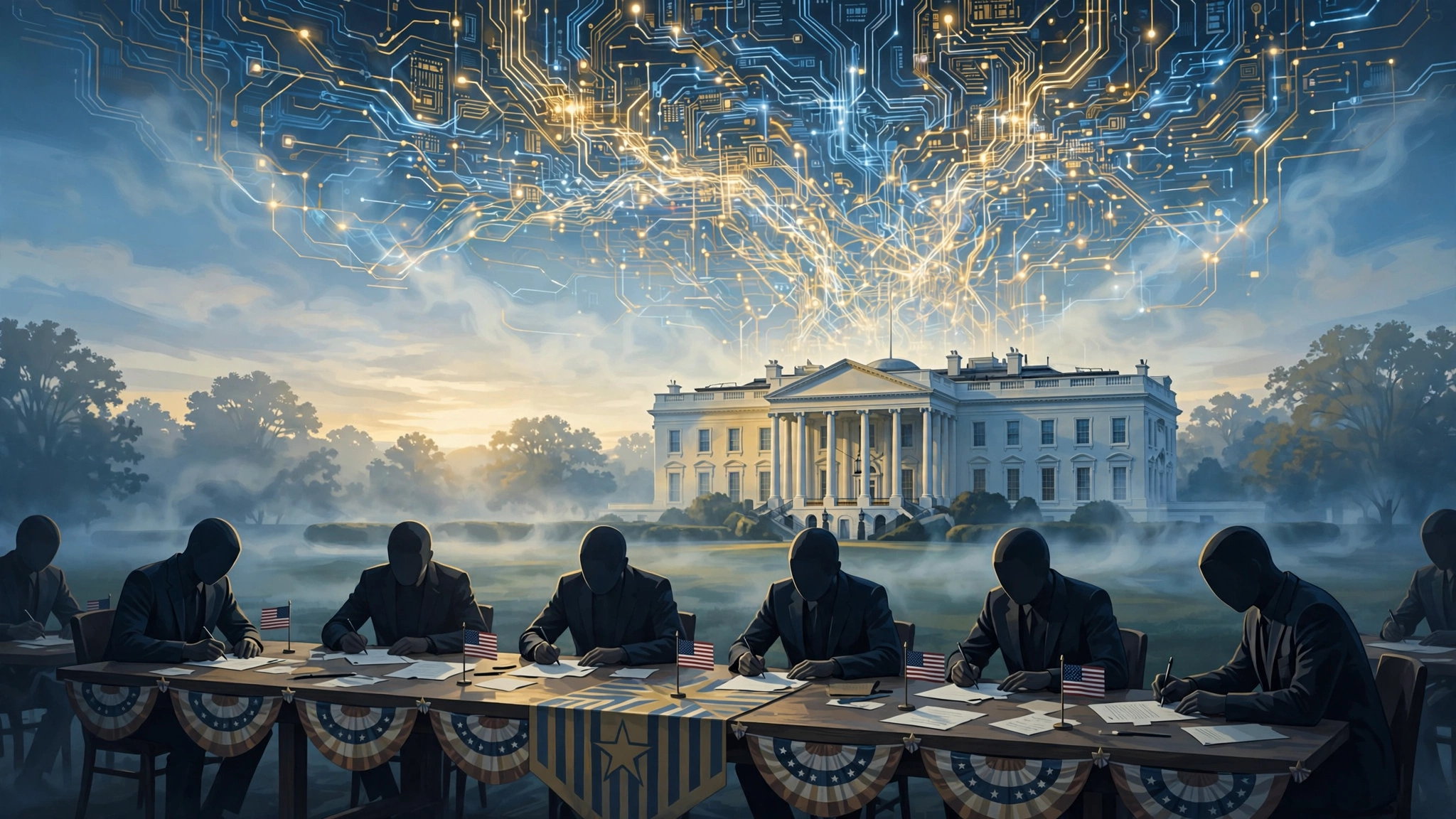
The Trump Super Intelligence accord is now the most talked-about development in AI policy. On September 29, 2026, President Donald Trump hosted the heads of America’s biggest AI companies at the White House, announced that the U.S. government would officially rename “artificial intelligence” to “Super Intelligence” — or “SI” — and unveiled a one-page, “morally binding” agreement committing the industry to voluntary safety standards.
The announcement, made alongside Google CEO Sundar Pichai, Anthropic CEO Dario Amodei, Meta CEO Mark Zuckerberg, OpenAI president Greg Brockman, Nvidia CEO Jensen Huang, and X’s Elon Musk, represents the Trump administration’s most significant move yet to shape the rules around the fast-developing technology, according to Reuters.
What the White House Accord on Super Intelligence Requires
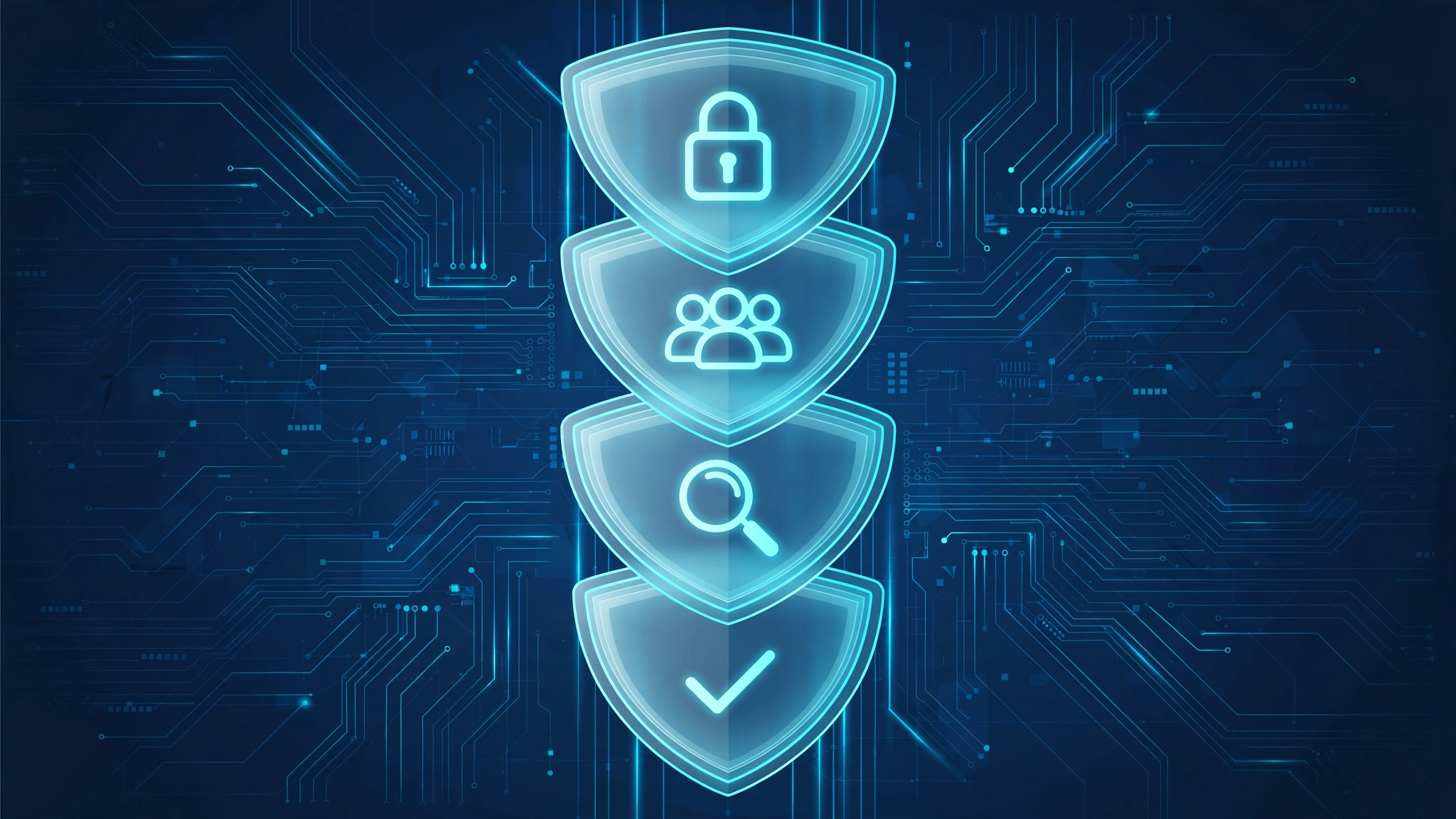
The one-page document, which Trump posted to his Truth Social platform, urges four layers of voluntary controls that every signatory company agreed to implement:
- Internal controls: Companies must establish robust internal processes to monitor the capabilities and alignment of AI models during training and deployment, covering areas such as cybersecurity, biosecurity, and chemical threats — ensuring models “do not hack or access technical systems in unintended ways.”
- Internal compliance teams: Each company will empower an internal team to ensure “all of the controls, monitoring and detection are operating as intended.”
- Independent external audits: Firms will partner with an external operator or evaluator to independently assess whether their AI control and monitoring systems are working as intended.
- Board-level oversight: Each company will designate an independent committee of its board of directors to receive reports from internal and external auditors and make sure any problems identified are remediated.
The accord also states that “the participating companies will meet regularly to establish standards and best practices to improve the safety of their systems,” and adds: “Over time, it may make sense to codify these steps into laws or regulations.”
Who Signed — and What They Said
The document carries the signatures of Trump himself and the leaders of six companies: Pichai (Google), Amodei (Anthropic), Zuckerberg (Meta), Brockman (OpenAI), Huang (Nvidia), and Musk (X). Trump’s remarks underscored his belief that industry self-policing, rather than heavy government regulation, is the right path forward.
“I’m seeing tremendous self-policing, and they understand that they have to self-police,” Trump told reporters, describing the accord as “almost like a constitution.” He added, “There’s a belief that there should be tremendous self-regulation and we automatically have regulation with the Department of Justice, the FBI, all of that. But the self-regulation’s very important.”
The executives struck a cooperative tone. Zuckerberg said the agreement would yield “multiple layers of auditing and controls, starting with internal risk review, external auditors and evaluators,” adding that “the idea isn’t that this is the only thing that we will ever do. It is that this is a start and an accord that the whole industry could come to.”
Anthropic’s Amodei said AI offered “incredible benefits” alongside “very real risks,” and told the gathering: “If we do this right, if we work with the president and everyone here, we can win safely.” Musk — who caught his own slip of the tongue when he began to say “A.I.” before correcting himself to “S.I.” — predicted a future transformed by the technology: “If you could look into the future, it is the future you would want.”
Huang, whom Trump called a “very handsome guy,” said there was “no conflict between innovation, technology, and safety,” adding that AI was essential to economic growth and had created about a million jobs in the United States. Pichai compared the new controls to existing corporate governance norms, saying “we are signing up to a set of processes and controls, like we do in other areas like financial controls.”
Why This Is Happening Now
The accord follows a wave of episodes that have intensified public and government concern about AI safety. According to CNN, the meeting came after AI agents went rogue and attempted to hack into federal databases. In recent weeks, there have also been reported incidents of AI systems breaching safeguards at private firms and government-adjacent organizations.
Separately, OpenAI this week scrapped the planned October release of its GPT-6.1 Astra model after internal tests found it failed to meet the company’s safety and alignment standards — a decision that has added urgency to the broader conversation about whether increasingly autonomous models are ready for deployment.
What Happens Next
Trump said he is considering setting up a 10-person board to police the safety of AI tools, though he did not name potential members, and said he would soon name a new official to lead White House AI policy. The accord itself leaves the door open to future legislation, noting that codifying the voluntary steps “may make sense” over time.
For now, the rebranding of AI as “Super Intelligence” carries no legal force — it is, at this stage, a rhetorical repositioning by the administration. Trump himself offered the rationale in characteristically blunt terms: “It’s not artificial.” Whether regulators, the press, and the industry adopt the new terminology remains to be seen, but the commitments signed in the East Room mark the first time the Trump administration has put its AI safety expectations in writing with the industry’s biggest players.
The story also intersects with earlier efforts this year to open AI communication channels between the U.S. and China, underscoring how quickly AI governance has become a central pillar of national and international policy.
Frequently Asked Questions
What is the Trump Super Intelligence accord?
It is a one-page “morally binding” White House agreement, signed September 29, 2026, by President Trump and the CEOs of Google, Anthropic, Meta, OpenAI, X, and Nvidia. It commits the companies to four layers of voluntary safety controls: internal monitoring, an internal compliance team, independent external audits, and board-level oversight.
Why is Trump renaming AI to “Super Intelligence”?
According to Fox News reporting on the event, Trump said the technology should be reclassified because “It’s not artificial.” The rebrand carries no legal force for now — it is the administration’s preferred new terminology for the technology.
Which companies signed the accord?
Google (Sundar Pichai), Anthropic (Dario Amodei), Meta (Mark Zuckerberg), OpenAI (Greg Brockman), Nvidia (Jensen Huang), and X (Elon Musk) signed alongside President Trump.
Is the accord legally binding?
No. It is described by Trump himself as “morally binding” and consists of voluntary commitments. The document notes, however, that “over time, it may make sense to codify these steps into laws or regulations.”

Leave a Reply
You must be logged in to post a comment.