
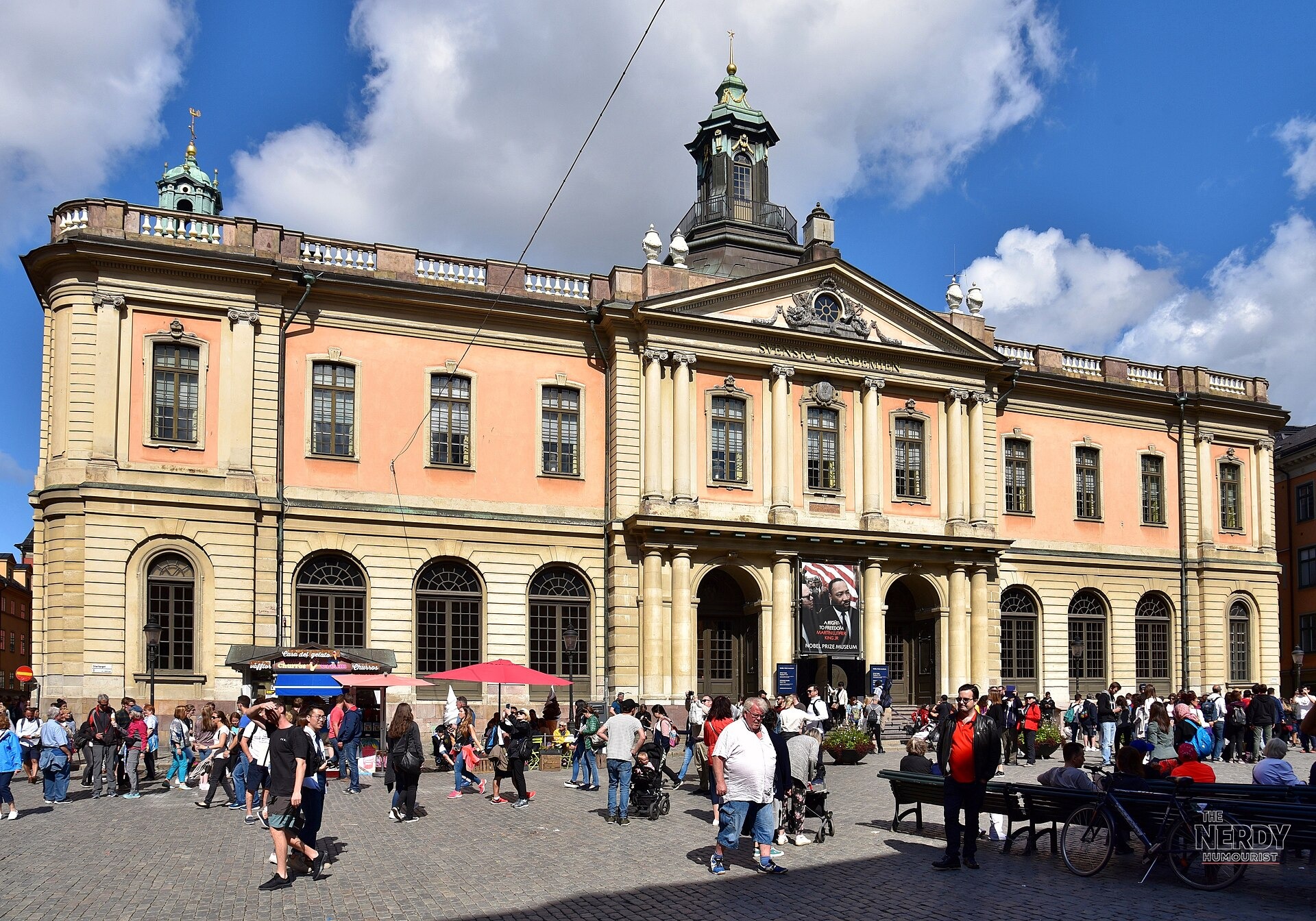
The world of letters gets its biggest moment of the year today. The Nobel Prize Literature 2026 winner will be announced by the Swedish Academy on Thursday, October 8, at 13:00 CEST at the earliest — that is 7:00 AM ET in the United States and 4:30 PM IST — from Börssalen, the Academy’s grand hall in Stockholm’s Old Town. This preview covers everything confirmed about the announcement: the timing, how to watch, how the secretive selection works, the betting favorites, and the recent laureates whose choices hint at where the Academy might go next.
Today’s announcement is the fourth prize of Nobel Week 2026. The Nobel Prize in Physiology or Medicine opened the week on October 5, awarded to Karl Deisseroth, Dieter Hegemann and Robert Nagel, as The Nerdy Humourist reported. Physics followed on October 6 with Francis Halzen’s win, and Chemistry went to Henri Kagan and Kenso Soai on October 7. The Peace Prize is announced Friday, October 9, from Oslo, and the Economics prize closes the week on Monday, October 12.
Nobel Prize Literature 2026 Winner: When and Where the Announcement Happens
The Swedish Academy will reveal the 2026 laureate from Börssalen — the Exchange Hall in Börshuset, the historic Stockholm building that houses the Academy — at 13:00 CEST “at the earliest,” the Academy’s standard formulation, meaning the announcement could slip a few minutes past the hour. The permanent secretary of the Academy steps before a packed press corps to read the laureate’s name, the citation, and the prize amount.
The announcement streams live on the Nobel Prize YouTube channel and at nobelprize.org. Bookmakers have priced about 90 writers, but the Swedish Academy itself is famously tight-lipped: official nominations are sealed for 50 years, so no official shortlist exists. Any “favorites” list is informed guesswork, not insider knowledge.
How the Swedish Academy Chooses the Literature Laureate
The prize is decided by the 18-member Swedish Academy, an institution founded in 1786 that has awarded the literature prize since it was first presented in 1901 under Alfred Nobel’s 1895 will. Each year the Academy solicits nominations from members of academies, universities, previous laureates and literary societies around the world, then narrows the field through committee deliberation to a shortlist of roughly five before a final vote in October.
The vote is conducted in secret, and the process is deliberately designed to resist campaigning. Authors cannot apply, and the bookmakers’ odds — often treated as a leaderboard — reflect punters’ pattern-reading rather than any access to the Academy’s deliberations. As the Indian Express notes in its 2026 explainer, “bookmakers have no access to the nominations, so the odds reflect punters’ guesses, not the Academy’s list.”
The Bookmakers’ Favorite: Can Xue at 10/1
The clear betting favorite with British bookmaker Ladbrokes is the Chinese experimental novelist Can Xue, the pen name of Deng Xiaohua, priced at 10/1. The 73-year-old author has appeared on bookmakers’ lists for years — she was tied at 10/1 with eventual winner László Krasznahorkai before last year’s announcement, according to the Indian Express — and is known for experimental fiction, including dreamlike, stream-of-consciousness prose that defies conventional plot. Her writing has been likened to Franz Kafka and Jorge Luis Borges.
Swedish-founded betting company Betsson, which has offered odds on the prize for more than a decade, also has Can Xue as its favorite at 5.00, the company said in a statement this week. Betsson’s head of PR, Robin Olenius, noted that in recent years winners have often been found among Betsson’s leading candidates: Krasznahorkai had the second-lowest odds before the announcement, as did Jon Fosse before his 2023 win.
Haruki Murakami, the Perennial Favorite, Chases at 14/1
Japan’s Haruki Murakami, the author of Norwegian Wood and 1Q84, is priced at 14/1 with Ladbrokes — the world’s most famous also-ran, near the top of the odds for more than a decade without ever winning. A Murakami victory would break the longest-running narrative in publishing: the global audience’s annual October ritual of hoping, and failing, to see the bookmakers’ most beloved name called in Stockholm.
Behind the top two sit Australia’s Gerald Murnane and the reclusive American Thomas Pynchon, author of Gravity’s Rainbow, both at 16/1. A group of six writers is priced at 20/1: Mexico’s Cristina Rivera Garza, Spain’s Enrique Vila-Matas, Portugal’s Lídia Jorge, Russia’s Ludmila Ulitskaya, Canada’s Margaret Atwood and France’s Michel Houellebecq, according to Literary Hub’s rundown of the Ladbrokes list. Betsson’s own board differs slightly, with Canadian poet Anne Carson at 7.00 and Gerald Murnane at 8.00, and notes that Amitav Ghosh is among Asia’s strongest contenders.
The Reigning Laureate and Recent Winners
The bar for 2026 is set by Hungary’s László Krasznahorkai, who won the 2025 prize for what the Academy called his visionary oeuvre — long, winding, hypnotic sentences that have made him one of Europe’s most distinctive prose stylists. His best-known novels in English include Satantango and The Melancholy of Resistance.
The Academy’s recent choices show an openness to both celebrated global names and quieter discoveries. South Korea’s Han Kang won in 2024 for her “intense poetic prose that confronts historical traumas and exposes the fragility of human life” — the first Asian woman to win the prize and South Korea’s second Nobel laureate overall. In 2023, Norwegian author, translator and playwright Jon Fosse took the prize for “innovative plays and prose which give voice to the unsayable.”
Whether the Academy follows its habit of rotating regions and languages — or doubles down on a particular vein — is the question every October morning turns on. With the odds spread unusually wide this year, in contrast to Krasznahorkai’s 6/1 favoritism at this point last year, 2026 looks like a genuinely open field.
What the Nobel Prize Literature 2026 Winner Takes Home
The Nobel Foundation raised each prize by 1 million kronor this year, from 11 million in 2025, so the 2026 literature laureate will receive 12 million Swedish kronor — roughly $1.21 million. The money is only part of it: the laureate’s books typically see an immediate global sales surge, with publishers racing to reprint in dozens of languages within weeks of the announcement.
The laureate receives the prize — a gold medal and a diploma — from the Swedish king at the Nobel award ceremony in Stockholm on December 10, the anniversary of Alfred Nobel’s death. All six prizes are formally awarded the same day; the Peace Prize ceremony takes place in Oslo, Norway, per Nobel’s will.
FAQ
What time is the Nobel Prize in Literature 2026 announcement?
The Swedish Academy announces the 2026 literature laureate on Thursday, October 8, at 13:00 CEST at the earliest — 7:00 AM ET / 4:30 PM IST. The announcement streams live on the Nobel Prize YouTube channel and nobelprize.org.
Who is the favorite to win the Nobel Prize Literature 2026?
Bookmakers have no access to nominations, so “favorites” are punters’ guesses. Chinese experimental novelist Can Xue leads Ladbrokes at 10/1, followed by Haruki Murakami at 14/1 and Gerald Murnane and Thomas Pynchon at 16/1. Betsson also lists Can Xue as favorite, ahead of Anne Carson and Murnane.
How does the Swedish Academy choose the literature winner?
An 18-member Swedish Academy solicits nominations worldwide, narrows the field through committee deliberation, and holds a secret vote in October. Official nominations are sealed for 50 years, so there is no published shortlist.
Who won the Nobel Prize in Literature last year?
Hungary’s László Krasznahorkai won the 2025 prize for his visionary oeuvre, known for long, winding sentences in novels like Satantango and The Melancholy of Resistance. The 2024 laureate was South Korea’s Han Kang; the 2023 winner was Norway’s Jon Fosse.
Sources: The Indian Express, Literary Hub, Betsson Group (via PR Newswire), The Nerdy Humourist — Nobel Chemistry 2026, The Nerdy Humourist — Nobel Physics 2026

Leave a Reply
You must be logged in to post a comment.