

The Trump administration imposed sweeping sanctions on the International Criminal Court on Friday, announcing the move just hours after one of the court’s former judges, Navanethem “Navi” Pillay, was named the winner of the 2026 Nobel Peace Prize. The dramatic US sanctions ICC decision puts Washington on a diplomatic collision course with European allies and sets up a direct clash between the White House and the Hague-based tribunal.
Secretary of State Marco Rubio announced the sanctions in a statement reviewed by Reuters ahead of the official announcement, declaring that the administration intended to cut off the court’s resources entirely. According to Reuters, Rubio said the United States would ban transactions with what he called a “rogue court,” escalating a long-running campaign by the administration against the tribunal it accuses of unfairly targeting Americans and Israelis.
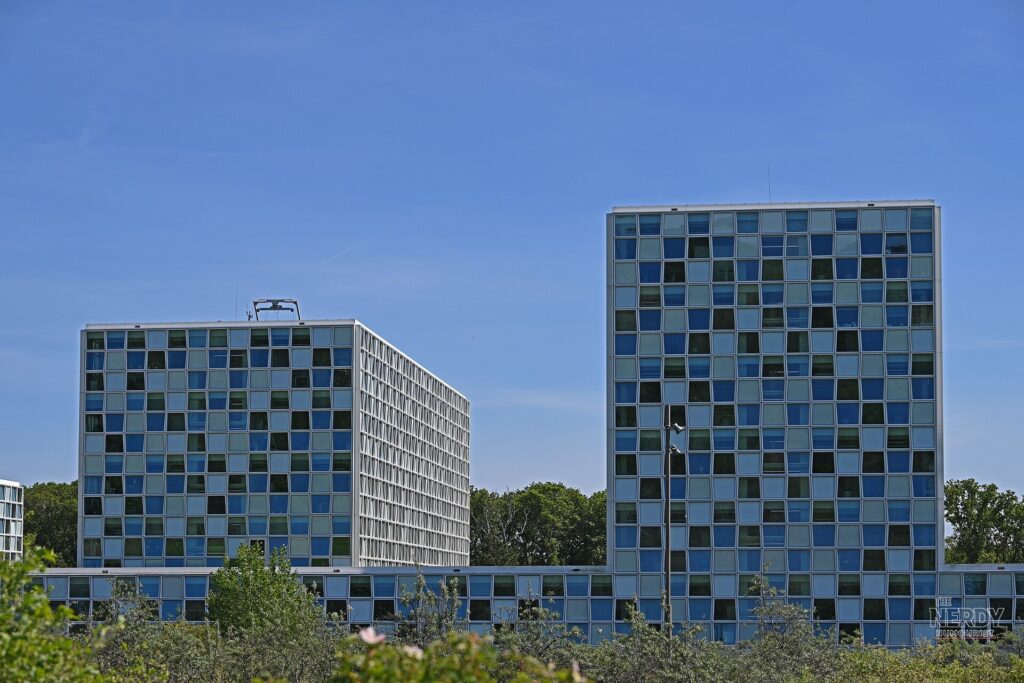
Photo: Ymblanter / Wikimedia Commons
“We Will Ban Transactions With This Rogue Court”
“President Trump will never allow the International Criminal Court to prosecute Americans,” Rubio said in the statement, according to Reuters. “That is why, today, the United States is sanctioning the International Criminal Court. We will ban transactions with this rogue court, cutting off their resources and crippling its ability to operate.”
In a video address posted to social media, Rubio went further, saying: “The United States and the American people are not subject to the jurisdiction of this fake ICC.” He added, according to the Associated Press, that “either the ICC will end its threats, or we will end the ICC” — language that signaled the administration’s stated goal is not merely to pressure the court, but to dismantle it, in his words, “brick by brick.”
According to a fact sheet issued by the State Department, the United States had already imposed sanctions on 17 individuals under the executive order titled “Imposing Sanctions on the International Criminal Court.” Friday’s move goes much further: the Treasury Department added the entire court itself to its Specially Designated Nationals list, a step that would impose financial punishment on any entity that does business with the ICC, according to The Japan Times.
Six-Month Grace Period Built Into the Sanctions
The immediate impact of the US sanctions on the ICC was softened somewhat by a series of exemptions. The Treasury issued a six-month wind-down waiver for companies to end their dealings with the court, and the State Department said the grace period was meant to give the court’s member states time to show “meaningful progress” toward addressing American concerns. The department added that the window “can be adjusted in response to the success or failure” of those diplomatic efforts, CNN reported.
Rubio said the action should encourage America’s allies within the court to work toward resolving what the administration considers threats to U.S. sovereignty — an expectation that puts pressure on European members of the court, which include every European Union country and nearly every NATO member.
Why the Administration Targeted the Court
The White House has long accused the court of unfairly targeting the United States and Israel. Washington has been angry over ICC arrest warrants issued for Israeli officials, including Prime Minister Benjamin Netanyahu, and over a past investigation into the actions of American soldiers in Afghanistan — an investigation the ICC has since closed, according to Reuters.
The administration argues the court has become politicized and has attempted to illegally prosecute Americans and Israelis on war crimes charges. Officials say both Republicans and Democrats have long held deep reservations about the tribunal, but that only President Trump was willing to move against it.
The ICC, founded in 2002 to prosecute war crimes, crimes against humanity and genocide, counts 125 countries as member states and is based in the Netherlands, an EU and NATO member. It has received strong public backing from member countries in the past.

Photo: OSeveno / Wikimedia Commons
Court and Allies Hit Back
The court’s response was defiant. The ICC condemned the sanctions as an “assault on the rule of law and on the very foundations of the international legal order,” called on other states to support the court, and warned that “history will judge this moment,” according to CNN.
ICC Deputy Prosecutor Nazhat Shameem Khan told Reuters the sanctions “must be condemned,” adding: “The sanctions are intended to undermine the rule of law internationally and the work that an independent judicial institution is doing. Our work will continue across all our situations, our investigations and our prosecutions.”
International reaction was swift. In a joint statement, the foreign ministers of Canada, Denmark, Germany, France, Italy, Japan, the Netherlands and the United Kingdom reaffirmed their “continued and unwavering support” for the court, according to CNN. United Nations Secretary-General António Guterres called the US decision “a serious blow to our collective pursuit of international criminal justice, of which the ICC is a key pillar.” The European Union called the sanctions “deeply regrettable” and said it was “ready to take any necessary measures” to enable the court to carry out its work. Rights group Amnesty International urged countries to “resist” the move, saying the sanctions were “designed to isolate and ultimately destroy” the court.
The Nobel Prize Timing
The timing stunned diplomats. Hours before the sanctions announcement, the Norwegian Nobel Committee named Pillay, an 85-year-old South African jurist, the 2026 Nobel Peace Prize laureate for her lifelong work defending international law and human rights. Pillay served as a judge on the ICC’s Appeals Chamber from 2003 to 2008, and the prize committee said it had sought to “issue a reminder” at a time when “judges and institutions of international law are under political attack.”
However, according to the Associated Press, the US sanctions move long predated the Nobel announcement — the timing of the two events landing on the same day was a collision of independent developments, not a direct response. The administration had been building its case against the court for months, and the escalation from sanctioning individuals to sanctioning the entire institution had been signaled well in advance.
Still, the symbolism is unavoidable. The day a former ICC judge was celebrated as a champion of international justice, Washington declared war on the institution she once served — sharpening a standoff between the world’s most powerful nation and the court the world built to prosecute the worst crimes.
Frequently Asked Questions
What sanctions did the US impose on the ICC?
The Treasury added the entire International Criminal Court to its Specially Designated Nationals list, blocking all property of the court in the United States and banning transactions by US persons with the court. A six-month wind-down waiver was granted for companies to end dealings with the tribunal.
Why did the Trump administration sanction the ICC?
The administration accuses the court of unfairly targeting the United States and Israel, citing ICC arrest warrants for Israeli officials including Prime Minister Benjamin Netanyahu and a past investigation into US soldiers in Afghanistan. Secretary of State Marco Rubio says the court threatens American sovereignty.
How has the international community reacted?
Canada, Denmark, Germany, France, Italy, Japan, the Netherlands and the UK jointly reaffirmed “continued and unwavering support” for the court. The UN Secretary-General called it “a serious blow” to international criminal justice, and the EU called the sanctions “deeply regrettable.”
Was the sanctions announcement a response to the Nobel Peace Prize?
According to the Associated Press, the US move long predated the Nobel announcement. But the Nobel Committee’s citation — warning that judges and institutions of international law are “under political attack” — made the same-day timing a powerful coincidence.
Sources: Reuters, CNN, Haaretz, The Japan Times, Associated Press.
Related on The Nerdy Humourist: Navi Pillay Wins Nobel Peace Prize 2026 for Championing International Law | Nobel Peace Prize 2026 Contenders Preview

Leave a Reply
You must be logged in to post a comment.